

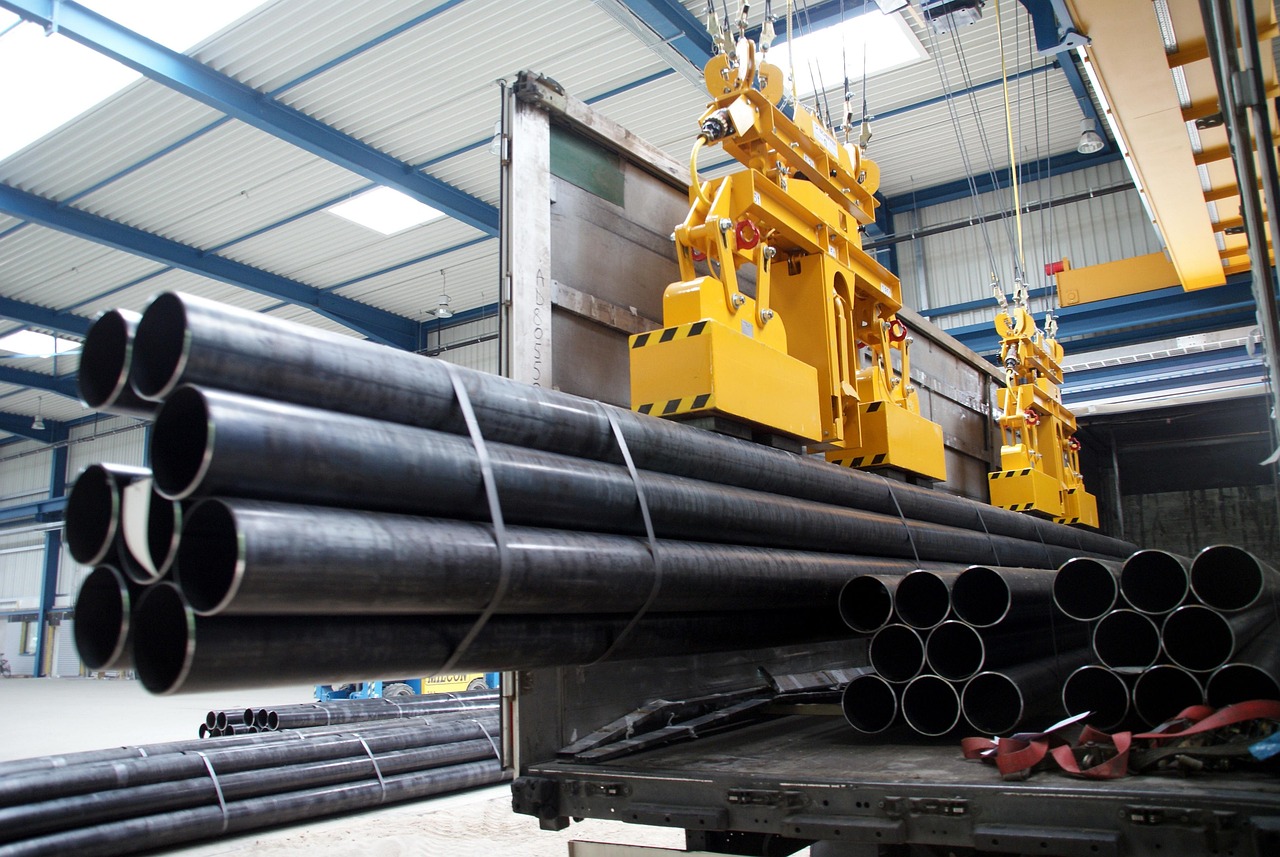
The crane magnetic system
Cabinet Clears ₹7,280-cr REPM Plan for EVs and Defence
New REPM Scheme Links Clean Energy, Strategic Security, Industry
New Delhi: The Union Cabinet today approved a ₹7,280-crore “Scheme to Promote Manufacturing of Sintered Rare Earth Permanent Magnets (REPM),” setting the stage for India’s first integrated attempt to build an end-to-end domestic ecosystem for high-performance magnet production. The decision, taken at a meeting chaired by Prime Minister Narendra Modi, reflects a policy approach that combines industrial expansion, national-security considerations, and the energy-transition agenda. By targeting a product segment that has become strategically indispensable to modern technology, renewable energy infrastructure and defence platforms, the government has signalled that REPM manufacturing is no longer merely an industrial choice but a matter of long-term autonomy and supply assurance.
Sintered Rare Earth Permanent Magnets are among the strongest commercial magnets in the world, and their use has become central to advanced manufacturing and strategic capability. These magnets are designed for applications in electric-vehicle motors, wind-turbine generators, aerospace navigational components, precision-guided defence systems, high-speed industrial robotics, consumer electronics and sophisticated medical devices. India currently meets the majority of its demand through imports. For a country that is rapidly expanding electric-vehicle production, building gigawatt-scale renewable-energy capacity and modernising its strategic systems, this dependence is viewed increasingly as a structural vulnerability. The scheme therefore aims to create 6,000 Metric Tons per Annum (MTPA) of domestic REPM manufacturing capacity, anchored in facilities that convert rare-earth oxides to metals, metals to alloys and alloys to finished magnets. Under a global competitive bidding process, five beneficiaries will be allotted capacity, with each eligible for up to 1,200 MTPA.
The government has structured the financial architecture around ₹6,450 crore in sales-linked incentives to be disbursed over five years and ₹750 crore in capital subsidy to support the establishment of capacity. The overall duration of the scheme is seven years, including a gestation window of two years for plant establishment, followed by five years of incentive-linked commercial operations. The aim, officials say, is not only to secure supply for domestic industries but also to propel India into a competitive position in the international REPM market, where manufacturing has historically been concentrated in a few countries.
India’s move comes against the backdrop of rapidly increasing global demand for rare-earth magnets driven by electric mobility, industrial automation and renewable energy. Market projections indicate that the global rare-earth magnet sector could expand to around US $30.01 billion by 2030, up from roughly US $21.98 billion in 2025. This striking growth curve is paired with a supply landscape in which global manufacturing is heavily concentrated, largely in East Asia, with China commanding a dominant share. This concentration has long been identified by policymakers worldwide as a strategic risk, given the possibility of trade restrictions, export curbs or supply-chain disruption in periods of geopolitical tension. In that sense, India is entering the REPM domain at a time when several industrial economies are attempting to diversify sourcing, promote domestic manufacturing and build insulation from external pressure.
For India’s electric-vehicle sector, the policy decision could prove critical. The efficiency and performance of EV motors rely heavily on high-grade sintered magnets that deliver compactness, power density and thermal resilience. With India setting ambitious EV penetration targets and automobile manufacturers investing in battery technologies and drivetrain localisation, the availability of domestically produced REPMs could reduce lead times, improve cost predictability and provide a buffer against global price fluctuations. The renewable-energy sector — especially the offshore and onshore wind-power segment — stands to gain in similar ways. Wind turbines using direct-drive technology require significant volumes of REPMs for generators. Domestic manufacture of magnets could strengthen supply assurance for India’s green-energy transition and support cleaner, high-reliability power generation.
The defence and strategic affairs angle is equally significant. Rare-earth magnets are embedded in guidance, propulsion, actuation and control systems across a range of modern platforms, including missiles, fighter aircraft, drones, sonar equipment and advanced communication networks. For a country that is investing in indigenous defence production and strengthening aerospace capability, a secure and predictable REPM supply chain becomes a foundational requirement. Officials familiar with the policy landscape describe the scheme as aligned with the principle that technological self-reliance is not solely an economic objective but an element of national security. Domestic magnet production could reduce exposure to supply interruption in sensitive categories, enhance autonomy in system modernisation programmes and improve India’s resilience in defence procurement cycles.
Analysts note that the scheme’s eventual impact will depend on execution capacity and industry participation. Even if magnet manufacturing becomes self-sufficient, India may still depend to some extent on imports for rare-earth minerals or processed intermediates unless upstream mining, refining and recycling ecosystems evolve in parallel. Rare-earth processing also requires stringent environmental safeguards and regulatory oversight. The global nature of competition is another variable; countries with established magnet industries have decades of experience and scale advantages that new entrants must match through quality, consistency and cost efficiency. At the same time, India’s growing domestic demand — particularly from EV, renewable-energy and defence programmes — provides a strong internal market base to support early industrial maturation.
The government has articulated that the new scheme complements the Atmanirbhar Bharat Abhiyan, the Net Zero 2070 commitment and the Viksit Bharat @2047 vision of a globally competitive manufacturing economy. Instead of treating REPMs as an isolated technological product, the initiative situates them at the crossroads of industrial growth, energy transition and national security. If the implementation phase succeeds in balancing commercial competitiveness, ecosystem development and environmental responsibility, the policy could mark a structural shift in India’s position in high-technology supply chains. For now, attention will turn to the bidding phase, investor interest, plant location decisions and how rapidly the ecosystem evolves from incentivised manufacturing to long-term capability and export potential.
– global bihari bureau



thanks for info.