Prime Minister Narendra Modi launches green mobility initiatives at Hansalpur, in Gujarat on August 26, 2025.
Made-in-India EVs Set for Export to 100 Countries
Hansalpur (Gujarat): India today launched its first Made-in-India global strategic Battery Electric Vehicle (BEV), the “e VITARA,” and began hybrid battery electrode manufacturing at the TDS Lithium-Ion Battery plant, a joint venture of Toshiba, Denso, and Suzuki. These initiatives mark significant advancements in India’s electric vehicle (EV) ecosystem, particularly in battery production, enabling exports to over 100 countries and reducing reliance on imported batteries.
Until recently, India imported all EV batteries. The TDSG battery plant, with its foundation laid in 2017, has now enabled domestic production. Prime Minister Narendra Modi announced that three Japanese companies will manufacture battery cells in India for the first time, with electrodes also produced locally.
“Under a new initiative by TDSG, three Japanese companies together will manufacture cells in Bharat for the very first time in this factory. Even the electrodes for battery cells will now be produced locally in Bharat,” Modi said at the launch of green mobility initiatives.
Over 80% of the battery value will be manufactured domestically. “This localisation will give new strength to Bharat’s self-reliance. It will also accelerate the growth of hybrid electric vehicles,” Modi added.
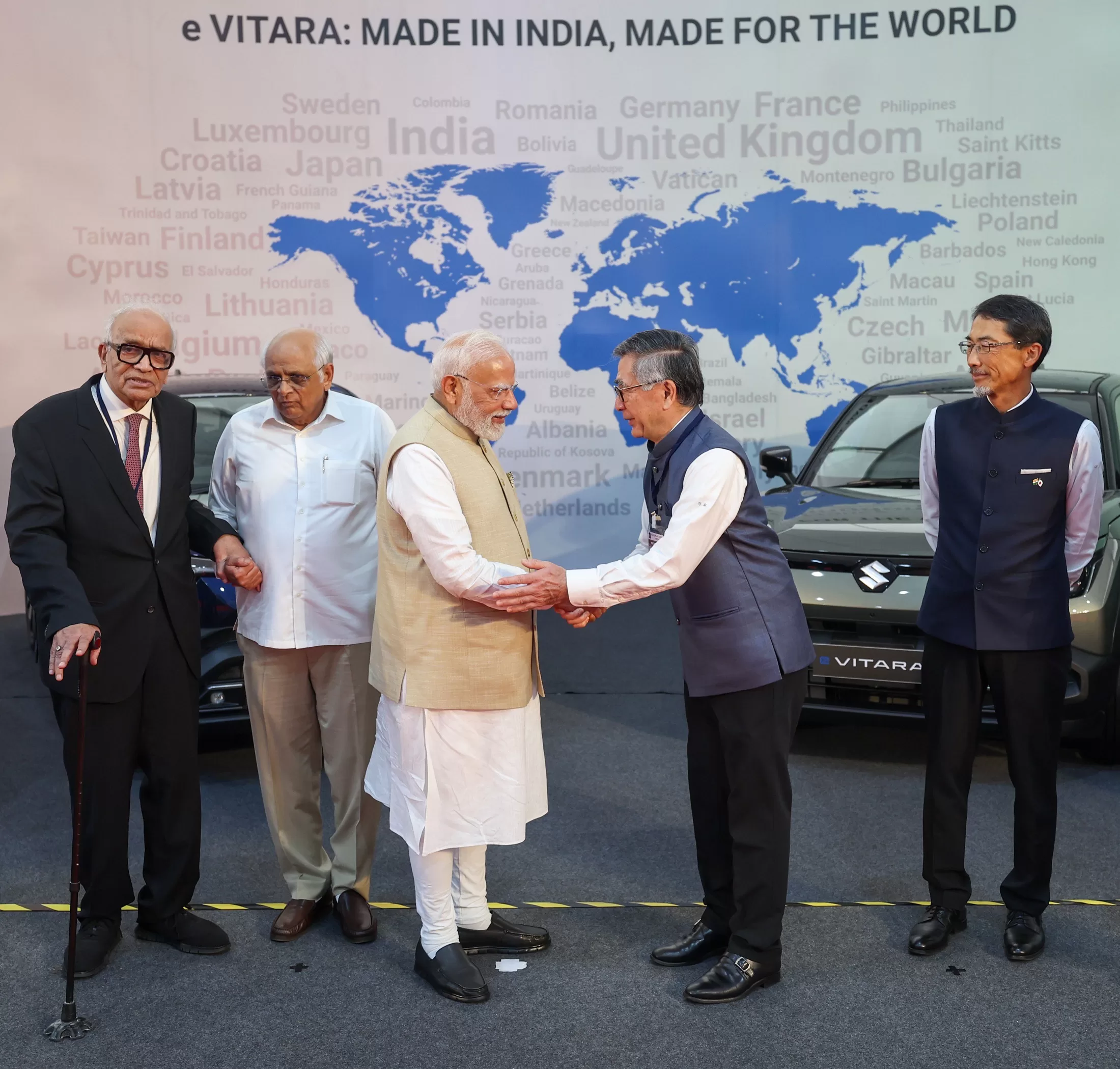
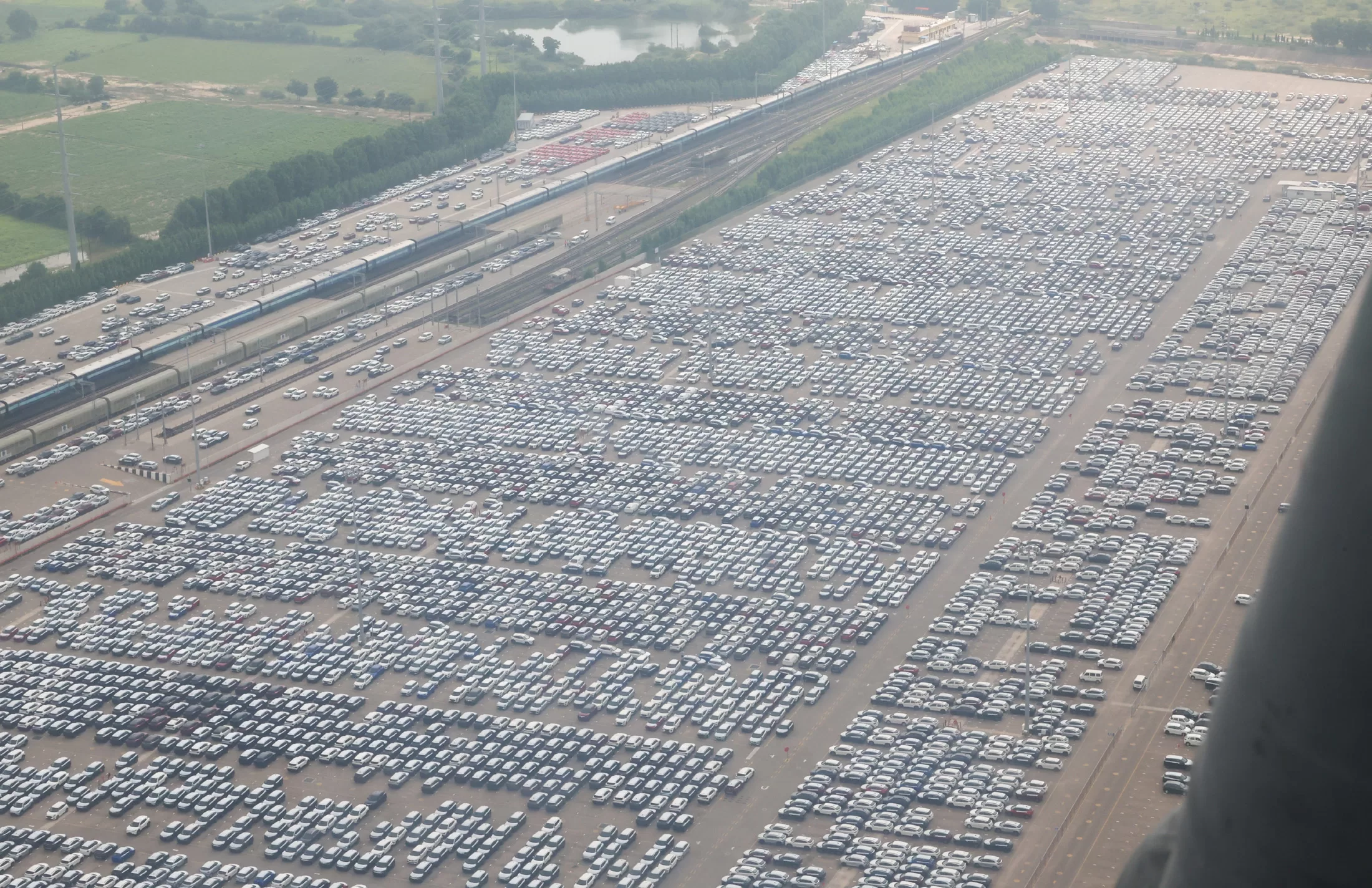
The “e VITARA,” produced by Maruti Suzuki, will be exported to over 100 countries, including Japan and Europe, making India Suzuki’s global EV manufacturing hub. “From today, Electric Vehicles made in Bharat will be exported to 100 countries… Now, in dozens of countries around the world, the EVs running there will carry the mark—Made in India!” Modi stated. Maruti Suzuki, India’s largest car exporter for four years, will extend its export capabilities to EVs. “Companies like Maruti Suzuki have become brand ambassadors of Make in India,” he said, noting global confidence in India’s manufacturing.
Modi highlighted the India-Japan partnership, stating, “The relationship between India and Japan is beyond just diplomatic relations; it is a cultural and trust-based relationship. We see our progress in each other’s progress.” Held during Ganeshotsav, the event was described as a new chapter in India’s Make in India journey.
“Amidst the joy of Ganeshotsav, today a new chapter is being added to Bharat’s Make in India journey. This ‘Make in India, Make for the World’ is a big leap towards our goal,” Modi said. He recalled allotting land to Maruti Suzuki in Hansalpur in 2012 as Gujarat’s Chief Minister. “The seeds of this success story of Bharat were sown almost 13 years ago… Our efforts back then are playing such a big role today in fulfilling the nation’s aspirations,” he noted.
The Prime Minister paid tribute to the late Osamu Suzuki, honoured with the Padma Vibhushan. “I am happy that the vision he had for Maruti-Suzuki India, today we are witnessing its grand expansion,” he said. He emphasised India’s strengths: “Bharat has the power of democracy, and Bharat has the advantage of demography. We also have a very large pool of skilled workforce. This creates a win-win situation for all our partners.”

A new development includes hybrid ambulances, following Modi’s 2024 Singapore proposal to convert old vehicles into hybrid EVs. Maruti Suzuki developed a prototype in six months, which he reviewed. “These hybrid ambulances perfectly fit into the PM E-DRIVE scheme,” he said, referencing the ₹11,000 crore scheme’s budget for e-ambulances. “Hybrid EVs will reduce pollution and also provide an option to transform old vehicles,” he added.
Policy reforms since 2014, including industrial corridors, plug-and-play infrastructure, logistics parks, and Production Linked Incentive schemes, have supported manufacturers. “We launched the Make in India campaign and created a favourable environment for both global and domestic manufacturers,” Modi said. Electronics production has increased by 500%, mobile phone production by 2,700%, and defence production by over 200% since 2014. “Through major reforms, we have removed old difficulties faced by investors,” he noted. He urged states to adopt pro-development policies, stating, “The faster a state keeps its policies neat and clean… the more the investor’s confidence increases.”
India is focusing on futuristic industries, with six semiconductor plants under development. “India is taking off in the semiconductor sector,” Modi said. The National Critical Mineral Mission, addressing shortages of rare earth magnets, will conduct over 1,200 exploratory campaigns. Efforts to strengthen India-Japan ties include printing regulations in Japanese, providing Japanese cuisine, developing 7–8 golf courses in Gujarat, and prioritising Japanese language education. “Through our efforts, the people-to-people connect between Bharat and Japan has grown tremendously,” Modi said, urging companies like Maruti Suzuki to expand youth exchange programs.
Modi expressed confidence in achieving a developed India by 2047, with Japan as a partner. “By 2047, we will build such a Bharat that your future generations will take pride in your sacrifices… With this spirit, come with me, friends,” he said, emphasising Swadeshi production where “the sweat belongs to my countrymen… the production will carry the fragrance of the soil of Bharat.”
Gujarat Chief Minister Bhupendrabhai Patel, Japan’s Ambassador Keiichi Ono, Suzuki Motor Corporation President Toshihiro Suzuki, Maruti Suzuki India Managing Director Hisashi Takeuchi, Chairman R.C. Bhargava, and other dignitaries attended.
– global bihari bureau