MadhuNetrAI Programme Aims to Detect Diabetic Eye Disease Early
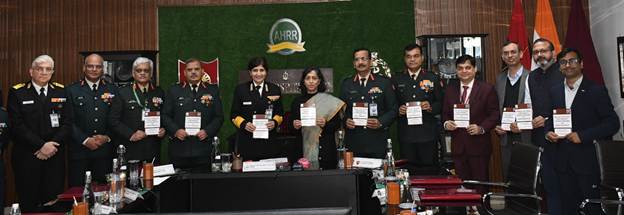
New Delhi: India’s Armed Forces Medical Services (AFMS), in partnership with AIIMS’ Dr Rajendra Prasad Centre for Ophthalmic Sciences and the Ministry of Health & Family Welfare, launched the country’s first AI-driven community eye screening programme for Diabetic Retinopathy (DR) today. The initiative, inaugurated at the Army Hospital (Research & Referral) in New Delhi, represents a high-profile attempt to integrate artificial intelligence into public health delivery, aiming to strengthen early detection of diabetic eye disease while creating a national health intelligence framework.
The programme, anchored by the MadhuNetrAI web-based platform, combines automated screening, grading and triaging of retinal images captured through handheld fundus cameras. It is designed to empower trained medical officers, nursing staff, and healthcare assistants to conduct community-level screening across diverse geographic and demographic settings. Beyond diagnosis, the system collects real-time data on disease prevalence and regional distribution, potentially informing evidence-based planning and resource allocation.
AFMS has outlined a pilot phase at seven locations—Pune, Mumbai, Bengaluru, Dharamshala, Gaya, Jorhat and Kochi—covering metropolitan, rural, hilly, coastal and remote regions. Personnel at each site will undergo intensive training at AIIMS’ RPC, followed by implementation of large-scale screening. Patients diagnosed with Diabetic Retinopathy will be referred for comprehensive diabetic management, while cases of vision-threatening DR will be escalated to vitreo-retina specialists at designated district hospitals. District Health Administrations are expected to coordinate referral mechanisms and integrate DR management into existing non-communicable disease programmes.
While the initiative is being presented as a scalable and replicable model, several critical questions remain. The success of AI-driven community screening depends on the quality of image acquisition, local healthcare capacity, adherence to referral protocols, and the reliability of digital infrastructure across rural and remote sites. There is also the challenge of sustaining patient follow-up, ensuring continuity of care, and linking AI-generated data with actionable public health interventions beyond the pilot phase.
A compendium detailing methodology and operational guidelines has been released, marking a formal effort to standardise practices across sites. Leadership credits were given to Brig S K Mishra, HOD & Consultant Ophthalmology at the Army Hospital (R&R), for his role in establishing the collaboration. The programme highlights India’s broader push to leverage AI in public health, combining military medical reach, academic expertise, and government policy to address chronic disease challenges.
However, as with many technology-driven public health interventions, the real test will lie in implementation fidelity, measurable health outcomes, and integration into routine healthcare systems. While the launch is a symbolic and strategic milestone, the effectiveness of AI-enabled DR screening will ultimately be determined by the programme’s capacity to translate data into improved clinical care at scale.
– global bihari bureau