India, Brazil, and Ethiopia in focus as DRDO hits 32,000 feet
New Delhi: India marked a significant day in its defence and strategic engagement calendar today, with multiple developments spanning indigenous technology achievements, international cooperation, and maritime exercises.
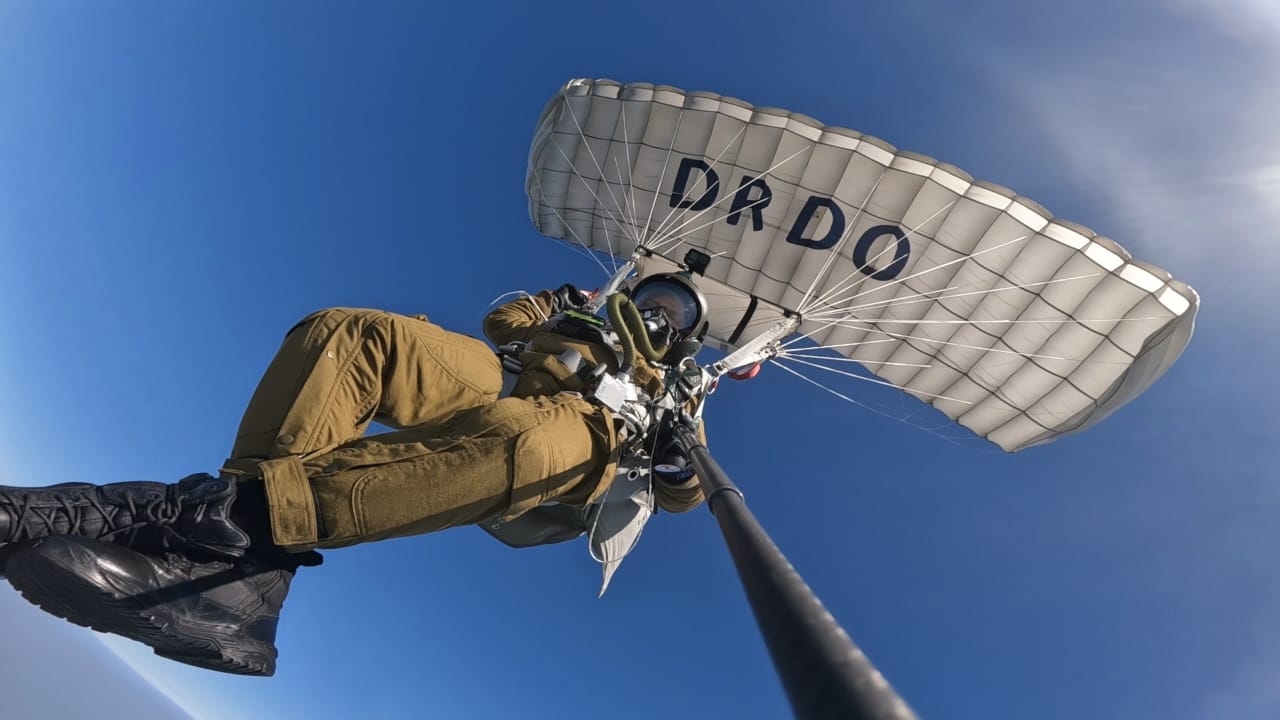
The Defence Research and Development Organisation (DRDO) successfully conducted a high-altitude test of its indigenously developed Military Combat Parachute System (MCPS) from 32,000 feet. At the same time, the Ministry of Defence signed a ₹659.47 crore contract for advanced night sights for the Indian Army’s assault rifles. Simultaneously, India hosted key international defence engagements, including the United Nations Troop Contributing Countries’ (UNTCC) Chiefs Conclave in New Delhi and Agra, the inaugural India–Ethiopia Joint Defence Cooperation meeting, and the fifth edition of the Indo-Indonesian maritime exercise Samudra Shakti in Visakhapatnam.
According to the Ministry of Defence, the DRDO’s MCPS underwent a successful combat-free-fall jump, executed by Indian Air Force test jumpers. The achievement made the MCPS the only parachute system currently in operational use by the Indian Armed Forces capable of deployment above 25,000 feet.
Developed jointly by DRDO’s Aerial Delivery Research and Development Establishment in Agra and the Defence Bioengineering and Electromedical Laboratory in Bengaluru, the system features a lower descent rate, improved steering, and precision navigation. It is compatible with the Navigation with Indian Constellation (NavIC) system, enabling independent operation without reliance on foreign satellites. Defence Minister Rajnath Singh congratulated DRDO, the Armed Forces, and industry partners on the successful trial, calling it a “significant milestone” in India’s indigenous capability.
In another development, the Ministry of Defence signed a ₹659.47 crore contract for the procurement of Image Intensifier Night Sights for 7.62 x 51 mm assault rifles used by the Indian Army. The deal, concluded with a consortium led by MKU Ltd and Medbit Technologies Pvt. Ltd., will enable soldiers to engage targets up to 500 metres even under starlit conditions. The procurement, classified as a Buy (Indian-IDDM) case with over 51 per cent indigenous content, is expected to benefit micro, small, and medium enterprises engaged in component manufacturing.
Meanwhile, the United Nations Troop Contributing Countries’ Chiefs Conclave 2025, hosted by the Indian Army from October 14 to 16, continued with delegates travelling to Agra to witness an Integrated New Age Technology Demonstration. The visiting chiefs were shown next-generation military equipment developed indigenously by the Indian Army, reflecting India’s emphasis on self-reliance and innovation.
The delegates also visited the Taj Mahal and the Heritage Centre at Kalakriti, followed by a cultural programme and a scheduled Light and Sound Show at the Red Fort, to which they travelled by Delhi Metro. The conclave will conclude on Thursday with deliberations, industry interactions, and a summation of outcomes focused on strengthening United Nations peacekeeping operations.
Adding to India’s defence diplomacy calendar, the inaugural Joint Defence Cooperation meeting between India and Ethiopia was held in New Delhi today. The meeting was co-chaired by Joint Secretary (International Cooperation) in the Ministry of Defence, Amitabh Prasad, and Major General Teshome Gemechu, Director General for Defence Foreign Relations and Military Cooperation of Ethiopia.
The two sides reviewed ongoing defence cooperation and discussed new areas of collaboration in training, joint exercises, medical cooperation, and defence industry engagement. The meeting was held under the framework of the Defence Cooperation Memorandum of Understanding signed earlier in 2025 between the Defence Ministers of the two countries. Ethiopia’s Army Chief is also attending the UNTCC Conclave being hosted by India.
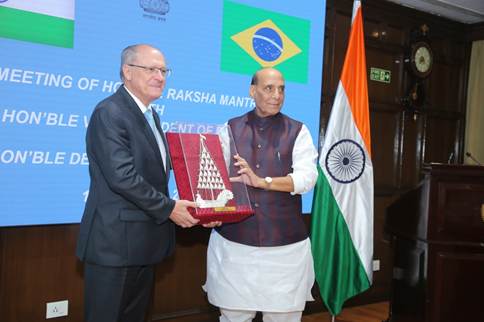
In another bilateral engagement, Defence Minister Rajnath Singh met the Vice President of Brazil, Geraldo Alckmin, and Brazil’s Defence Minister, José Múcio Monteiro Filho, in New Delhi. The leaders reviewed the progress of ongoing defence initiatives and identified areas for co-development and co-production of defence equipment. Both sides reaffirmed their commitment to advance cooperation through joint exercises, training exchanges, and industry partnerships.
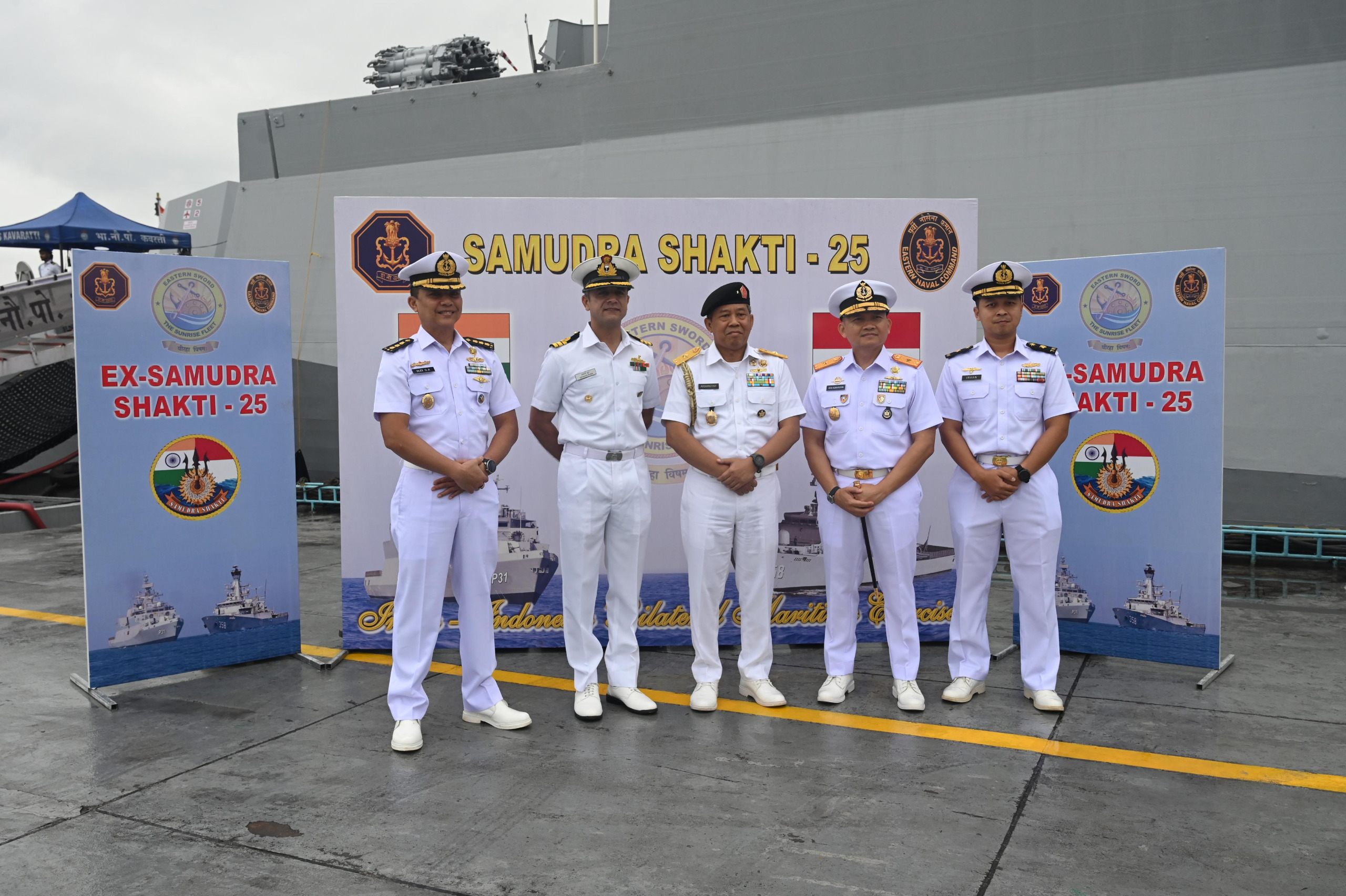
At Visakhapatnam, the Indian Navy is hosting the fifth edition of the Indo-Indonesian Joint Maritime Exercise Samudra Shakti–2025 from October 14 to 17. Participating units include INS Kavaratti, an Anti-Submarine Warfare Corvette, and the Indonesian Navy Ship KRI John Lie, which arrived at the port earlier this week. The harbour phase includes joint professional interactions, cross-deck visits, and cultural exchanges, while the sea phase will feature complex operational drills such as helicopter operations, air defence exercises, weapon firing, and visit-board-search-and-seizure activities.
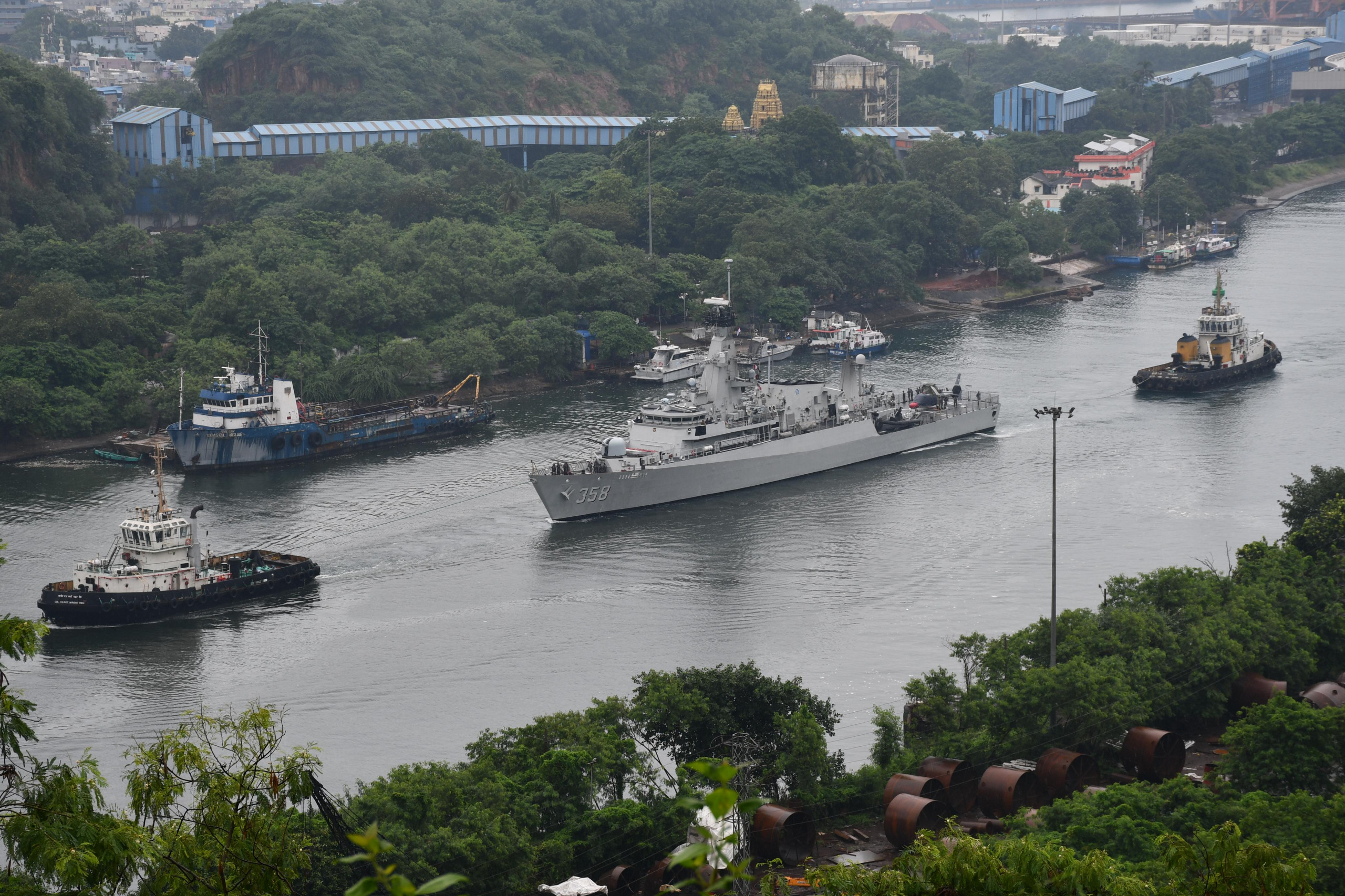
Exercise Samudra Shakti is a key bilateral engagement aimed at enhancing interoperability, mutual understanding, and coordination between the two navies in support of regional peace and stability.
The series of activities today collectively underscored India’s continuing efforts to strengthen indigenous capability, deepen international defence partnerships, and enhance operational readiness through research, cooperation, and joint training.
– global bihari bureau