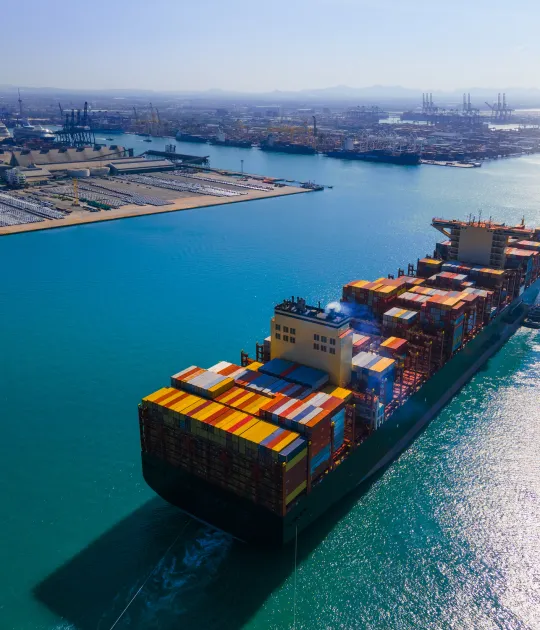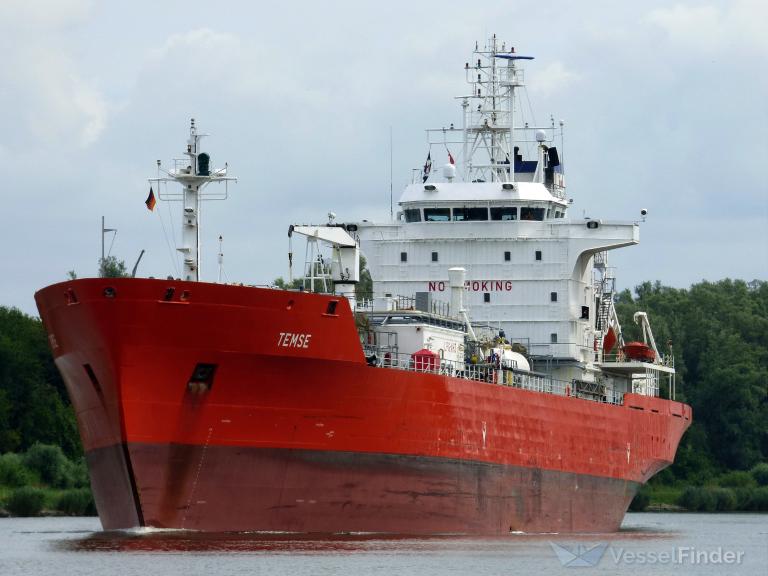
LPG Tanker Bateleur
India’s Sai Saburi Faces US Oil Ban
Washington: The United States today imposed sanctions on entities and vessels facilitating Iran’s illicit petroleum and petrochemical trade, including India-based Sai Saburi Consulting Services, alongside seven senior officials and one entity linked to Hezbollah’s financial institution Al-Qard Al-Hassan (AQAH), to disrupt revenue streams funding Iran’s destabilising activities and Hezbollah’s operations in Lebanon.
The Department of State and the Department of the Treasury’s Office of Foreign Assets Control (OFAC) announced these measures, marking the tenth round of sanctions since National Security Presidential Memorandum-2 was issued on February 4, 2025, to enforce maximum economic pressure on Iran. The designation of Sai Saburi, which has its registered office in New Delhi, and its liquefied petroleum gas (LPG) tankers, Bateleur and Neel, for transporting Iranian petroleum products poses significant challenges for India’s maritime and financial sectors, raising compliance costs and risking diplomatic tensions with the United States. Sai Saburi was incorporated in November 2013.
The Department of State designated Sai Saburi Consulting Services for knowingly engaging in significant transactions for the transport of Iranian petroleum products. Bateleur conducted a significant transaction in September 2022 for the sanctioned Alliance Energy Co., and both Bateleur and Neel have likely transported Iranian energy products over eleven times, engaging in “dark activity” by disabling automatic identification system (AIS) beacons to obscure cargo origins, increasing maritime safety and compliance risks, as noted in the State Department’s fact sheet.
This designation blocks all Sai Saburi Consulting Services assets in the U.S. or under U.S. control, prohibiting transactions by U.S. persons unless authorised by OFAC, severely limiting the company’s access to U.S. markets for insurance, logistics, or port services, which could disrupt its international shipping operations.
Indian financial institutions face secondary sanctions risks, such as restrictions on U.S. correspondent accounts, if they engage with Sai Saburi Consulting Services, necessitating enhanced due diligence that raises compliance costs for India’s shipping and banking sectors, as outlined in OFAC’s Economic Sanctions Enforcement Guidelines. The vessels’ AIS manipulation invites scrutiny from international maritime regulators, potentially leading to higher insurance premiums or port access restrictions.
India’s oil imports from Iran, negligible in 2025 due to prior sanctions under the 2017 Countering America’s Adversaries Through Sanctions Act (CAATSA), remain unaffected, with India importing 1.76 million barrels per day of Russian crude in 2024. However, the sanctions could strain U.S.-India relations, as the designation of an Indian company may prompt bilateral discussions on compliance, similar to past engagements, potentially escalating diplomatic tensions if India is perceived as facilitating Iran’s sanctions evasion, per web sources.
Other sanctioned entities include Iran’s Kaveh Methanol Company, which operates a methanol refinery and terminal and exported methanol in October 2022, and Aria Sina Control International Technical Inspection Co., a cargo surveyor in Iran’s northern and southern ports, designated for facilitating methanol loading in October 2022. Asian Sea Angel Shipping Co., based in Hong Kong, was targeted for supporting Trilliance Petrochemical Co. Ltd. by facilitating port calls for vessels loading Iranian petrochemicals.
The Treasury sanctioned an Iraqi-led smuggling network run by Iraqi-British national Salim Ahmed Said, operating since 2020, involving companies like VS Tankers FZE, formerly Al-Iraqia Shipping Services & Oil Trading FZE, which brokered a 2020 deal to transport Iranian oil via Iraqi pipelines, blended with Iraqi oil for sale.
VS Oil Terminal FZE, based in Khor al-Zubayr, Iraq, manages six oil storage tanks for blending, with employees smuggling hard currency into Iran, some carrying millions of dollars, as payment for oil. Said bribed Iraqi officials, including parliament members, with millions in kickbacks to secure forged vouchers, enabling the sale of Iranian oil as Iraqi, as per the Treasury’s press statement.
Other Said-controlled companies include VS Petroleum DMCC, Rhine Shipping DMCC, The Willett Hotel Limited, and Robinbest Limited, all designated for their role in the petroleum sector. Shadow fleet vessels, including Cameroon-flagged Vizuri, Comoros-flagged Fotis, and Panama-flagged Themis and Bianca Joysel, owned by Seychelles-based Egir Shipping Ltd, Marshall Islands-based Fotis Lines Incorporated, Themis Limited, and British Virgin Islands-based Betensh Global Investment Limited and Dong Dong Shipping Limited, shipped tens of millions of barrels of Iranian oil, often via ship-to-ship transfers with sanctioned vessels like Amor and Starla.
Singapore-based Trans Arctic Global Marine Services PTE. LTD. was designated for arranging piloting services for the National Iranian Tanker Company (NITC), facilitating oil transport through the Strait of Malacca. The Al-Qatirji Company used vessels like Cameroon-flagged Elizabet, Atila, owned by Seychelles-based Grat Shipping Co Ltd, and Palauan-flagged Gas Maryam, owned by Liberia-based Dima Shipping & Trading Company, to transport Iranian oil for the IRGC-Qods Force (IRGC-QF) and the sanctioned Sa’id al-Jamal network, disguising it as Malaysian oil.
Seven AQAH officials—Nehme Ahmad Jamil, Issa Hussein Kassir, Samer Hasan Fawaz, Imad Mohamad Bezz, Ali Mohamad Karnib, Ali Ahmad Krisht, and Mohammed Suleiman Badir—and the entity Tashilat SARL were sanctioned under E.O. 13224 for facilitating millions in transactions benefiting Hezbollah, a designated Foreign Terrorist Organization and Specially Designated Global Terrorist since 2001. Jamil, head of AQAH’s auditing and business departments for nearly 20 years, co-owns Tashilat SARL with previously sanctioned officials Ahmad Mohamad Yazbeck and Husayn al-Shami, managing financial services for Hezbollah and its affiliates like Yousser Company and Bayt al-Mal. Kassir, overseeing equipment and logistics, sent nearly a million dollars to sanctioned AQAH officials between 2007 and 2019, prior to the designation of Jammal Trust Bank SAL. Fawaz, administrative director since 2010, liaises with logistics firms. Bezz, head of AQAH’s evaluation and storage department, transacted over $2.5 million with AQAH officials and handles gold deals. Karnib, head of the purchase department, oversaw the acquisition of over a thousand ounces of gold in 2024. Krisht, AQAH’s Tyre branch manager, held accounts benefiting Hezbollah and worked with senior advisor Hassan Moukalled. Badir, a deputy director at AQAH’s Nabatiyeh branch, held joint accounts to circumvent financial systems. The Department’s Rewards for Justice program offered up to $10 million for information disrupting Hezbollah’s financial mechanisms, encouraging tips via Signal, Telegram, or WhatsApp at +1-202-702-7843, with potential relocation for informants, as per the State Department’s press statement.
The sanctions intensify pressure on Iran’s oil revenue, critical for its nuclear program and proxy support, potentially escalating U.S.-Iran tensions, as Iran has threatened to pursue nuclear weapons if sanctions persist, per web sources. For India, the SAI SABURI designation heightens maritime compliance challenges, as Indian shipping companies must navigate stricter international regulations to avoid similar sanctions, potentially facing increased operational costs or restricted access to global ports, particularly in Western markets, as noted in Reuters reports. Diplomatically, the U.S. focus on an Indian firm could lead to bilateral talks to ensure compliance, risking tensions if India is seen as insufficiently vigilant, though India’s minimal reliance on Iranian oil—importing only 0.2 million barrels per day in 2024 compared to 1.76 million from Russia, per Reuters—mitigates broader trade impacts. For China, importing over 90% of Iran’s crude at 1.5 million barrels per day in 2025, per Reuters, the sanctions raise shipping costs, as seen in prior actions against Shandong Shengxing Chemical Co., Ltd., increasing freight costs to $3–$4 per barrel, but yuan-based payments sustain imports at 1.43 million barrels per day in February 2025, per Kpler data, with potential U.S.-China tensions amid nuclear talks. For Russia, the input lacks direct evidence of oil trade disruption, but a $40 billion Gazprom memorandum with Iran suggests resilience, per web sources, though expanded U.S. scrutiny of shadow fleets could heighten tensions. Hezbollah’s financial constraints may increase regional instability if it retaliates, impacting Lebanon’s fragile economy.
– global bihari bureau