Nafithromycin marks milestone in India’s pharma self-reliance
New Delhi: India has achieved a major milestone in biomedical research and pharmaceutical innovation with the development of its first indigenously discovered antibiotic, Nafithromycin, effective against resistant respiratory infections and particularly beneficial for cancer patients and individuals with poorly controlled diabetes. The antibiotic is the first molecule to be entirely conceptualised, developed, and clinically validated in India, marking a significant step toward self-reliance in the pharmaceutical sector. The development was led by the Department of Biotechnology, Government of India, in collaboration with the private pharmaceutical company Wockhardt, exemplifying the potential of industry-academia partnerships to drive the country’s biopharmaceutical growth.
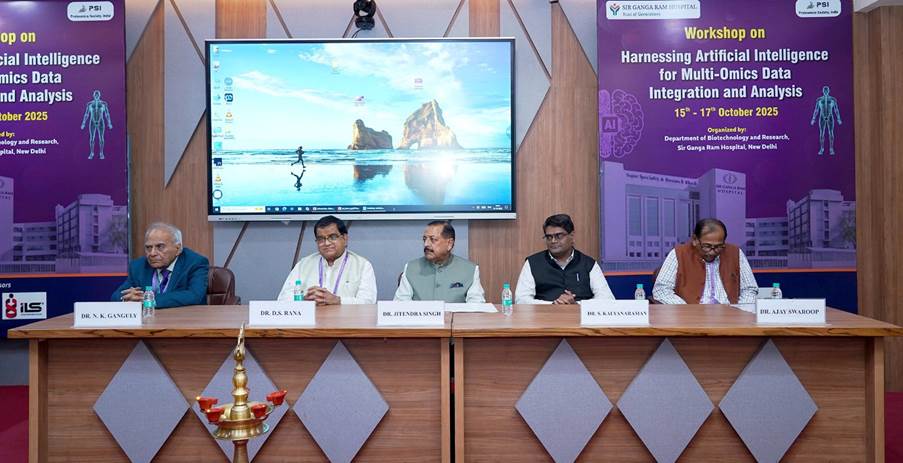
Speaking at the inauguration of the three-day Medical Workshop on “Harnessing Artificial Intelligence for Multi-Omics Data Integration and Analysis”, Union Minister of State for Science & Technology and Prime Minister’s Office, Dr. Jitendra Singh, emphasised that India must build a self-sustainable innovation ecosystem. He noted that most countries with global recognition in science and innovation have achieved it through models that combine private sector participation, philanthropic support, and reduced dependence on government funding. Citing Nafithromycin as an example, the Minister said such partnerships can accelerate the development of world-class medical solutions while strengthening the domestic research infrastructure.
In another landmark achievement, India has recorded the first successful indigenous clinical trial in gene therapy for haemophilia, conducted at Christian Medical College, Vellore, with support from the Department of Biotechnology. The trial, which involved over 10,000 sequenced human genomes to date, achieved a 60–70% correction rate with zero bleeding episodes, representing a transformative development in genomic medicine. The findings have been published in the New England Journal of Medicine, underscoring India’s emerging leadership in advanced biomedical research. Dr Singh noted that the nation aims to scale up genome sequencing to one million genomes, which will enhance the understanding and treatment of rare and chronic diseases.
Dr Singh also highlighted the Anusandhan National Research Foundation (ANRF) as a key instrument in fostering a sustainable innovation ecosystem. With a total outlay of ₹50,000 crore over five years, of which ₹36,000 crore will come from non-government sources, the ANRF is designed to integrate academia, industry, and government initiatives, creating a robust framework for research, development, and innovation aligned with international standards.
Artificial Intelligence is another pillar of India’s vision for advanced healthcare and governance. Dr Singh explained that AI-driven systems are already revolutionising healthcare delivery, particularly in rural and remote regions, through hybrid mobile clinics that provide high-quality services. Additionally, the AI-enabled grievance redressal system developed by the Department of Administrative Reforms and Public Grievances (DARPG) has achieved a weekly disposal rate of 97–98%, significantly improving citizen satisfaction and administrative efficiency. He cited pioneering institutions like Sir Ganga Ram Hospital, which integrate AI, biotechnology, and genomics, as models for interdisciplinary approaches that improve health outcomes.
Dr Singh called for greater collaboration among government departments, private hospitals, and research institutes to realise the vision of Viksit Bharat by 2047, emphasising that the convergence of innovation, collaboration, and compassion will define India’s journey toward becoming a developed nation. He stated that the progress in biotechnology, AI, and genomic medicine positions India to achieve global recognition in science, reduce dependence on foreign technology, and establish leadership in research and healthcare innovation.
The event was attended by notable experts, including Dr Shiv Kumar Kalyanaraman, CEO of ANRF; Dr N.K. Ganguly, Dr D.S. Rana, and Dr Ajay Swaroop, reflecting a broad-based engagement of academia, industry, and government in advancing India’s scientific and technological capabilities.
– global bihari bureau