India Celebrates Make in India Decade
Goyal Launches Key Logistics Reforms
New Data Challenges India’s 13-14% GDP Claim, Revises Logistics Cost to 7.97% of GDP
New Delhi: Logistics costs in India, long cited at 13–14% of GDP based on external studies or partial datasets, have been reassessed at approximately 7.97% of total GDP, according to a new report launched by Union Minister of Commerce and Industry Piyush Goyal here today.
This first comprehensive and scientifically derived estimate, prepared by the National Council of Applied Economic Research for the Department for Promotion of Industry and Internal Trade, employs a hybrid methodology combining secondary data with nationwide surveys. The release, part of celebrations marking a decade of the Make in India initiative, aligns with the National Logistics Policy of 2022, which mandates a uniform framework for measuring logistics costs and benchmarking against global practices, addressing past inconsistencies that confused policymakers and stakeholders.
The report provides a detailed framework, capturing logistics costs across various transport modes, product categories, and firm sizes, while presenting estimates of freight cost per tonne-kilometre and emphasising multi-modality’s role in enhancing efficiency. It offers evidence-based guidance to bolster India’s competitiveness and support its ambition to become a global logistics hub. Data from the past five years indicates a slowing growth rate in logistics costs compared to non-services output, credited to initiatives like the PM GatiShakti National Master Plan, Dedicated Freight Corridors, Bharatmala Pariyojana, Sagarmala Project, Integrated Check Posts, the Unified Logistics Interface Platform, and the Logistics Efficiency Enhancement Programme.
The launch coincided with several other initiatives unveiled by Goyal to advance India’s industrial and trade landscape. Following positive discussions on September 16, 2025, with officials from the United States Trade Representative’s office in India, where aspects of a trade deal were explored and efforts to intensify progress were agreed upon, a delegation led by Goyal is set to visit the United States on September 22, 2025. The delegation aims to further negotiations toward an early conclusion of a mutually beneficial Trade Agreement.
Goyal also launched the Industrial Park Rating System 3.0, developed by the Department for Promotion of Industry and Internal Trade with Asian Development Bank support, to assess and benchmark the facilities, infrastructure, and competitiveness of industrial parks nationwide. The government is developing 20 plug-and-play industrial parks and smart cities under the National Industrial Corridor Development Corporation, with four completed, four under construction, and others in bidding and tendering stages. Building on a 2018 pilot and IPRS 2.0 in 2021, the third edition introduces parameters such as sustainability, green infrastructure, logistics connectivity, digitalisation, skill linkages, and enhanced tenant feedback. Parks will be categorised as Leaders, Challengers, and Aspirers based on performance, providing investors with transparent data, fostering competition among States and Union Territories, and guiding targeted policy interventions. This initiative aims to attract investments, generate employment, and strengthen industrial ecosystems, positioning India as a sustainable and competitive investment destination.
The Logistics Ease Across Different States 2025 was also introduced, benchmarking logistics performance across States and Union Territories to support a globally competitive logistics ecosystem. Goyal noted India’s rise as a manufacturing hub under Make in India, particularly in pharmaceuticals and engineering goods, with efficient logistics as a critical backbone for reducing costs. The LEADS survey provides insights into state performance, identifies best practices, and highlights areas for intervention, enabling collaboration to strengthen infrastructure and supply chains in line with Atmanirbhar Bharat and Make in India. LEADS 2025 includes assessments of 5–7 key corridors based on journey time, truck speed, and waiting periods, alongside API-enabled evaluations of section-wise speeds on major road corridors, offering precise guidance for efficiency improvements. The initiative is expected to contribute to a cost-efficient, sustainable logistics system, supporting Viksit Bharat by 2047.
Additionally, Goyal released the Guidebook on Mapping of Harmonised System of Nomenclature (HSN) Codes, prepared by the Department for Promotion of Industry and Internal Trade, allocating 12,167 HSN codes across 31 ministries and departments. This guidebook aims to enable targeted policymaking and effective trade negotiations by establishing product-level linkages, a priority as India strengthens its role in global value chains. It provides coherence to HSN codes, offering a roadmap based on ‘Manufacture in India’, ‘Strengthen Brand India’, and ‘Make for the World’. Mapping codes to line ministries helps industries understand sector-specific processes, simplifies business coordination, and bolsters trade negotiation positions, enhancing efficiency, reducing compliance burdens, and supporting competitive logistics and trade toward Viksit Bharat@2047.
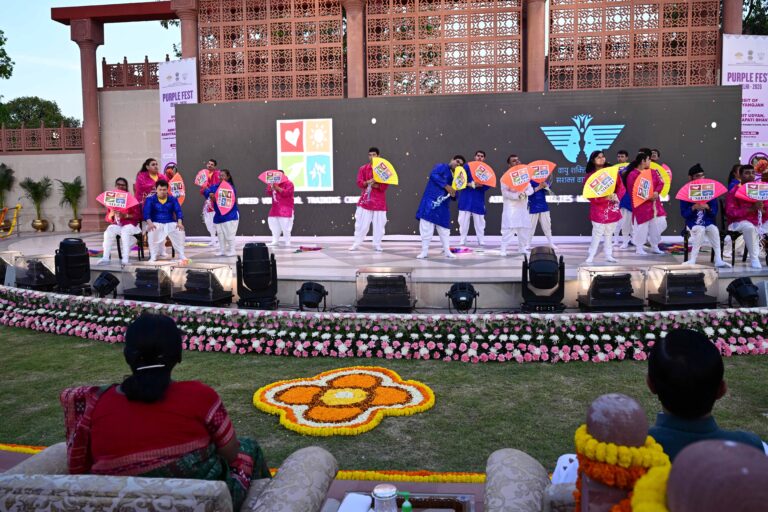
To commemorate a decade of Make in India, Goyal unveiled a commemorative coin. Launched on September 25, 2014, by Prime Minister Narendra Modi, the initiative has facilitated investment, encouraged innovation, built infrastructure, and positioned India as a global hub for manufacturing, design, and innovation. Over the past ten years, it has shifted India’s image from a service-driven to a manufacturing powerhouse economy, attracting USD 667 billion in foreign direct investment between 2014 and 2024, nearly two-thirds of post-liberalisation inflows. India’s ease of doing business ranking improved from 142nd in 2014 to 63rd in the World Bank’s 2020 report. Merchandise exports reached USD 437.42 billion in FY 2024-25. The startup ecosystem grew to over 1.80 lakh DPIIT-recognised startups, the third-largest globally, generating over 17.6 lakh jobs and 118 unicorns by 2025. The Production Linked Incentives scheme, with a ₹1.97 lakh crore outlay across 14 sectors, attracted ₹1.88 lakh crore in investments through 806 approved applications, creating over 12 lakh jobs. India became the second-largest mobile phone manufacturer, producing 99% of smartphones domestically. Projects like Vande Bharat trains and INS Vikrant highlight engineering capabilities, while defence production hit ₹1.51 lakh crore in 2024-25, with exports of ₹23,622 crore to over 80 countries. Five Positive Indigenisation Lists cover over 5,500 items, with 3,000 indigenized, including fighter aircraft, tanks, artillery, corvettes, sonar systems, and helicopters. In pharmaceuticals, 21 PLI projects produce 54 devices, including MRI machines, CT scanners, heart valves, stents, and dialysis machines. Domestic production of air conditioners and LED light components has reduced import dependency. In semiconductors, India is advancing toward its first 2 nm chip, moving from 7, 5, and 3 nm technologies, supporting AI, smartphones, high-performance systems, security, and space applications. These achievements underscore Make in India’s transformative impact, laying a foundation for Viksit Bharat@2047.
Goyal also launched Integrated State and City Logistics Plans under the SMILE programme with Asian Development Bank collaboration, starting in eight cities across eight states to assess infrastructure, identify gaps, and provide roadmaps for improving efficiency and reducing costs. This initial effort aims for nationwide replication to ensure smoother goods movement, enhanced competitiveness, and resilient supply chains. Anchored by the Department for Promotion of Industry and Internal Trade, the plans strengthen local logistics ecosystems while complementing national progress. Reforms through the National Logistics Policy and PM GatiShakti National Master Plan provide a framework for efficiency and competitiveness, supported by the Asian Development Bank’s Strengthening Multimodal and Integrated Logistics Ecosystem programme. States have aligned with the National Logistics Policy by formulating their own policies and action plans. Following PM GatiShakti, the National Logistics Policy, and directives from the Fourth Chief Secretaries’ Conference in December 2024, the department has adopted a programmatic approach to support City Logistics Plans, advancing India’s goal of a modern, integrated, and competitive logistics sector.
– global bihari bureau