From Mahe to HAMMER to Oman: Triple Aatmanirbhar leap on one day
Mumbai/New Delhi: In a remarkable convergence of events that underscored India’s accelerating journey toward defence self-reliance and stronger strategic partnerships in the Indian Ocean Region, the country today witnessed three major developments: the commissioning of the fully indigenous INS Mahe, the first Mahe-class Anti-Submarine Warfare Shallow Water Craft at the Naval Dockyard in Mumbai; the formal signing of the Joint Venture Cooperation Agreement between Bharat Electronics Limited and France’s Safran Electronics & Defence for the local production of the advanced HAMMER precision-guided air-to-ground weapon system in New Delhi; and the successful conclusion of the 13th meeting of the India-Oman Joint Military Cooperation Committee, also in the national capital, where both sides committed to expanded joint development, technology sharing and production partnerships.
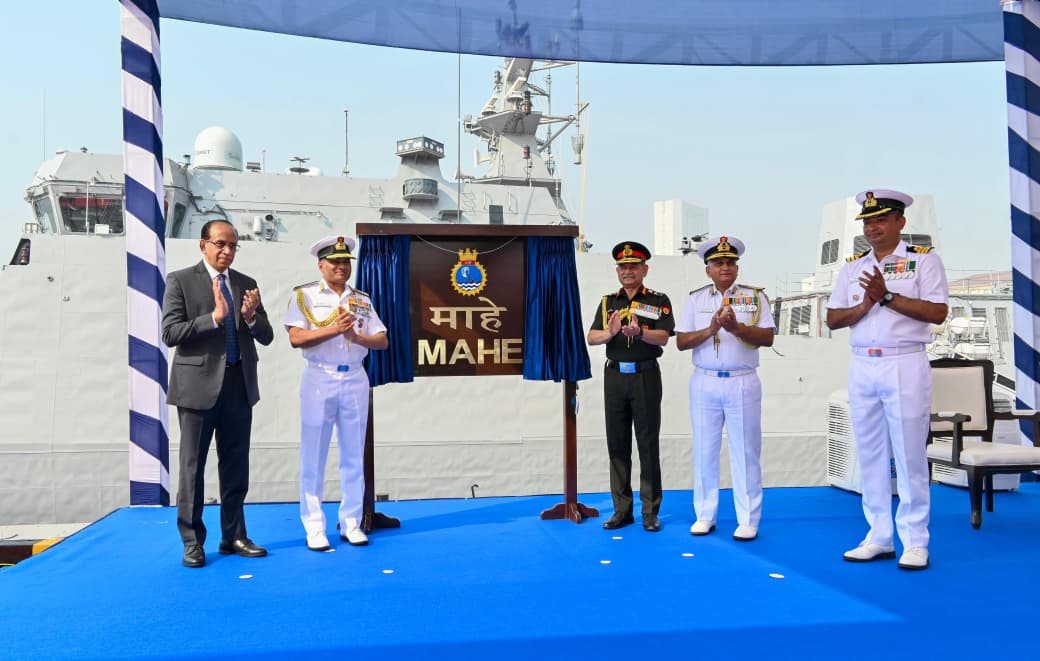
The day began at the Naval Dockyard in Mumbai with the commissioning ceremony of INS Mahe, the lead ship of an eight-vessel Mahe-class project conceived, designed and constructed entirely within India. The event was presided over by General Upendra Dwivedi, Chief of the Army Staff, who attended as the Chief Guest, while Vice Admiral Krishna Swaminathan, Flag Officer Commanding-in-Chief, Western Naval Command, hosted the proceedings. A large number of senior naval officers from Headquarters Western Naval Command and other formations, representatives from Cochin Shipyard Limited based in Kochi, and several distinguished civilian guests were present as INS Mahe was formally welcomed into the Indian Navy’s active fleet under the Western Naval Command.
The ship derives its name from the historic coastal town of Mahe on the Malabar Coast, a former French enclave with deep maritime traditions and a tranquil estuary that the Navy says mirrors the vessel’s own combination of graceful lines and formidable combat capability. The ship’s crest features the Urumi, the legendary flexible whip-sword of the Kalaripayattu martial art, rising dramatically from stylised blue waves, symbolising agility, precision and lethal grace in battle. The Cheetah has been chosen as the ship’s mascot, representing explosive speed and unwavering focus, while the motto “Silent Hunters” perfectly encapsulates the stealth, vigilance and relentless readiness demanded of modern anti-submarine warfare platforms operating in shallow waters.

Constructed by Cochin Shipyard Limited in Kochi, INS Mahe incorporates contributions from a wide array of Indian defence entities, including Bharat Electronics Limited, Larsen & Toubro Defence, Mahindra Defence Systems Limited, the Naval Physical and Oceanographic Laboratory, and more than twenty micro, small and medium enterprises spread across the country. With more than eighty per cent indigenous content by value, the vessel stands as one of the most visible symbols of the Aatmanirbhar Bharat initiative in the naval domain and demonstrates the steady maturation of India’s domestic warship design, systems integration and equipment manufacturing ecosystem.
Specifically tailored for anti-submarine operations in coastal and shallow waters where larger warships cannot easily operate, INS Mahe is fitted with a highly integrated combat suite that brings together advanced indigenous underwater sensors, weapon systems, communication networks and low-observable propulsion machinery into a compact yet extremely potent platform. The ship is capable of detecting, classifying, tracking and neutralising subsurface threats with high accuracy while maintaining prolonged presence in the littorals, thanks to its low acoustic and magnetic signatures and excellent manoeuvrability.
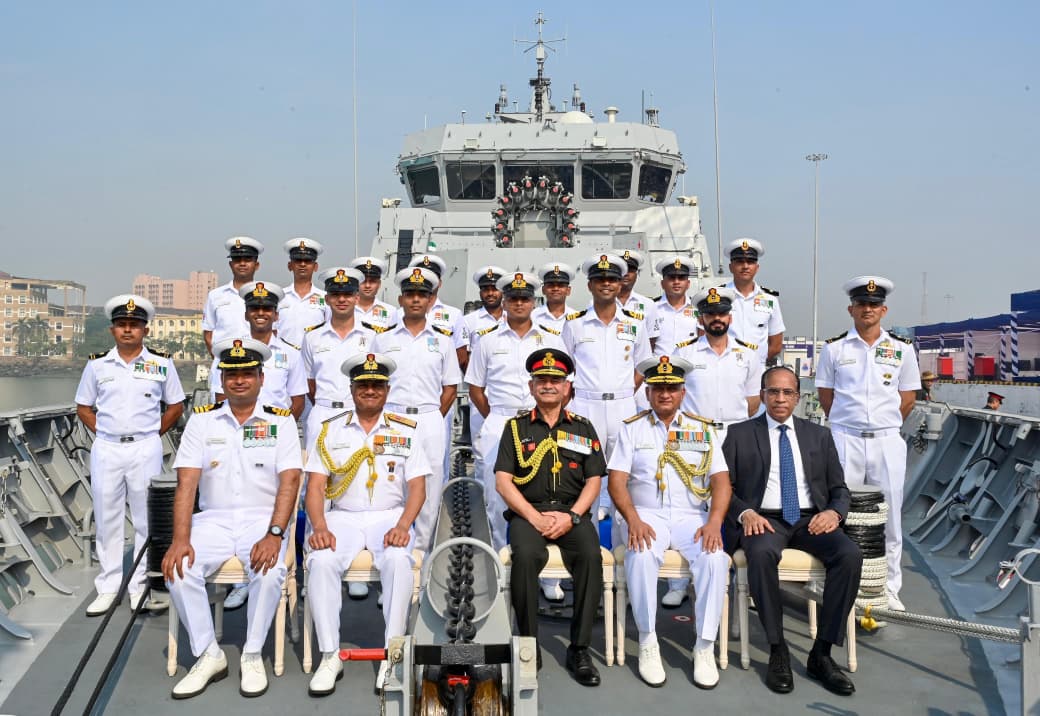
Addressing the gathering at the outset of the ceremony, General Upendra Dwivedi commended the flawless execution of the event, stating, “At the outset, bravo zulu to the commanding officer, officers and men of Mahe and all those involved in this ceremony for such a fine arrangement and outstanding ceremony.” He went on to describe the induction as a profound milestone, saying, “Today’s ceremony not only marks the induction of a potent new platform to a maritime order of battle, but also reaffirms our nation’s increasing capability to design, construct and field complex combatants with indigenous technology.” The Army Chief further emphasised the Navy’s evolving role, noting that “the commissioning of INS Mahe reaffirms the Navy’s steadfast transformation into a Builders’ Navy, one that designs, constructs, and sustains its own combat platforms.” Turning to the ship’s crew, he added a personal touch of inspiration: “As INS Mahe hoists the ensign today, she carries not just the hopes of the Navy but the collective faith of a nation that stands behind her. May her voyages be safe, her missions successful, and her crew steadfast in the service of India. I wish the commanding officer, officers and all hands fair winds, following seas and fathoms below keel in every mission ahead.” General Dwivedi lauded the professionalism behind the timely delivery of INS Mahe, describing it as “an example of excellence” by Cochin Shipyard Limited, and highlighted the Navy’s growing strategic role in national security. He emphasised that INS Mahe will markedly strengthen the Navy’s ability to dominate the near-seas, tighten the coastal security grid and protect national maritime interests throughout the littoral region. Highlighting the importance of tri-service integration, the Army Chief observed that future conflicts will be fought across multiple domains simultaneously and will demand seamless synergy between land, sea and air forces. He cited the recently concluded Operation Sindoor as a successful example of jointness in action and recalled the long-standing cooperation between the Army and Navy in humanitarian assistance and disaster relief operations, as well as amphibious exercises conducted worldwide. Following the commissioning, General Dwivedi undertook a guided tour of the vessel and awarded COAS Commendations to Navy personnel who played key roles in preparing INS Mahe for service—an uncommon gesture that officials said may become more frequent as tri-service synergy deepens.

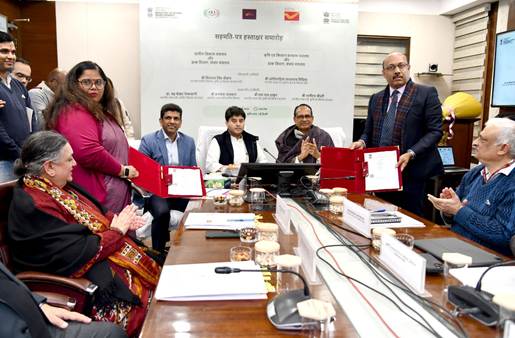
Meanwhile, in New Delhi, another significant milestone for Aatmanirbhar Bharat was achieved when Bharat Electronics Limited and Safran Electronics & Defence formally signed the Joint Venture Cooperation Agreement for the manufacture in India of the Highly Agile Modular Munition Extended Range (HAMMER) smart precision-guided air-to-ground weapon. The document was signed by Chairman and Managing Director of BEL, Manoj Jain, and Executive Vice President of Safran Electronics & Defence, Alexandre Ziegler, in the presence of Secretary (Defence Production) Sanjeev Kumar and Safran Group Chief Executive Officer Olivier Andries.
The agreement gives legal and operational shape to the Memorandum of Understanding that the two companies had signed on 11 February 2025 during Aero India and sets the stage for the incorporation of a new 50:50 joint venture company in India. This entity will undertake localised production, supply and through-life support of HAMMER munitions for both the Indian Air Force and the Indian Navy. Indigenisation levels are planned to rise progressively to sixty per cent, with critical sub-assemblies, electronic modules and mechanical components manufactured domestically under a structured transfer-of-technology arrangement, while BEL will lead final assembly, integration, testing and quality assurance activities. Already combat-proven and renowned for its modular design, HAMMER is compatible with multiple platforms, including the Rafale fighter and the indigenous Light Combat Aircraft Tejas, and will substantially enhance India’s precision-strike capabilities from the air. An official statement from the Ministry of Defence underscored the broader impact, noting that “this JVCA underscores BEL’s commitment to strengthening India’s defence industrial base and aims at leveraging SED’s extensive experience in manufacturing of smart precision guided air-to-ground weapon.” Earlier comments from BEL Chairman Manoj Jain during the initial MoU phase had highlighted the partnership’s forward-looking potential, stating that the JV will “localise” production of the HAMMER while “enabling the development of future variants,” allowing for sales to external customers and further innovation in India’s defence ecosystem.

Completing the triad of defence developments, Defence Secretary Rajesh Kumar Singh and Secretary General of the Ministry of Defence of the Sultanate of Oman, Dr Mohammed Bin Naseer Bin Ali Al Zaabi, co-chaired the 13th session of the India-Oman Joint Military Cooperation Committee at South Block in New Delhi. The two sides conducted a comprehensive review of ongoing defence engagements, expressed satisfaction at the robust and expanding cooperation, and exchanged perspectives on regional and international security challenges, with particular attention to evolving dynamics in the Indian Ocean Region.
Both delegations reaffirmed their commitment to take defence industrial collaboration to the next level through joint development of advanced platforms, deeper technology sharing, and expanded production partnerships. Discussions centred on building resilient supply chains, enhancing operational interoperability between the armed forces of the two countries, and fostering innovation in emerging defence technologies. The meeting agreed on the need for long-term institutional frameworks that would support co-development, boost indigenous manufacturing capabilities in both nations, and contribute to strategic resilience and regional stability. A statement from the Integrated Defence Staff Headquarters captured the essence of the deliberations, noting that the discussions “reaffirmed the commitment to deepen Defence Cooperation through progress on the Military Logistic Complex, enhanced collaboration in shipbuilding, maintenance, repair and overhaul (MRO), strengthened training cooperation and avenues for defence exports.”
During his visit, the Omani Secretary General also paid courtesy calls on Minister of State for Defence Sanjay Seth, where the two sides discussed the progress of India-Oman defence cooperation and reaffirmed commitment to advance the partnership, and held detailed talks with Chief of Defence Staff General Anil Chauhan. In their extensive interaction, General Chauhan and Dr Al Zaabi focused on reviewing progress on the proposed Military Logistic Complex and exploring new areas of collaboration, including expanded cooperation in shipbuilding, MRO facilities, and strengthening existing training programmes between the armed forces. India and Oman share a strategic partnership anchored in centuries-old cultural ties, extensive economic collaboration including energy security through oil and gas trade, and converging interests in maritime security, counter-terrorism and maintaining stability in the Arabian Sea and the Gulf region.
Taken together, the commissioning of INS Mahe, the signing of the HAMMER joint venture, and the forward-looking decisions of the 13th India-Oman JMCC on a single day illustrate the multi-dimensional and rapid progress India is making across the entire spectrum of defence modernisation—from inducting fully indigenous frontline warships and localising cutting-edge foreign technology under controlled partnerships to strengthening industrial and operational ties with a trusted partner in a strategically vital region. The remaining seven ships of the Mahe-class are at various stages of construction and sea trials at Cochin Shipyard Limited and will join the fleet progressively over the coming years, while both the HAMMER production programme and the expanded India-Oman defence industrial roadmap are expected to deliver concrete results in the near to medium term.
– global bihari bureau