India delegation visits Punatsangchhu-1 Hydro Electric Project in Bhutan
Thimphu Talks Boost Flood Forecasting Cooperation
India Reviews Punatsangchhu Projects, Expands Data Sharing
Shared Rivers Anchor New Phase of Bilateral Cooperation
Thimphu: India and Bhutan have agreed to deepen cooperation on transboundary rivers, flood forecasting and hydropower development following a four-day official visit by a senior Indian delegation from February 24 to 27, 2026. The discussions focused on strengthening existing flood management mechanisms, modernising hydro-meteorological observation networks, and improving data-sharing systems to address growing risks from climate change, glacial lake outburst floods and extreme weather events.
The visit was led by VL Kantha Rao, Secretary, Department of Water Resources, River Development and Ganga Rejuvenation under the Ministry of Jal Shakti, Government of India. The Indian delegation included officials from the Department of Water Resources, River Development and Ganga Rejuvenation, the State Governments of Assam and West Bengal, and Water and Power Consultancy Services Limited. The delegation held detailed consultations with Bhutanese counterparts on cooperation in managing shared river systems and reviewed progress on major hydropower projects being implemented in Bhutan in partnership with India.
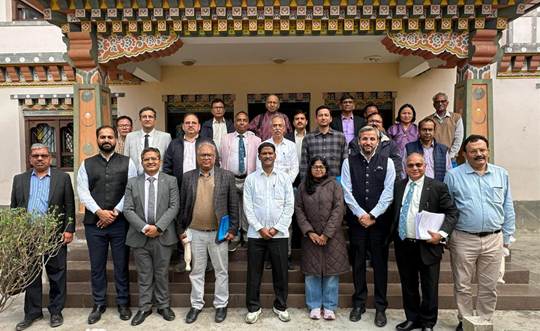
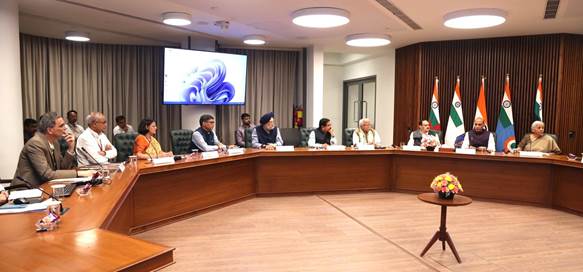
At the Secretary-level bilateral meeting held on February 25, 2026, both sides reviewed existing arrangements for flood management and flood forecasting. These mechanisms enable real-time exchange of hydro-meteorological data during the monsoon season. They are critical for downstream districts in Assam and West Bengal that depend on upstream rainfall and river gauge information from Bhutan to issue early flood warnings. The meeting examined measures to strengthen and modernise Bhutan’s hydro-meteorological observation network on trans-boundary rivers, improve data-sharing systems for flood forecasting, and enhance collaboration in capacity building and technical exchanges.
Deliberations also focused on emerging challenges arising from climate change, particularly the increasing risks posed by glacial lake outburst floods and extreme rainfall events in the eastern Himalayas. Officials noted that retreating glaciers and shifting monsoon patterns are heightening the vulnerability of both upstream and downstream communities. The two sides underlined the need for upgraded monitoring infrastructure and closer scientific cooperation to improve preparedness and disaster response across shared river basins.
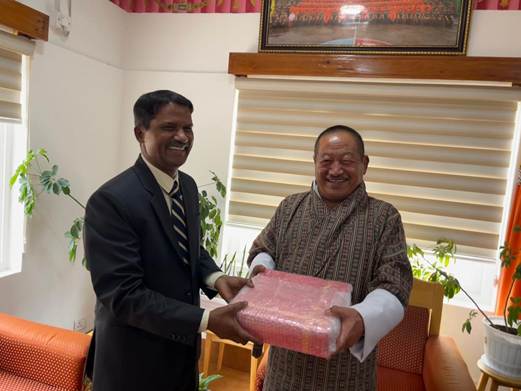
Following the bilateral meeting, VL Kantha Rao paid a courtesy call on Lyonpo Gem Tshering, Bhutan’s Minister for Energy and Natural Resources, reaffirming high-level political commitment to sustained cooperation in water resources management and hydropower development.
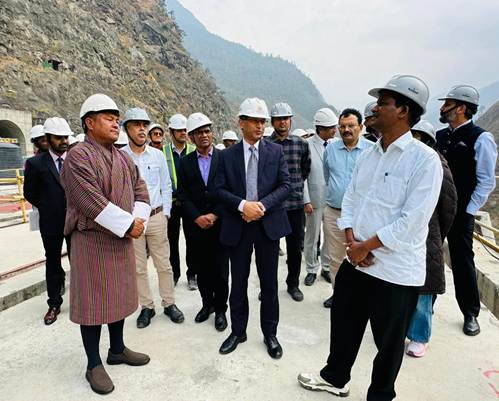
On February 26, the Secretary visited the Punatsangchhu-I Hydroelectric Project, which is under construction, and the recently commissioned Punatsangchhu-II Hydroelectric Project. He held meetings with officials of the Punatsangchhu Hydropower Authority-I and Punatsangchhu Hydropower Authority-II and reviewed the progress of both projects. These projects form part of Bhutan’s major hydropower expansion programme supported by India and are designed to supply electricity for domestic use and export.
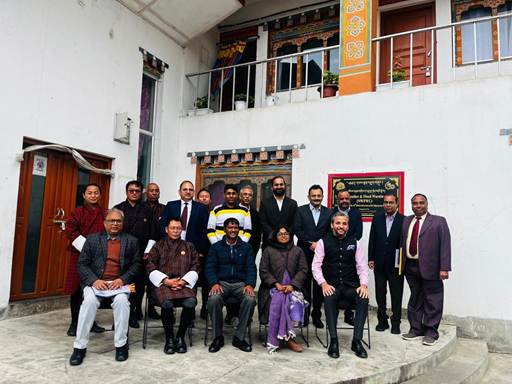
The delegation also visited the National Centre for Hydrology and Meteorology in Thimphu, the 3.5 million litres per day Water Treatment Plant at Chamgang, and the flood monitoring station near Wangdue Phodrang Dzong, which is part of Bhutan’s glacial lake outburst flood early warning infrastructure. These visits highlighted the expanding scope of cooperation from hydropower construction to integrated water management, urban water security and disaster preparedness.
Officials said the primary objective of the visit was to enhance water resources management, strengthen flood forecasting systems and improve climate resilience in shared river basins. The discussions reaffirmed the shared commitment of India and Bhutan to the sustainable and mutually beneficial management of transboundary water resources. India conveyed its continued support for deepening technical and institutional cooperation in this sector.
The engagement builds on a historical relationship shaped by geography and a development partnership. Rivers flowing from Bhutan into India, including the Manas, Sankosh, Raidak and Amo Chu systems, have long linked the two countries while also posing recurring flood risks to downstream regions. Formal cooperation on water and energy took shape after the Treaty of Friendship was signed in 1949 and revised in 2007, which laid the foundation for close bilateral development collaboration.
Hydropower emerged as the central pillar of this partnership from the 1970s onward with projects such as Chukha and later Tala, transforming Bhutan into a major exporter of clean electricity and providing a stable revenue base for its economy. Over time, cooperation expanded from power generation to include flood forecasting and disaster management, particularly after repeated monsoon floods in Assam underscored the importance of upstream data from Bhutanese river basins.
In the early 2000s, the two countries institutionalised real-time exchange of hydro-meteorological data during the flood season, enabling Indian authorities to issue advance warnings to vulnerable downstream populations. The present discussions represent an effort to upgrade those arrangements through denser observation networks, faster digital transmission of data and closer coordination between technical agencies.
Climate change has added urgency to this cooperation. Scientific assessments in the eastern Himalayas point to rising temperatures, shrinking glaciers and higher risks of sudden lake bursts and flash floods. Bhutan’s steep terrain and fragile valleys face increasing threats from extreme weather, while downstream regions in India remain exposed to rapid river surges. Officials from both sides agreed that traditional flood management frameworks must now be adapted to these evolving conditions.
By the conclusion of the visit, both governments reiterated their shared responsibility for managing transboundary rivers and their commitment to cooperation based on data sharing, technical collaboration and environmental safeguards. India reaffirmed its support for Bhutan’s efforts in water resources management and climate resilience, while Bhutan expressed its intention to continue working closely with Indian institutions on flood forecasting and sustainable hydropower development.
The renewed focus on shared rivers underscores how a partnership that began with energy development has expanded into a comprehensive framework for managing Himalayan water systems in an era of climate uncertainty. As rivers continue to flow from Bhutan’s mountains into India’s plains, the two countries have signalled that historical trust and modern science will together guide the next phase of their cooperation.
– global bihari bureau