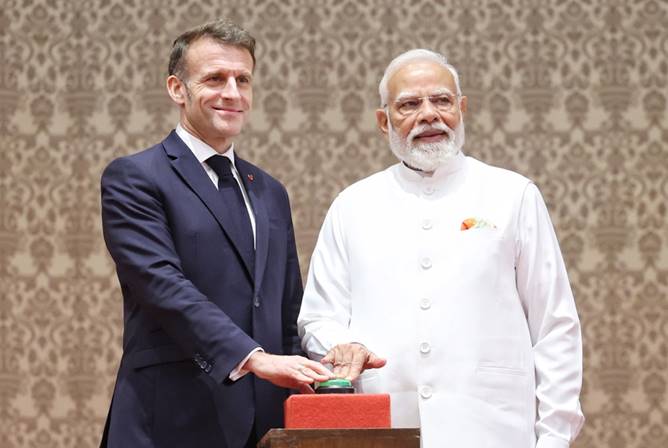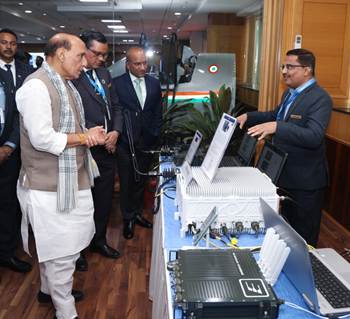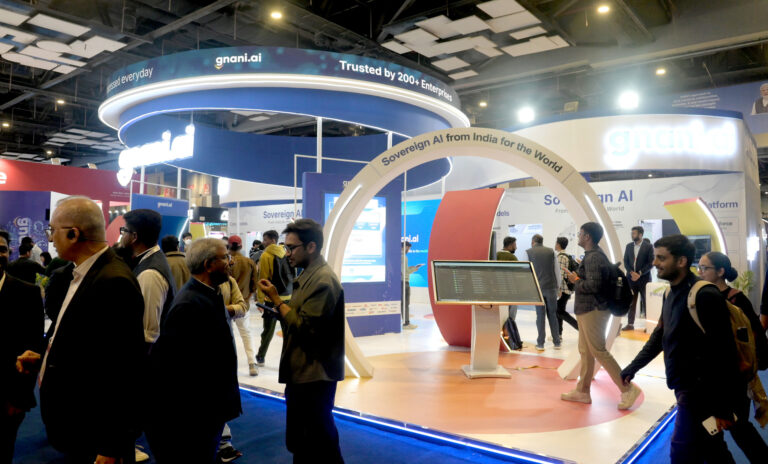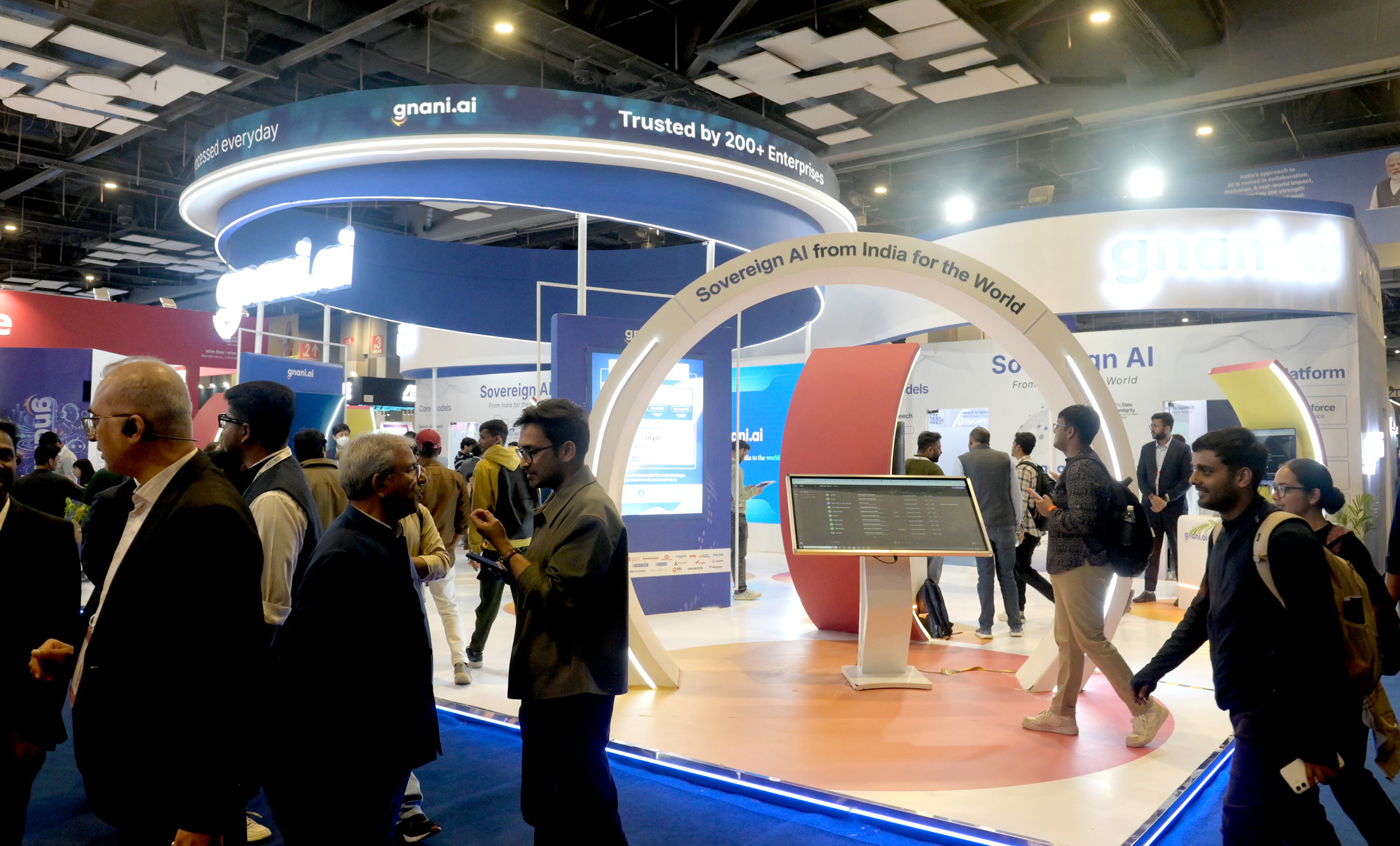
Glimpses of AI Impact Summit - 2026 at Bharat Mandapam, in New Delhi on February 17, 2026.
India AI Summit Signals Scale and Inclusion Push
20,000 GPUs and a New AI Geopolitical Strategy
New Delhi: India’s attempt to shape the global conversation on artificial intelligence (AI) has moved beyond technical debates into the realm of geopolitics and development policy, as the India AI Impact Summit 2026 continues at Bharat Mandapam in the national capital from February 16 to 20, 2026. What began as a technology-focused gathering has increasingly assumed the character of a diplomatic and policy forum in which infrastructure, governance, and social outcomes are being negotiated alongside innovation.
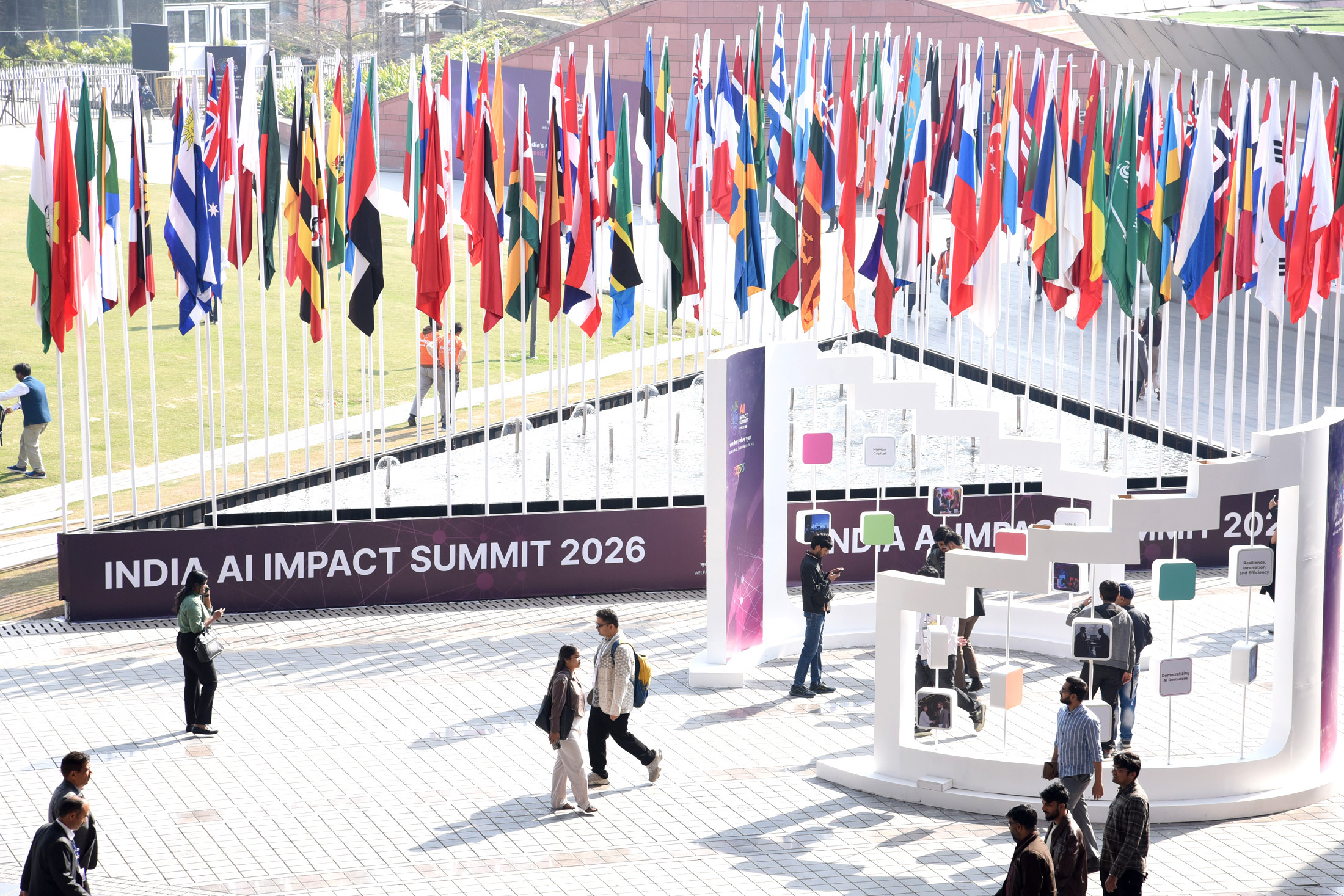
A central development at the Summit has been the announcement that India will expand its national artificial intelligence compute capacity by adding 20,000 Graphics Processing Units in the coming weeks. Union Minister for Electronics and Information Technology Ashwini Vaishnaw said the expansion would take India’s available high-end GPU pool beyond the existing 38,000 units under the IndiaAI Mission and strengthen support for researchers, startups and public institutions building AI applications. Officials described the move as the next phase of India’s AI strategy, aimed at aligning ambition with infrastructure and policy with execution.
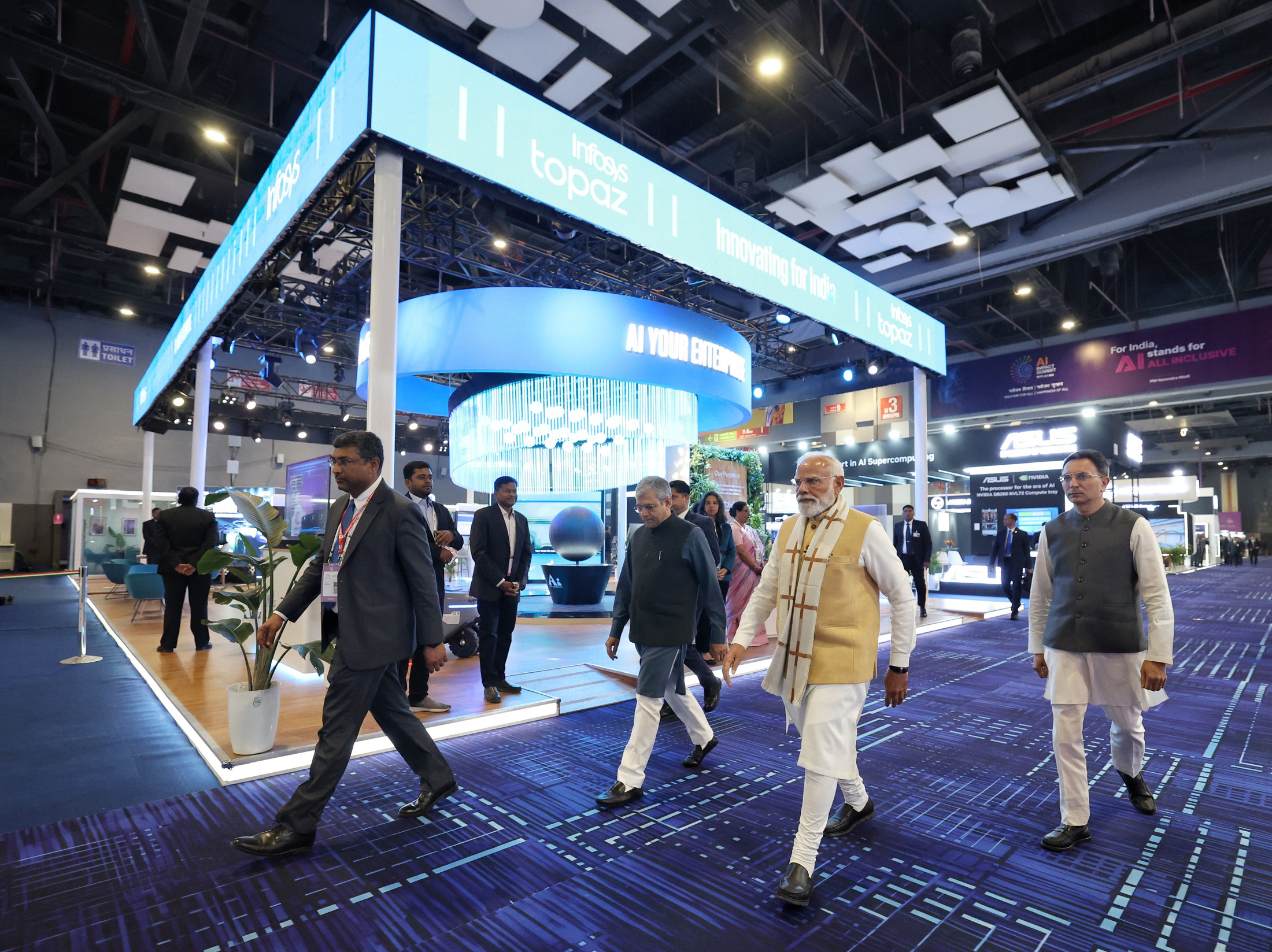
The Summit was inaugurated on February 16 by Prime Minister Narendra Modi, and its theme, Sarvajan Hitaya, Sarvajan Sukhaya (Welfare for All, Happiness for All), has framed discussions around inclusion and public value. Unlike models in many countries where advanced AI infrastructure remains concentrated among a small number of corporations, India’s approach under the ₹10,300 crore-plus IndiaAI Mission has focused on widening access. Existing GPU resources are being made available at a subsidised rate of ₹65 per hour for startups, students, researchers and public institutions, with the stated objective of democratising foundational AI resources such as compute power, datasets and model ecosystems so that innovation is driven by ideas rather than capital alone.
The Summit has drawn confirmed participation from several heads of state and government alongside more than 60 ministers and around 500 global AI leaders, making it one of the largest international political gatherings focused exclusively on artificial intelligence. Emmanuel Macron and Aleksandar Vučić have already arrived in New Delhi and participated in early sessions, while Luiz Inácio Lula da Silva is en route and expected to attend. Leaders and delegations from Estonia, Bhutan, Croatia, Finland, Greece, Spain, Slovakia, Switzerland, Mauritius, the Netherlands and the United Arab Emirates are scheduled to arrive as the Summit progresses, along with senior-level representatives from Bolivia, Guyana, Seychelles and Liechtenstein. As delegations assemble through the week, the gathering is evolving from a technology conference into a diplomatic platform where questions of sovereignty, regulation and development priorities are being debated alongside AI policy.
A notable political interpretation of the Summit has come from President Vučić, who, in a commentary written on his arrival in Delhi, and shared by Indian Prime Minister Modi, described the gathering as placing India at the centre of the emerging global discourse on artificial intelligence. He linked the Summit’s philosophy to Prime Minister Modi’s ambition to democratise access to new technology and argued that AI must not become the preserve of a privileged few nations or corporations. Framing India as a bridge between advanced economies and the Global South, he suggested that the emphasis on inclusion, pluralism and shared development reflects India’s own experience of managing diversity while pursuing technological modernisation. His intervention added a distinctly geopolitical layer to the proceedings, presenting the Summit not only as a venue for announcing infrastructure investments such as GPU expansion but also as a forum where norms around access, regulation and shared benefit are being shaped.
Union Minister Ashwini Vaishnaw characterised artificial intelligence as a driver of what he termed the fifth industrial revolution, with implications across agriculture, healthcare, education, manufacturing, governance and climate action. He said India was not observing this transformation from the sidelines but actively shaping its trajectory. India’s sovereign AI models have been highlighted as evidence of this shift. Several models showcased at the Summit have been benchmarked against leading international systems and rated higher across multiple parameters, which officials described as competitive performance rather than incremental gains. Stanford University has ranked India among the top three AI nations globally, reinforcing this perception.
Sustainability has been integrated into discussions of scale. Officials noted that more than 50 per cent of India’s power generation capacity now comes from clean sources and that research is underway to reduce the energy and water footprint of AI data centres, with emerging innovations expected to lower power consumption by up to 35 per cent. Semiconductor development under Semiconductor 2.0 has also been identified as a strategic priority, with expectations that at least 50 deep-tech startups will emerge from current design-led innovation efforts.

Public participation has been a visible feature of the Summit. On the first day, more than 2.5 lakh students across the country took a pledge to use artificial intelligence for responsible innovation, an initiative submitted for Guinness World Records recognition. Officials said this was intended to embed ethical awareness among young users of emerging technologies and link technological enthusiasm with social responsibility.
Investment momentum has followed the infrastructure push. The Minister expressed optimism that more than USD 200 billion could flow into India’s AI ecosystem over the next two years, with venture capital firms committing funds across all five layers of the AI stack, from foundational models to large-scale applications. Parallel efforts are underway to expand reskilling and upskilling programmes and reform curricula in partnership with the Ministry of Education and AICTE.
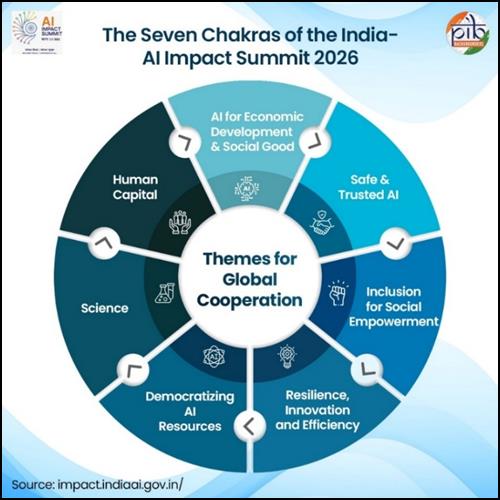
The intellectual framework of the Summit is structured around three Sutras — People, Planet and Progress — which emphasise dignity, sustainability and equitable distribution of benefits. These principles are translated into seven Chakras guiding policy priorities, including Human Capital, Inclusion for Social Empowerment, Safe and Trusted AI, Resilience and Efficiency, Science, Democratising AI Resources, and AI for Economic Growth and Social Good.
This emphasis on outcomes has been reflected in the launch of six sectoral AI Impact Casebooks documenting more than 170 deployed and scalable AI innovations across health, energy, gender empowerment, education, agriculture and accessibility. High-impact panel discussions have examined how these principles and proven models can be aligned with sector-specific realities. RailTel Corporation of India Ltd curated sessions on AI-powered public health and inclusive healthcare delivery, while another session titled “AI in Governance: Revolutionising Government Efficiency” brought together global researchers and policymakers to stress rigorous evaluation and responsible deployment over purely experimental initiatives.
Labour markets and employability have also featured prominently. Policymakers, industry leaders and educators discussed the shift from narrow technical skills to human-led capabilities such as adaptability and creativity, with India’s demographic profile cited as an advantage in managing this transition. Global experts warned that international coordination would be essential to ensure that access to AI does not become a new source of inequality.
The second day of the Summit highlighted the AI for ALL: Global Impact Challenge, a flagship initiative of the IndiaAI Mission implemented with Startup India and the Digital India Bhashini Division. The Challenge invited deployable innovations across urban infrastructure, agriculture, climate, healthcare, education and financial inclusion. Hundreds of submissions were assessed through a multi-stage process, with the top 10 solutions ranging from health technology platforms and climate-smart lending tools to conversational AI for mental health and soil intelligence systems. Finalists will present their work at the Summit’s Grand Finale and Awards Ceremony, with winning teams eligible for financial incentives of up to ₹2.50 crore and structured ecosystem support.
Parallel initiatives beyond the Summit venue have underlined the breadth of India’s AI strategy. Union Minister for Agriculture and Farmers’ Welfare and Rural Development Shivraj Singh Chouhan launched the AI-based Bharat VISTAAR scheme in Jaipur, Rajasthan, alongside Chief Minister Bhajanlal Sharma. The system provides farmers with agriculture-related information through a multilingual conversational advisory service accessible via a dedicated helpline. It integrates data from AgriStack, ICAR, IMD, mandi price systems and government schemes into a single digital platform and links with a Farmer Identity Card designed to unify access to programmes such as the Pradhan Mantri Fasal Bima Yojana and the Soil Health Card.
Telecom infrastructure has been presented as another foundation of India’s AI ecosystem. Minister of State for Communications and Rural Development Pemmasani Chandrasekhar said connectivity is central to technological leadership, noting that broadband subscribers have increased from 6 crore in 2014 to about 100 crore in 2025, with average monthly mobile data consumption exceeding 24 GB per user. Fibre deployment has crossed 42 lakh route kilometres, and India has completed one of the fastest 5G rollouts globally. AI-driven security tools such as the Digital Intelligence Platform, the ASTR tool and the Financial Fraud Risk Indicator were cited as having prevented fraudulent transactions worth over ₹1,400 crore.
Evidence-based governance has emerged as another key theme. In the session “AI in Governance: Revolutionising Government Efficiency,” researchers and policymakers emphasised rigorous scientific validation before deploying AI systems at scale, particularly in beneficiary identification and resource allocation. Studies from Togo were cited to show improvements in food security and mental health using machine learning-supported targeting, alongside limitations such as model drift. Officials observed that sectors such as banking and finance have advanced faster due to structured data, while education and citizen services face greater complexity.
Discussions on sovereign AI focused on the need for indigenous models adapted to Indian languages and contexts, resilient domestic infrastructure and long-term research ecosystems. Speakers stressed that sovereignty in AI implies control over design, deployment and governance to address real challenges in healthcare, education, agriculture and financial inclusion.
As the Summit continues through the week, the addition of 20,000 GPUs has emerged as its defining milestone. Alongside infrastructure expansion, parallel announcements in agriculture, telecom, traditional medicine, labour policy and governance indicate a broad-based strategy that links artificial intelligence with welfare, productivity and inclusive growth. Rather than treating AI solely as a technological race, India is framing it as a question of development policy and global governance, positioning itself not only as a user of advanced systems but as a country seeking to shape how artificial intelligence is deployed, regulated and shared in the years ahead.
– global bihari bureau