India Broadens Trade Diplomacy as Talks Advance in Latin America and New Zealand
New Delhi: Amid an evolving global trade landscape and mounting pressure to secure industrial inputs and dynamic markets, India has this week taken concrete steps in two geographically distinct regions. In Latin America (LatAM), it completed advanced rounds of negotiations with Peru and Chile; in New Zealand, Commerce Minister Piyush Goyal engaged with business and government leaders to build connectivity and services‑led cooperation. The timing reflects more than routine diplomacy: it signals a calibrated push to align India’s trade outreach with strategic domestic priorities in mining, manufacturing, services and supply‑chain diversification.
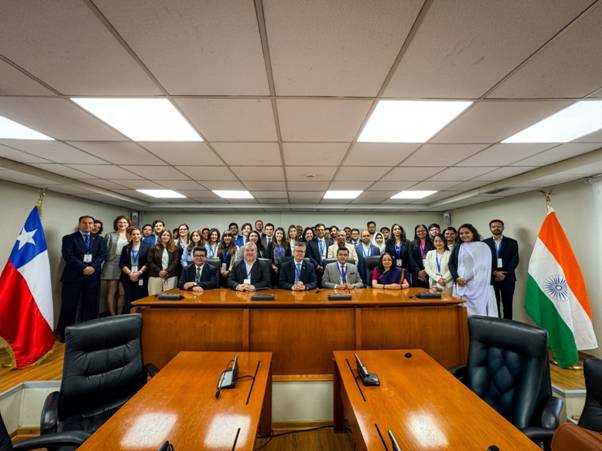
In the Peruvian capital of Lima, from November 3 to 5, 2025, India and Peru conducted the ninth round of negotiations on a proposed bilateral trade agreement. The agenda this round spanned trade in goods and services, rules of origin, technical barriers to trade, customs procedures, dispute settlement and critical minerals. The Indian delegation was led by Joint Secretary and Chief Negotiator Vimal Anand, supported by India’s Ambassador to Peru Vishvas Vidu Sapkal. On the Peruvian side, the closing session was attended by Minister of Foreign Trade and Tourism Teresa Stella Mera Gómez and Vice Minister César Augusto Llona Silva. In their closing remarks, both countries pledged to hold inter‑sessional meetings to resolve remaining issues, ahead of the next formal round scheduled for New Delhi in January 2026.
For India, the significance of the Peru talks lies not only in tariff lines but in broader industrial strategy. Peru is among the world’s important exporters of copper, gold and other minerals; in 2024, India’s imports from Peru stood at approximately US$4.69 billion, while India’s exports to Peru were around US$933 million. The trade balance is sharply tilted in Peru’s favour, which underscores the resource‑import dependence India has in this corridor. Indian exports to Peru continue to include vehicles, pharmaceuticals, machinery and textiles. The negotiating agenda—covering rules of origin, customs procedures and critical minerals—not only reflects standard trade architecture but signals India’s interest in anchoring supply‑chain resilience into these bilateral frameworks.
A few days earlier, between October 27 and 30, 2025, in Santiago, Chile and India held the third round of negotiations for a Comprehensive Economic Partnership Agreement (CEPA). The talks covered trade in goods and services, investment promotion, rules of origin, intellectual property rights, technical barriers to trade, sanitary and phytosanitary measures, economic cooperation and critical minerals. The governments reaffirmed their shared objective of a time‑bound conclusion to the CEPA, aimed at broadening market access and strengthening supply‑chain resilience. According to publicly available data, in FY 2023‑24, India’s exports to Chile were ca. US$1.18 billion, while imports from Chile were about US$1.51 billion; preliminary FY 2024‑25 figures indicate exports at around US$1.15 billion and imports at US$2.60 billion. The widening import side, particularly linked to minerals and raw materials, reinforces the pattern seen in Peru: India is engaging these Latin American economies not simply as export markets but as mineral‑resource partners and potential value‑chain collaborators.
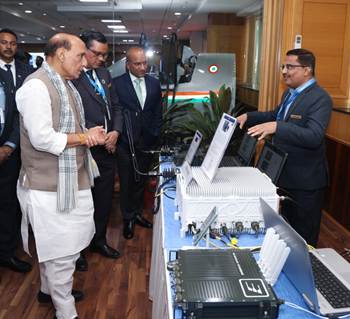
At the same time, India’s engagement with New Zealand this week adds a complementary dimension to its trade diplomacy. Minister Piyush Goyal, while on an official visit, met the CEO of Air New Zealand, Nikhil Ravishankar, to discuss connectivity and tourism synergies, emphasising India’s rapidly growing aviation sector and potential mutual gains in air services. In Rotorua, Mayor Tania Tapsell welcomed the minister, and at the Te Puia cultural centre, he participated in a Māori Pōwhiri ceremony in the presence of New Zealand’s Trade Minister Todd McClay. Subsequently, he co‑chaired an India–New Zealand CEOs Roundtable with Minister McClay, bringing together business executives from sectors such as technology, agriculture, education, clean energy, tourism and sustainability. According to New Zealand’s foreign trade ministry, bilateral trade with India stood at NZ$3.14 billion (approx US$1.9 billion) for the year ended December 2024, with New Zealand exports to India around NZ$718 million (≈US$430 million). While the scale remains modest compared to India’s trade with large partners, the engagement signals India’s ambition to deepen services‑led exports, connectivity and technology partnerships, rather than remain confined to goods‑trade intensification alone.
To appreciate why these engagements merit close attention, it is necessary to situate them within India’s broader trade architecture and current global economic context. India’s trade with Latin America and the Caribbean (LAC) region stood at US$35.73 billion in 2023‑24, with exports of US$14.50 billion and imports of US$21.23 billion. While this represents growth, the absolute magnitude remains small relative to India’s total trade volume and export ambitions. India’s trade strategy has long proclaimed diversification beyond Asia‑Pacific, Europe and North America; yet historically Latin America’s share in Indian trade has been limited by distance, logistical costs, regulatory heterogeneity and competition from other large buyers.
Similarly, India’s trade with New Zealand, though steadily increasing, remains within the ~US$1–2 billion range, underscoring that while dialogues may be strategic, the baseline is modest. The timing of these initiatives—negotiations entering deep technical chapters and ministerial visits combining cultural diplomacy with business forums—points to more than mere continuity: it indicates a second phase of trade diplomacy, where India seeks not simply more partnerships but partnerships aligned with industrial and resource imperatives.
The “why now” question is central. Global supply‑chain disruptions post‑pandemic, rising demand for clean‑energy minerals, and geoeconomic realignments (such as shifts in US–China trade relations) are all prompting India to recalibrate its trade exposures. For instance, India’s increasing dependency on imports of copper concentrates is projected to reach between 91% and 97 % by 2047. Latin American economies such as Peru and Chile, with rich mineral endowments and access to Pacific‐based logistics, thus emerge as strategic partners rather than marginal trade options. On the services and connectivity side, India’s growth in aviation, tourism, digital services and technology demands expanded partnership beyond traditional goods‑export paths; New Zealand offers regulatory maturity, trust‑based business ecosystems and sectors in which Indian services can scale. The week’s simultaneous Latin America and Indo‑Pacific engagements reflect this dual logic: develop resource‑rich partnerships and cultivate high‑value services/technology linkages in tandem.
The outcomes of this week’s diplomacy, while not yet crystallised into signed treaties, carry important markers. The India–Peru talks show movement into specialised negotiations around critical minerals and dispute resolution, the India–Chile CEPA round signals that trade discussions are being reframed around supply chains and investment, and the New Zealand visit demonstrates that India’s trade diplomacy now leans heavily on services, connectivity and the business diaspora rather than just merchandise flows. Each of these strands is significant in its own right, but together they present a networked vision of trade strategy rather than a series of ad‑hoc initiatives.
Nevertheless, the structural challenges remain substantial. In both Peru and Chile, India’s trade balance is sharply negative. In 2024, imports from Peru rose to US$4.69 billion while exports to Peru remained under US$1 billion. In Chile, imports in FY2024‑25 jumped to US$2.60 billion while exports hovered near US$1.15 billion. Unless India succeeds in boosting its value‑added exports and integrating into Latin America’s value chains, the risk is that deeper engagement simply augments import dependence rather than export-led growth. In New Zealand’s case, while services and connectivity are appealing sectors, geographic distance and market size limit near‑term trade gains; Indian exporters must build a credible presence, overcome regulatory segmentation and scale beyond niche goods or services.
In value‑judgement terms, India appears to be making a strategically sound shift. Aligning trade diplomacy with resource security (Latin America) and service‑technology growth (New Zealand) shows a mature commercial posture. That said, a strategy without execution may leave India exposed. Previous trade agreements have not always delivered their anticipated benefits: for instance, the India–UAE CEPA delivered rapid growth, but India’s trade with ASEAN under its Free Trade Agreements (FTAs) has not yielded the export surge once anticipated. Therefore, what matters now is whether India can translate these dialogue rounds into tangible market access, investment flows, supply‑chain integration and increased exports—not just bigger imports.
The sequencing of engagements this week—Latin America and the Indo‑Pacific in parallel—also deserves recognition. It shows that India is not solely focused on one geography; it is constructing a multi‑continental trade architecture. In doing so it not only seeks market diversification but also hedges against regional disruptions, builds alternative supply angles and embeds its outreach within varied economic systems. This shift bears watching because global trade is no longer just about bilateral volume but about resilience, supply‑chain architecture, technological value‑chains and geopolitical alignment.
In conclusion, India’s engagements this week offer evidence of a transition: from trade diplomacy that largely sought incremental goods‑market growth to one that integrates strategic resources, services, linkages, investment partnerships and global diversification. While many of the actual agreements are yet to be finalised, the movement is clear. The real test will lie in conversion: whether these negotiations yield frameworks that reduce India’s supply‑chain vulnerabilities, increase its export share in resource‑rich markets, embed its firms in new value‑chains and generate sustainable trade‑growth in services and technology. The week’s diplomacy thus stands as a significant waypoint in India’s evolving trade strategy—neither the final destination nor a mere repeat of past outreach, but a purposeful step into a deeper phase of economic engagement.
– global bihari bureau