Missile Mobility and Fighter Contract Mark Defence Push
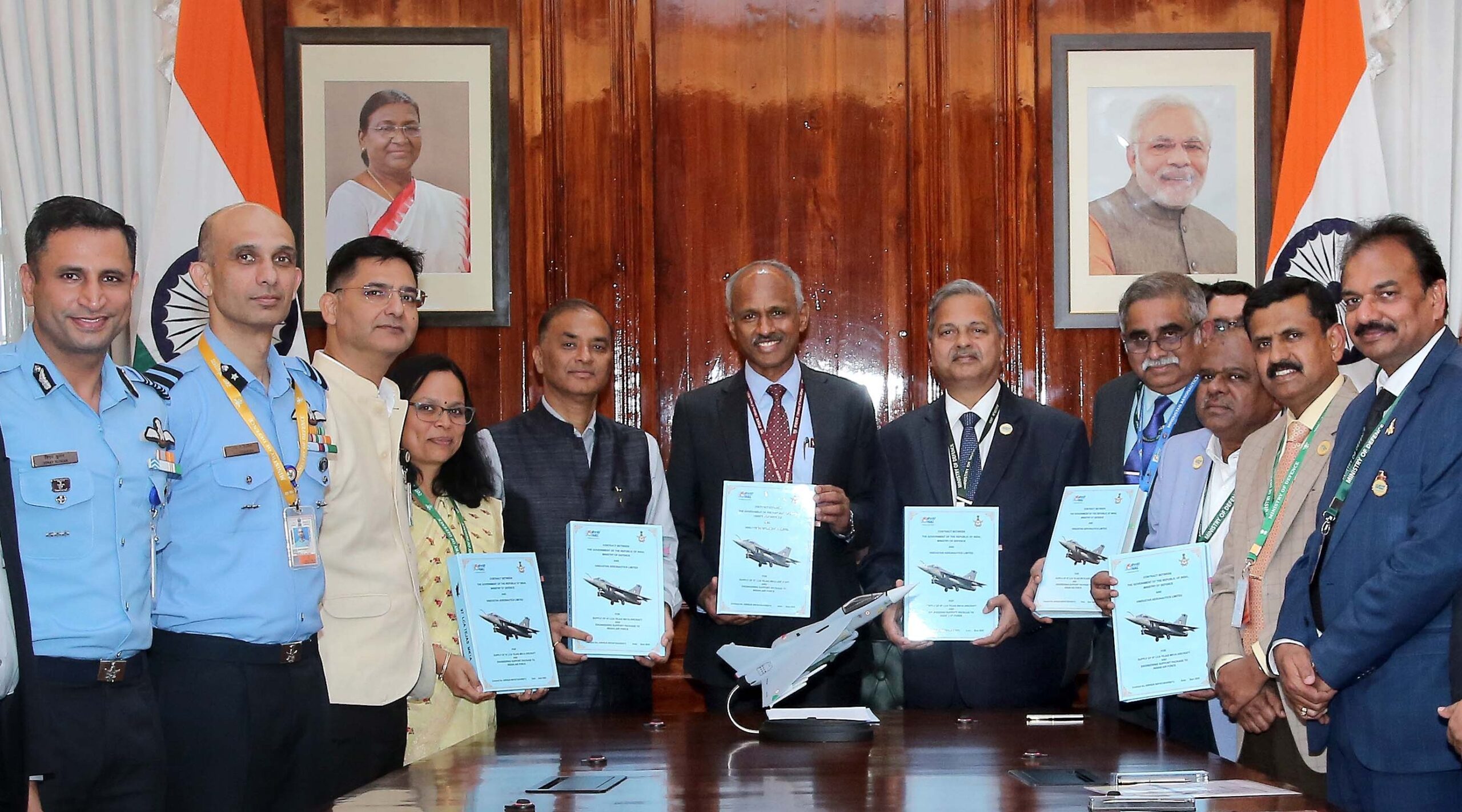
New Delhi: India recorded two significant advances in defence capability this week, combining progress in missile deployment flexibility with the expansion of indigenous fighter production. On September 24, the Defence Research and Development Organisation (DRDO), working with the Strategic Forces Command (SFC), successfully launched the Intermediate Range Agni-Prime missile from a rail-based mobile launcher. A day later, on September 25, the Ministry of Defence signed a Rs. 62,370 crore contract with Hindustan Aeronautics Limited (HAL) for the procurement of 97 Light Combat Aircraft (LCA) Mk1A for the Indian Air Force.
The Agni-Prime trial marked the first use of a rail-based launcher under a full operational scenario. Unlike silo-based or road-mobile systems previously used in India’s missile programme, the new launcher can move across the rail network without preconditions, giving it cross-country mobility and a shorter reaction time. It operates with independent launch capability supported by communication and protection systems, and the missile — designed with advanced features and a range up to 2,000 km — completed its trajectory as planned.
The road-mobile Agni-P has already been inducted after earlier trials. The addition of a rail-based variant increases dispersal options, making missile forces less dependent on fixed locations and reducing predictability. Senior scientists of DRDO and officers of the SFC witnessed the test. Defence Minister Rajnath Singh congratulated the teams, stating that the test has placed India in the group of select nations with canisterised rail launch capability. Secretary Defence R&D and DRDO Chairman also complimented all participants for the achievement.
The following day, the Ministry of Defence signed a contract with HAL for 97 LCA Mk1A aircraft, including 68 single-seaters and 29 twin-seaters, with deliveries scheduled between 2027–28 and 2033–34. This order follows an earlier 2021 contract for 83 LCA Mk1A aircraft, and both programmes are part of the phased build-up of the Tejas fleet, which has already seen the Mk1 variant inducted.
The Mk1A is the most advanced Tejas configuration yet. Compared to the 2021 order, the new contract adds 67 items, raising indigenous content to over 64 per cent. Major indigenous systems include the UTTAM Active Electronically Scanned Array (AESA) radar, the Swayam Raksha Kavach protection suite, and locally designed control actuators. The project involves about 105 Indian vendor companies and is expected to generate approximately 11,750 jobs per year during production.
Placed under the ‘Buy (India-IDDM)’ category of the Defence Acquisition Procedure 2020, the contract continues the government’s emphasis on indigenous design, development and manufacturing. For the Air Force, the expanded order sustains fighter production lines through the end of the decade and provides a platform to replace ageing fleets with an indigenous alternative.
Taken together, the Agni-Prime rail-mobile launch and the HAL fighter contract highlight two tracks of capability development. The missile launch adds a new basing mode alongside road-mobile systems already inducted, while the aircraft deal builds on the 2021 Tejas order to scale up production and indigenisation. Both developments reflect a pattern where strategic forces gain in survivability and flexibility, while conventional air power is strengthened through sustained domestic manufacturing.
– global bihari bureau