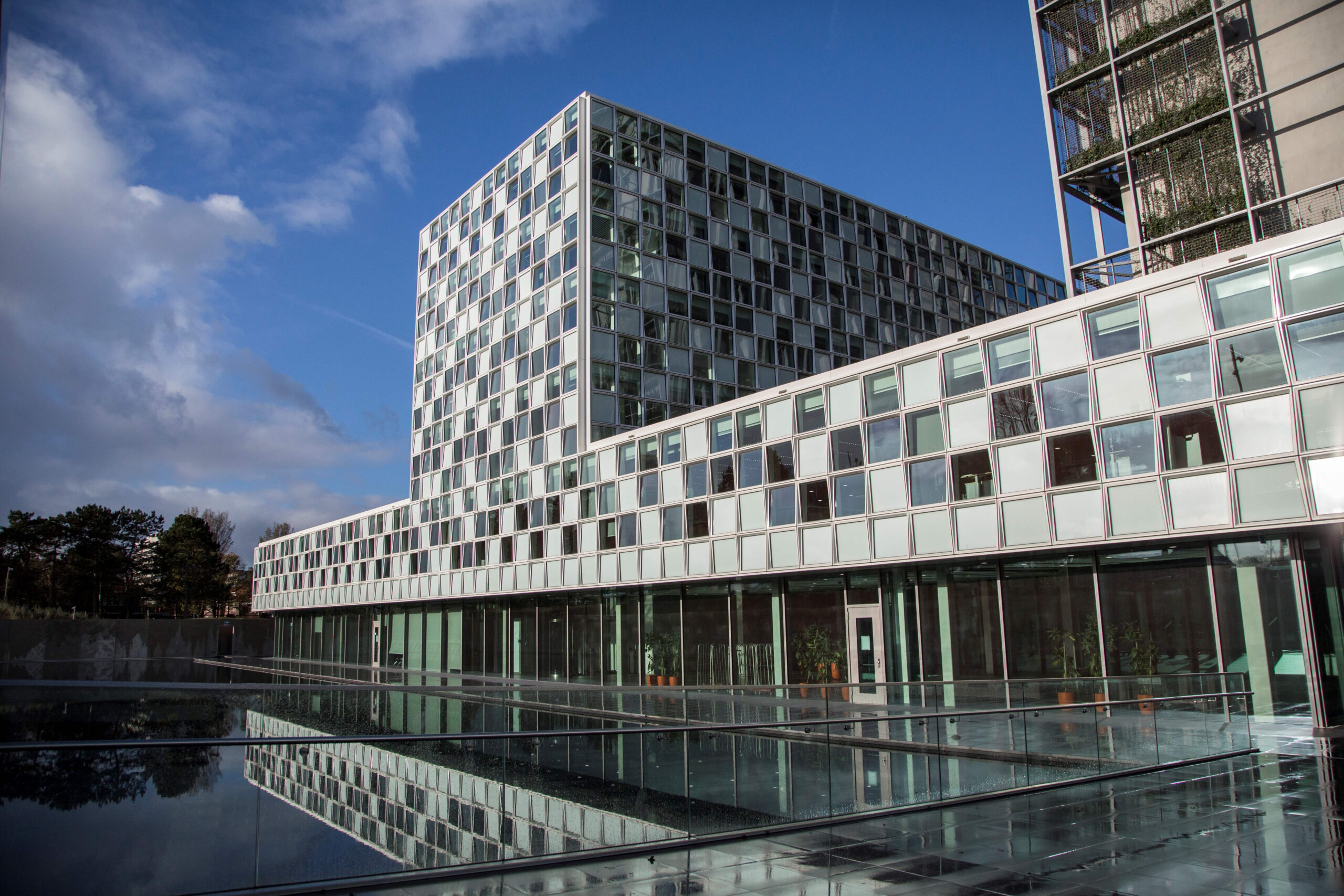
ICC
First new Libya suspect in years arrives before ICC judges
Arrest of El Hishri renews ICC push for accountability in Libya
The Hague: The International Criminal Court (ICC) today confirmed that Libyan national Khaled Mohamed Ali El Hishri is now in its custody, closing a months-long process that began when German authorities arrested him in July 2025 at the Court’s request. His quiet transfer to The Hague on 1 December marks the first arrival of a new suspect in the Libya situation in years, signalling that the Court is not ready to abandon the complex and politically fraught investigations that have dragged on since 2011 with little closure for victims and no shortage of geopolitical resistance.
El Hishri, described by ICC investigators as one of the most senior officials at Mitiga Prison in Tripoli, is alleged to have either committed directly, ordered, or overseen a catalogue of abuses that reads like a roll-call of international crimes: murder, torture, rape and sexual violence. The alleged offences cover the period from February 2015 to early 2020, during which thousands of detainees were reportedly held for prolonged periods in Mitiga—an institution that has become synonymous with arbitrary detention and systematic brutality in the eyes of human-rights monitors. For now, the Court stresses that the charges remain allegations until proven, but the scale of accusations already raises expectations for one of the most consequential Libya-related hearings in years.
His arrest on July 16, 2025, in Germany came after a sealed warrant was issued by the ICC Pre-Trial Chamber on 10 July. Under the Rome Statute, the German authorities retained custody until national legal prerequisites were satisfied, including judicial review under Article 59. Only after those proceedings concluded was El Hishri handed over to ICC custody. An initial appearance hearing will be scheduled in due course, during which judges will confirm his identity, determine the language in which he will follow the proceedings, and ensure he has been fully informed of the allegations and his legal rights. These appearances do little more than set the stage, but they tend to draw global attention precisely because they are usually the only public moments until a confirmation-of-charges hearing much later.
While the ICC’s Registrar Osvaldo Zavala Giler issued the customary thanks to German authorities for their cooperation, the arrest does not mask the fact that the Libyan situation remains one of the most politically sensitive and operationally difficult portfolios ever handled by the Court. Libya is not a State Party to the Rome Statute, and the ICC’s jurisdiction exists only because the United Nations Security Council referred the situation in 2011 during the collapse of the Gaddafi government. That referral, Resolution 1970, was once heralded as the international community’s determination to hold perpetrators accountable no matter where they hid. Fourteen years later, the optimism has eroded into a more cynical recognition that international criminal justice is still entangled in real-world power politics, access constraints, and shifting allegiances among armed groups.
The situation has spawned nine additional public arrest warrants that remain outstanding. These include suspects tied to the violence in Tarhunah, such as Abdelbari Ayyad Ramadan Al Shaqaqi, Fathi Faraj Mohamed Salim Al Zinkal, and others, accused of murder, cruel treatment, torture, sexual violence and outrages upon personal dignity during the so-called “Flood of Dignity” operations. Another warrant is for Osama Elmasry Njeem, alleged to have overseen Mitiga Prison during the same period that forms the focus of the charges against El Hishri. And perhaps most politically charged, Saif Al-Islam Gaddafi remains the most high-profile fugitive — a name that observers have invoked for so many years that it has become shorthand for the frustrations of ICC enforcement and the fragmentation of Libya’s post-revolution power structure.
In May 2025, the Libyan authorities formally accepted ICC jurisdiction over crimes on its territory from 2011 through the end of 2027, a move that ostensibly strengthens the Court’s legal footing but does not guarantee access to suspects, secure investigations, or reliable cooperation in a state still fractured by rival administrations and armed factions. For years, the ICC has been publicly criticised for pursuing Libya while the Security Council itself has never fully resourced the referral. Investigators have been left to navigate a patchwork of security constraints, political resistance, and disinformation campaigns that have complicated witness protection and evidence-gathering. Critics of the Court’s pace argue that justice delayed amounts to justice denied. Defenders counter that the alternative — abandoning the proceedings — would signal that war crimes can be negotiated away.
With El Hishri now in custody, the ICC gains a rare opportunity to move at least one case toward trial in a situation that has seen more legal stagnation than accountability. Yet the broader picture remains unchanged: nine warrants are still unenforced, rival authorities inside Libya continue to jockey for power, and the international community’s appetite for sustained engagement in the country has waned dramatically outside rhetorical commitments. The Court can prosecute only the suspects it can physically apprehend. Germany’s cooperation in this case, while significant, underscores rather than resolves the practical reality that there is no international police force and that arrests depend on states choosing to act.
For the families of detainees whose relatives disappeared into Mitiga Prison, the transfer of a single suspect to The Hague may offer a flicker of possibility that impunity is not absolute. Whether that flicker becomes a meaningful pursuit of justice — or an isolated courtroom spectacle unconnected to accountability on the ground — will depend on whether other states follow Germany’s example. The Libyan situation was once touted as proof that the international community remained determined to stop atrocities. Fourteen years on, the arrest of one man raises a quieter, far more cynical question: whether the world is still watching, or whether accountability in Libya has become an afterthought that only resurfaces when a fugitive crosses the wrong border.
– global bihari bureau