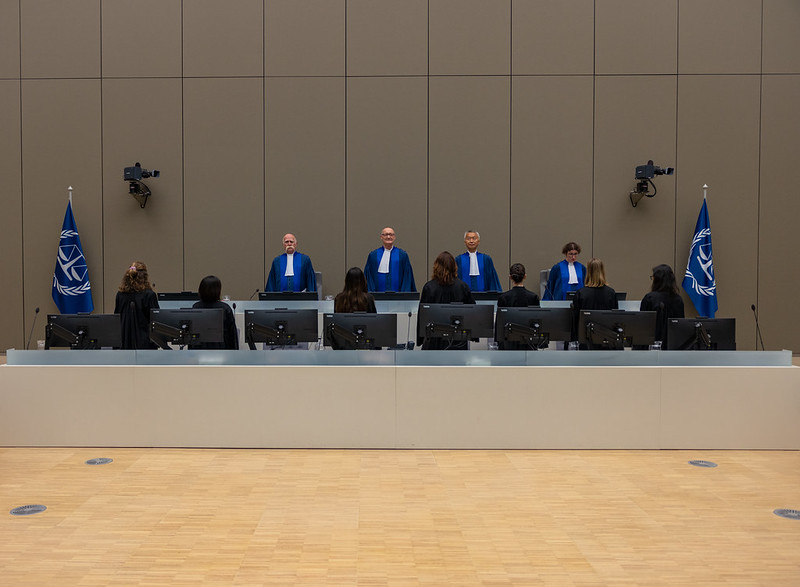
The ICC pronounces judgment in the Yekatom and Ngaïssona case.
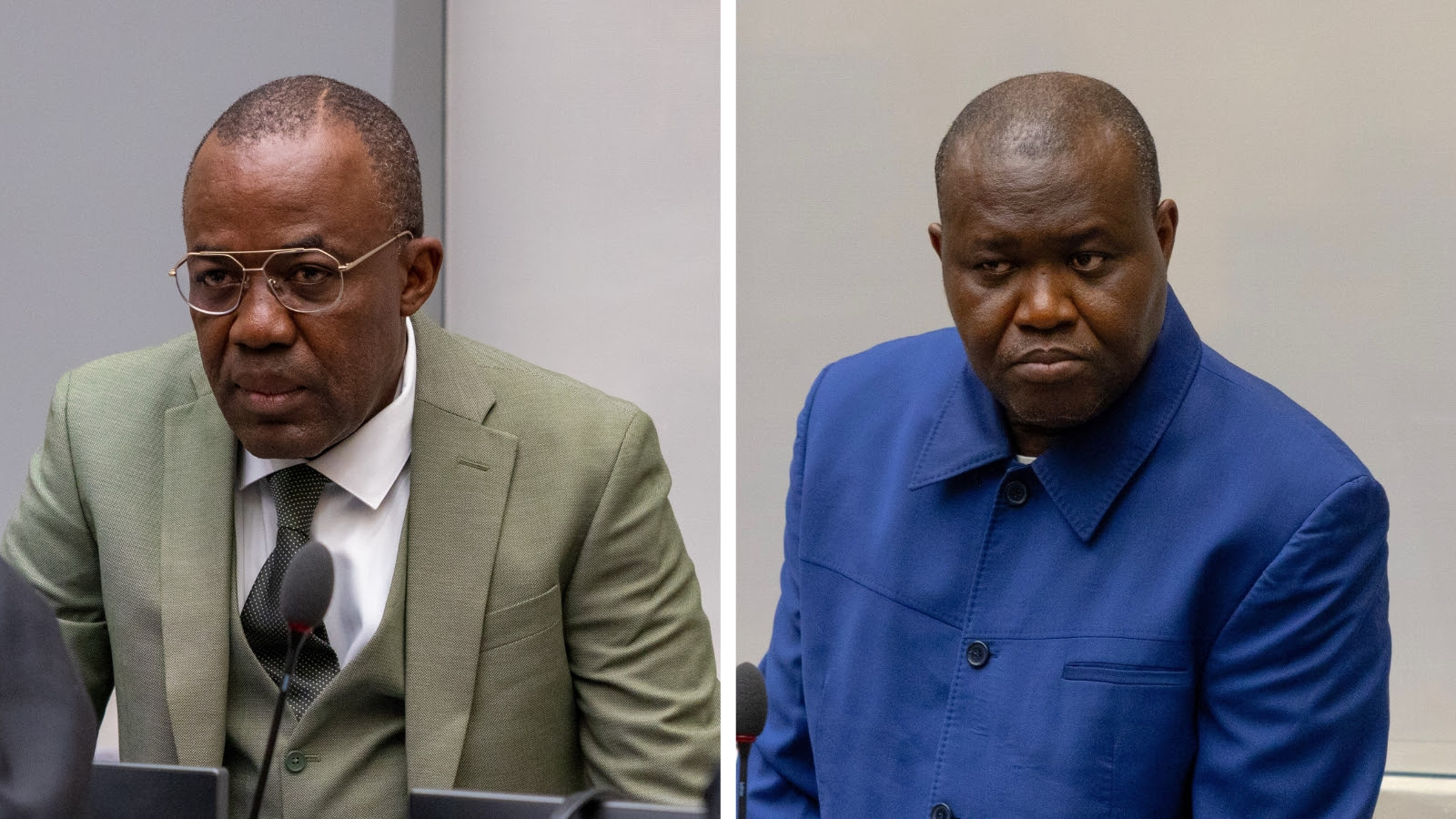
The Hague: Alfred Yekatom, a military commander in the Central African Republic (CAR), and Patrice-Edouard Ngaïssona, a political figure and key coordinator of the Anti-Balaka movement, were today convicted by the International Criminal Court (ICC) for war crimes and crimes against humanity committed between September 2013 and February 2014 in Bangui and western CAR. Trial Chamber V of the ICC, presided over by Judge Bertram Schmitt, sentenced Yekatom to 15 years in prison and Ngaïssona to 12 years, with time spent in detention deducted from their sentences.
“Today’s judgment is a vital recognition of the extensive harm and suffering of the victims and the affected communities of the Central African Republic, and a testament to the courage and resilience of men and women who contributed to manifesting the truth through their testimonies and their cooperation with the ICC,” Deputy Prosecutor Mame Mandiaye Niang said.
“The crimes attributed to the two are serious in all aspects, causing horrific and indelible consequences for the civilian population. This conviction is a strong message from the ICC that those responsible for atrocity crimes under the Rome Statute will be brought to justice and held to account. From the battlefield to the inner circles of power, there can be no impunity for crimes violating the most fundamental tenet of international humanitarian law – the protection of civilians,” Niang added.
The convictions arise from a violent conflict in the Central African Republic between the Seleka, a predominantly Muslim rebel coalition, and the Anti-Balaka, a mostly Christian militia. In August 2012, the Seleka, including fighters from Chad and Sudan, formed to oppose then-president François Bozizé. On March 24, 2013, they seized Bangui, and their leader, Michel Djotodia, declared himself president. The Seleka committed widespread abuses, targeting non-Muslims, particularly Christians, and those associated with Bozizé, spreading fear and chaos across the country.
In response, anti-Seleka groups coalesced into the Anti-Balaka movement, aiming to remove the Seleka and restore Bozizé to power. Yekatom, leading a group with allies like Freddy Ouandjio, known as ‘Cœur de Lion,’ and Habib Beina, commanded Anti-Balaka forces. Ngaïssona, from exile in Cameroon, planned operations and provided financial support, including for the Front pour le retour à l’ordre constitutionnel en Centrafrique (FROCCA), founded with Bozizé in August 2013. The ICC found that both men knew the Anti-Balaka targeted Muslim civilians, perceiving them as collectively responsible for Seleka abuses. This fueled a series of attacks in western part of the Central African Republic, including coordinated assaults on Bangui and Bossangoa on December 5, 2013.
In Bangui, Yekatom’s group attacked the Boeing market at dawn, firing on Muslim traders and killing three, including Hassan Mahamat, as they fled. The group also targeted a mosque, deeply wounding the community. Witness Salehou Ndiaye expressed his grief: “It’s very sad to see the house of God destroyed. When I see it, it brings back all the memories.” The violence drove Muslims like Ndiaye to PK5, a Bangui district that became overcrowded and unsafe, forcing many to flee to neighbouring countries. Ndiaye said, “It’s very difficult to forget,” avoiding his former home to escape painful memories.
In Bossangoa, 300 kilometres north of Bangui, Anti-Balaka fighters, led by Florent Kema and Théophile Ndangba, attacked the Boro neighbourhood, a Muslim area, on the same day. They killed at least 18 people, including Khadidja Adjaro, a taxi driver known as ‘C-17,’ and Salamatou, a Peuhl woman. Homes near the imam’s residence were burned, and thousands fled to École de la Liberté, where cramped, dire conditions prevailed. Witness P-2049, displaced from Bossangoa, said, “I would like to return to Bossangoa, but peace has not been restored. I have no home.” These Muslims were later evacuated to Chad, leaving Bossangoa nearly empty of its Muslim population.
At the Yamwara school in Bangui on December 24, 2013, Yekatom’s fighters detained seven people, including Saint Cyr Lapo N’Gomat, accusing them of being Muslim and linked to the Seleka. The group was threatened with being “skinned like a papaya,” a term implying execution. Saint Cyr was tortured—his toes, fingers, and an ear were cut off—and beaten to death. Witness P-0967 described the terror: “It was clear to us that it meant we would be buried that day.” Yekatom, known as ‘Rombhot,’ later praised the act, calling Saint Cyr a “traitor” and saying they “peeled the papaya.” Ngaïssona was found to have aided these crimes through funding and coordination. By a majority, with Judge Péter Kovács dissenting, Ngaïssona was convicted for aiding the murder and torture of Saint Cyr, as the court found he knew such acts were part of the Anti-Balaka’s widespread attack.
In January 2014, after Djotodia resigned on January 10, Yekatom’s group advanced along the PK9-Mbaïki road, capturing villages like Sekia, Ndangala, Bimon, Bossongo, and Pissa. They set up checkpoints to target Muslims, forcing over 3,000 to flee to Mbaïki, where they faced hunger and fear. Witness Diakité Aboubakar recalled, “Life was very difficult. Women were scared to go to the market” as Anti-Balaka patrolled with machetes. On February 6, Chadian forces evacuated many to Chad. On February 28, Yekatom’s men killed Djido Saleh, Mbaïki’s Muslim deputy mayor, mutilating his body in a brutal attack. Yekatom called it an “accident” but took no responsibility, despite offering to cover burial costs.
The ICC emphasised that the conflict was not initially religious. Muslim and non-Muslim witnesses testified to peaceful coexistence before the violence. However, leaders like Yekatom and Ngaïssona exploited religious divides for political and economic gain. Yekatom was convicted of murder, torture, cruel treatment, attacks on civilians, forcible transfer, deportation, attacking a religious building, imprisonment, other inhumane acts, and persecution. Ngaïssona was found guilty of aiding crimes, including murder, deportation, torture, cruel treatment, property destruction, imprisonment, other inhumane acts, and persecution, though cleared of charges related to a rape in Bossangoa, pillaging, and attacking a religious building there. A charge against Yekatom for conscripting child soldiers was dismissed by the majority, with Judge Chang-ho Chung dissenting, due to insufficient reliable evidence.
The judges, including Schmitt, Péter Kovács, Chang-ho Chung, and alternate Judge Beti Hohler, weighed the crimes’ severity and victims’ suffering. Witness P-1666, forced from Mbaïki, said, “We had to abandon everything. It was very hard to bear.” The verdict holds Yekatom and Ngaïssona accountable for a conflict that displaced thousands and left lasting scars, offering justice to those who suffered in the Central African Republic.
– global bihari bureau