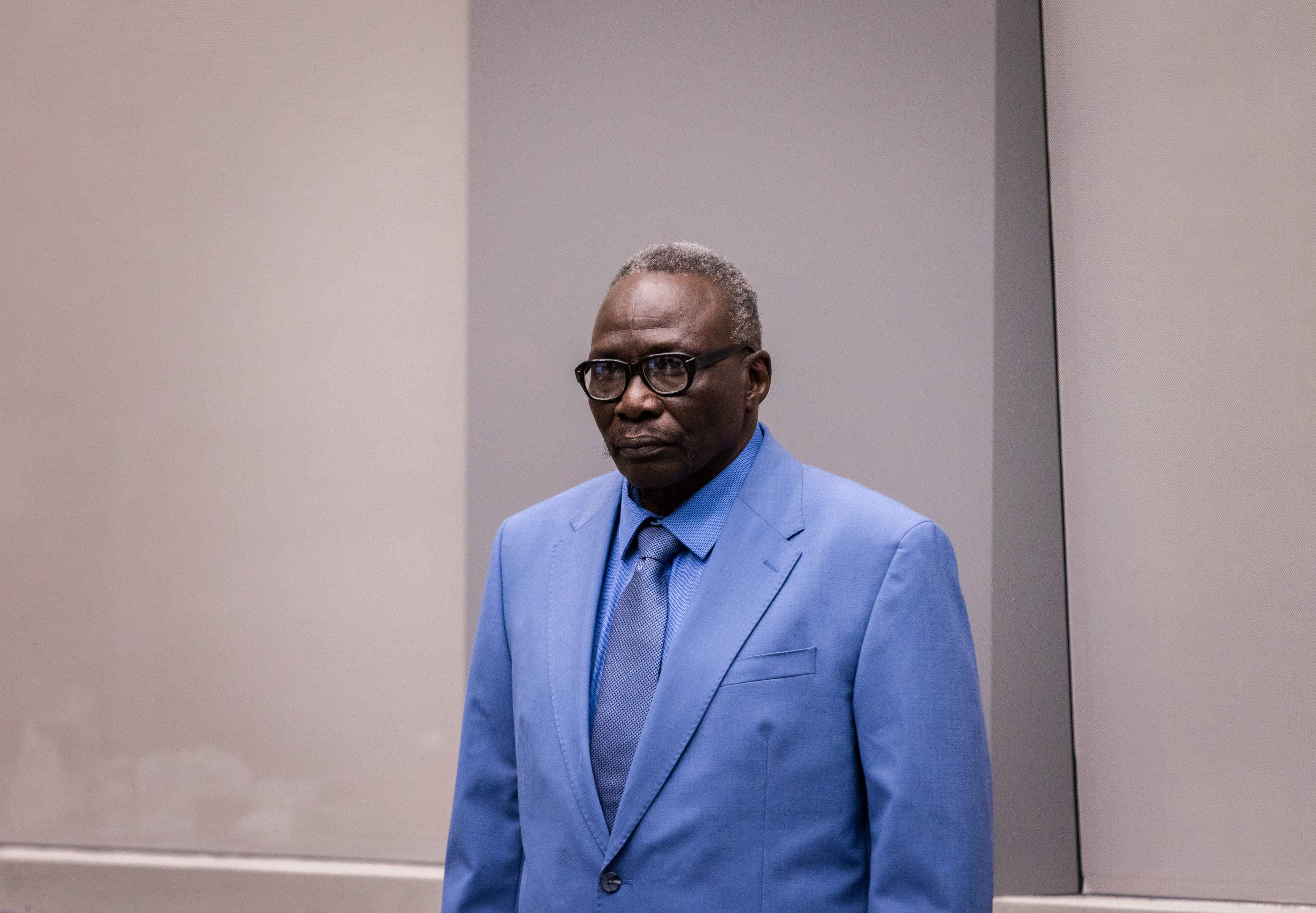
Ali Kushayb
The Hague: The International Criminal Court (ICC) today sentenced Ali Muhammad Ali Abd-Al-Rahman, known as “Ali Kushayb,” to 20 years in prison for atrocities committed in Darfur between August 2003 and April 2004, rejecting the Prosecution’s request for a life term but concluding that the crimes were of exceptional gravity and carried “massive and lasting” impact on the Fur civilian population. The sentence, handed down today by Trial Chamber I, follows the Court’s October judgment convicting Abd-Al-Rahman on 27 counts of crimes against humanity and war crimes and marks the first ICC sentencing of a senior Janjaweed commander for the Darfur campaign. The period he has already spent in ICC detention since surrendering on 9 June 2020 will reduce the total time to be served.
The Chamber confirmed that it considered whether life imprisonment was justified and decided against it after individually assessing each offence, imposing sentences for each count and then calculating the single joint sentence required under Article 78(3) of the Rome Statute while avoiding double-punishment for overlapping conduct. Judges found that the statutory ceiling of 30 years or life imprisonment could apply only when justified by extreme gravity and the individual circumstances of the convicted person; in this case, although the crimes were extremely grave, the Chamber exercised sentencing discretion to impose a term of 20 years instead.
The sentencing decision rests heavily on the finding that Abd-Al-Rahman, as a Janjaweed commander, exercised operational authority over systematically planned attacks on villages identified as sympathetic to rebel forces, and that he acted not only through orders but also as a direct perpetrator. The judgment describes a pattern of attacks in Kodoom, Bindisi, Mukjar and Deleig, culminating in the week-long Mukjar and Deleig operations in February–March 2004, in which at least 167 detainees — including boys — were executed after torture and abuse. The Chamber cited evidence that Abd-Al-Rahman used an axe to beat two community leaders to death and that the crimes were carried out publicly, amid gunfire, rape, and beatings, “as blood ran freely in the streets,” according to a victim testimony filed in the record.
The Prosecution sought a life sentence on the basis that all crimes were committed with “unimaginable cruelty,” discriminatory motivation and high intent, including abuse of authority, the defencelessness of victims, and the enduring destruction of community structures. Prosecutors argued that no legitimate mitigating factor applied. Defence lawyers countered that Abd-Al-Rahman’s rank was subordinate, that he acted under pressure, that his age, health and family justified leniency, and that his surrender to the Court, good behaviour in detention and isolated instances in which he allegedly protected civilians should be treated as mitigation.
The Chamber rejected several of these defence arguments outright. Judges ruled that the claim of “subordinate rank” had no basis in the findings on liability, that age and health did not substantially diminish culpability, and that voluntary surrender and good conduct in detention merited only limited weight. Submissions that Sudanese domestic sentencing law should govern the penalty were dismissed as having “no foundation” in ICC law, and the Court reiterated that Article 77 of the Rome Statute exhaustively lists available penalties, making the defence’s use of Sudan’s age-based sentencing exclusions irrelevant. The Chamber reaffirmed that retribution and deterrence are the primary sentencing aims under the Statute and that retribution is not revenge but the international community’s formal condemnation of the crimes.
Victims’ representatives told the Court that their objective was justice rather than retribution, but insisted the sentence must prevent Abd-Al-Rahman’s return to Darfur, describing not only psychological trauma but an ongoing fear of reprisals and direct physical risk if he were released. Lawyers emphasised that the impacts of the attacks endure across generations through displacement, the breakdown of village life, stigma and continuing insecurity.
With sentencing now complete, both the Defence and Prosecution have 30 days to appeal. A separate appeal against the conviction is already underway. Meanwhile, the reparations phase begins. The Chamber has ordered submissions by 4 May 2026 from the Defence, the Common Legal Representative for Victims, the Registry and the Trust Fund for Victims addressing the identification of eligible direct and indirect victims, the types and extent of harm, prioritisation of victims, appropriate modalities of reparations and cost estimates. The Registry has also been instructed to assess Abd-Al-Rahman’s current financial situation, informed by information the Prosecution must transmit by January 12, 2026, signalling that the Court may consider personal liability for reparations if assets can be identified.
Although 1,592 victims are formally participating in the proceedings, a mapping report indicates that many more may qualify as direct or indirect victims eligible for reparations. The Chamber has urged efficiency, noting that the original crimes occurred over two decades ago and that the trial itself — which lasted 134 sitting days over roughly two and a half years — was prolonged partly because the renewed war in Sudan since April 2023 disrupted hearings and witnesses.
For now, the 20-year sentence stands as the ICC’s clearest attribution of criminal responsibility to a Janjaweed commander for the early Darfur campaign. Whether the sentence will survive appeal, whether reparations can be funded, and whether the judgment will affect conditions on the ground in Sudan — still largely beyond international protection — remain unanswered questions beyond the reach of the Court’s ruling.
– global bihari bureau