Photo source: @Osint613
Hurricane Melissa Devastates Caribbean: Death Toll Climbing Across Four Nations
Miami: Hurricane Melissa, the most ferocious cyclone of the 2025 Atlantic hurricane season, has left a grim harvest of destruction across the Caribbean, with at least 36 lives lost in a multifaceted toll that underscores the storm’s relentless reach from Jamaica’s mountainous heartlands to Haiti’s flood-ravaged coasts.
The Category 5 monster, peaking with sustained winds of 175–185 miles per hour, slammed into Jamaica’s southwest near New Hope on October 28 – the strongest hurricane to batter the island since records began in 1851, as affirmed by the Jamaica Meteorological Service and World Meteorological Organization.
As of the United States National Hurricane Center’s 11:00 AM Eastern Daylight Time advisory on 30 October, Melissa has ebbed to a Category 2 hurricane with 100-mile-per-hour winds, its centre churning approximately 150 miles south-southeast of the central Bahamas and surging northeast at 12 knots. Hurricane warnings blanket the southeastern and central Bahamas, where surges up to 7 feet and tropical-storm-force gales spanning 200 miles threaten low-lying cays like Long Island and Crooked Island into the evening, while Bermuda braces for impacts late on 30 October. Relief convoys race against lingering rains, as the death tally – broken down to three in Jamaica during preparations and four bodies recovered post-landfall, 28 in Haiti from drowning and landslides, and one in the Dominican Republic from floodwaters – swells amid fears of underreported casualties in Cuba’s remote eastern provinces.
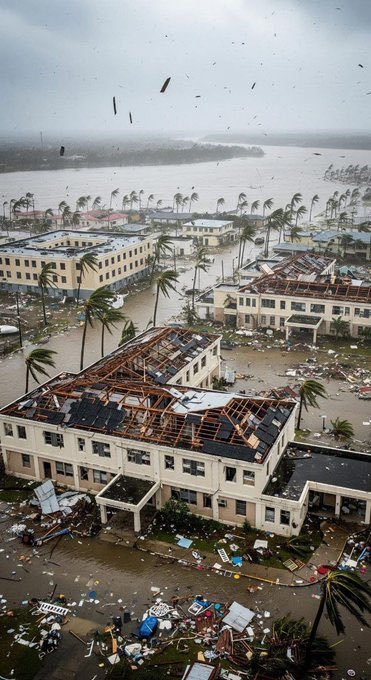
The storm’s Caribbean odyssey ignited on October 28 with a punishing 36-hour vigil over Jamaica, where Melissa’s sluggish 8-mile-per-hour crawl – a stamina rivalled by only Hurricanes Irma (2017), Ivan (2004), Mitch (1998), and David (1979) – amplified its fury, saturating highlands with up to 40 inches of rain per National Hurricane Center forecasts and unleashing gusts that pulverised hospitals like Savanna La Mar Public General Hospital, stripping entire roofs and scattering debris across Westmoreland. Power grids buckled, plunging more than 500,000 customers – over 70 per cent of Jamaica Public Service subscribers – into darkness, while internet connectivity plummeted to 30 per cent of normal levels, as tracked by NetBlocks. In St Elizabeth Parish, the eyewall’s epicentre, the breadbasket turned to a quagmire: cows foraged amid dangling wires, banana and coffee fields lay flattened, and flash floods submerged Santa Cruz and Alligator Pond, where drone imagery captured coastal resorts in Montego Bay reduced to skeletal frames, one proprietor lamenting the erasure of “decades of hard-won progress in a single night.” Hundreds of roads vanished under landslides, isolating rural enclaves and complicating early assessments.
Prime Minister Andrew Holness proclaimed Jamaica a disaster area on October 29, rousing the Jamaica Defence Force for non-stop patrols and inaugurating a national donation portal to marshal recovery funds. The human cost in Jamaica crystallised in a provisional ledger: three deaths during pre-storm preparations – attributed to accidents amid evacuation rushes – followed by four bodies retrieved in St Elizabeth, including an infant swept away in floods, as confirmed by parish coordinators and police amid communication blackouts that delayed full tallies. All 25,000 lingering international tourists were accounted for, with Norman Manley International Airport in Kingston resuming limited relief flights on October 29, ferrying aid from the United States and United Kingdom, and commercial evacuations slated for October 30. Tourism Minister Edmund Bartlett hailed the sector’s fortitude but flagged cascading economic shocks, as agricultural devastation – with paddies and orchards in irreparable ruin – threatens food security. Jamaica’s trailblazing catastrophe bond teeters on the brink of a 150-million-United-States-dollar payout if thresholds are breached, per World Bank evaluations, to underwrite reconstruction preliminarily valued at over 2 billion United States dollars.
Hurricane Melissa slammed into southwest Jamaica overnight, killing seven and leaving over half a million without power. Officials say 25,000 tourists are stranded as the storm heads toward Cuba, where 700,000 have been evacuated. pic.twitter.com/tj7t3E88t8
— Open Source Intel (@Osint613) October 29, 2025
Melissa’s northward pivot on October 28 spared no mercy for Hispaniola, the isle cleaved between Haiti and the Dominican Republic, where outer bands had already primed the ground with days of deluge, bursting rivers and priming landslides in a precursor to the main onslaught. In Haiti, the storm’s moisture-laden fringes swelled southern waterways, culminating in catastrophe at Petit-Goâve, where a river breached its banks on October 29, drowning 25 residents – including 10 children – in a torrent that engulfed over 160 homes and marooned thousands in gang-infested shelters now awash. Three additional pre-landfall deaths from falling trees and slips brought Haiti’s total to 28, as tallied by the Civil Protection Agency, with 13 more missing and the toll poised to climb amid mud-choked access routes. “The waters surged like divine retribution,” evoked a survivor from Port-au-Prince’s sodden fringes, where the United Nations’ migration arm readied 100 shelters and the World Food Programme airlifted 900 tons of rations for 86,000 souls over two weeks, even as UNICEF flagged 1.6 million children imperilled. In the Dominican Republic, the grim arithmetic stood at one confirmed fatality – an adult swept into a sewer while clearing debris in Santo Domingo – plus a 9-year-old child untraced, per emergency deputy director Julian Alberto Garcia Roman, with four pre-storm deaths from landslides rounding the island’s share to five amid outages afflicting thousands.
Dawn on October 29 heralded Melissa’s assault on Cuba, downgraded to a Category 3 with 115-mile-per-hour winds yet potent enough to hurl a 12-foot storm surge that devoured Santiago de Cuba’s coastal barrios, flinging boulders across highways and inundating Canizo village with 25 inches of rain that birthed flash floods and slips burying rural lanes. Over 735,000 evacuees – the lion’s share from Granma, Holguín, Las Tunas, and Guantánamo – huddled in state-run havens, as broadcast by Cuban media, where higher terrains funnelled winds to 30 per cent fiercer velocities. President Miguel Díaz-Canel inspected the wreckage on October 29, vowing “indomitable solidarity” and tasking military sappers with mending embargo-burdened infrastructure, though no formal fatality count has surfaced from Havana; whispers from Granma’s crags suggest five lives lost to the deluge’s hidden toll. At the U.S. naval outpost in Guantánamo Bay, a ruptured water conduit tainted supplies, confining staff to bottled reserves.
United States Air Force Hurricane Hunters, their sorties rattled by eyewall convulsions on October 27–28, persevere in dissecting Melissa’s vortex, bolstering simulations that augur progressive enfeeblement over Atlantic chill – yet not sans a lash at the Turks and Caicos with tropical-storm gales, en route to Bermuda’s hurricane watch. This maelstrom’s alacrity – vaulting from squall to Category 5 in 24 hours – epitomises perils exacerbated by anthropogenic warming, wherein oceans’ thermal surfeit magnifies downpours by 20 per cent and elongates peak intensities, per a nascent United Nations dossier. Evoking Gilbert’s 1988 rampage and Matthew’s 2016 scars, Melissa imperils the archipelagoes’ sinews; pledges cascade – 50 million euros from the European Union for Cuba, World Bank alacrity for Jamaica – yet savants implore a fortified hemispheric bulwark. As Bahamian sentinels scan the horizon today, the archipelago ponders: how manifold more Melissas till the globe musters?
– global bihari bureau