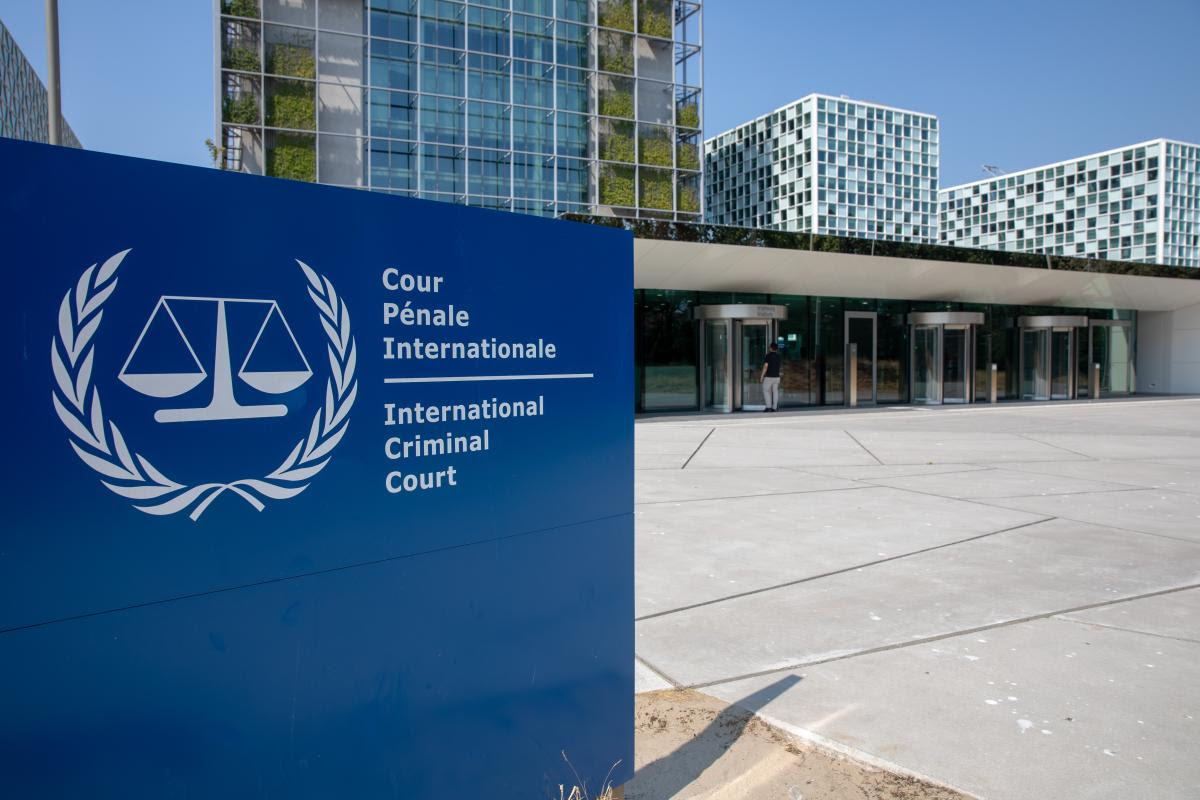
The International Criminal Court in The Hague, Netherlands.
ICC: Justice or Just Politics?
The Hague/Washington/Budapest: Effective June 2, 2026, Hungary will become the first European Union member state to exit the International Criminal Court (ICC), prompting renewed scrutiny of the Rome Statute’s relevance in a world of competing geopolitical agendas.
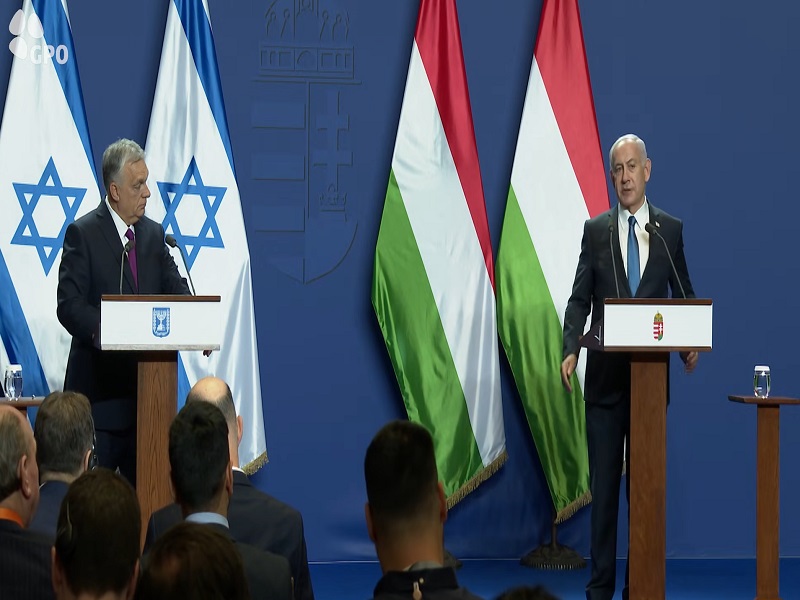
Hungary’s announcement on April 3, 2025, to withdraw from the Rome Statute, the founding treaty of the International Criminal Court (ICC), has sent ripples through the international justice community. Prime Minister Viktor Orban, speaking alongside Israeli Prime Minister Benjamin Netanyahu during a visit to Budapest that day, declared the ICC a “political court” following its November 2024 issuance of arrest warrants for Netanyahu and former Israeli Defense Minister Yoav Gallant for alleged war crimes in Gaza, including starvation as a method of warfare.
The Presidency of the Assembly of States Parties today expressed its regrets on the announcement of withdrawal from the Rome Statute by Hungary on April 3, 2025. President of the Assembly of States Parties, Päivi Kaukoranta (Finland), said today that she “truly hope that Hungary’s withdrawal from the Rome Statute is not permanent, but just a brief pause to its commitment to international justice, and that it will return to the community of States Parties in due course”. She stressed that achieving universal acceptance of the Rome Statute is crucial to advancing our united goal of ensuring justice for grave crimes and upholding the rule of law. “The ICC’s ability to combat impunity depends to a great extent on the sustained backing from the international community,” she said.
Hungary’s withdrawal, formalised under Article 127 of the Rome Statute, will take effect one year after its notification to the UN Secretary-General, meaning Hungary remains obligated to cooperate with the ICC until mid-2026. Orban’s government, however, has argued that the Rome Statute was never fully integrated into Hungarian law, signalling potential resistance to ICC mandates even during this period.
The decision has drawn sharp rebuke from Kaukoranta, who noted that Hungary’s exit “clouds our shared quest for justice.” The European Union officials, including Germany’s Foreign Minister Annalena Baerbock, called it a setback for international criminal law, while the Renew Europe Group urged sanctions, arguing that Hungary’s action violates EU values under Article 2 of the Treaty on European Union.
Hungary joins Burundi and the Philippines as the only countries to have withdrawn from the Rome Statute. Burundi’s 2017 exit followed the ICC’s investigation into the government’s violent crackdown on 2015 opposition protests, which killed hundreds. The Philippines left in 2019 after the ICC examined extrajudicial killings tied to President Rodrigo Duterte’s “war on drugs,” which claimed thousands of lives. Both withdrawals aimed to shield national leaders from accountability, a pattern echoed in Hungary’s response to the ICC’s pursuit of Netanyahu.
The United States, a non-member, has also shaped the Rome Statute’s contested landscape. While President Bill Clinton signed the treaty in 2000, President George W. Bush withdrew the signature in 2002, citing risks to U.S. soldiers. The Barack Obama administration engaged with the ICC as an observer, but President Donald Trump escalated hostility.
Today, the U.S. Department of State further escalated tensions by sanctioning four ICC judges—Solomy Balungi Bossa, Luz del Carmen Ibanez Carranza, Reine Adelaide Sophie Alapini Gansou, and Beti Hohler—under Executive Order 14203. Bossa and Ibanez Carranza were targeted for authorising an ICC investigation into U.S. personnel in Afghanistan, while Alapini Gansou and Hohler were sanctioned for their roles in approving the arrest warrants for Netanyahu and Gallant. These sanctions block any property or interests in property of the judges in the U.S. or under U.S. control, prohibit transactions involving U.S. persons, and impose reporting requirements to the Treasury’s Office of Foreign Assets Control.
These additional designations follow Prosecutor Karim A.A. Khan KC’s earlier designation. ICC deplored the sanctions, claiming these measures were a “clear attempt to undermine the independence of an international judicial institution which operates under the mandate from 125 States Parties from all corners of the globe.” Stating that it stands fully behind its personnel, the ICC said targeting those working for accountability does nothing to help civilians trapped in conflict, but only emboldens those who believe they can act with impunity. “These sanctions are not only directed at designated individuals, they also target all those who support the Court, including nationals and corporate entities of States Parties,” it stated.
The U.S. measures reflect a broader policy of shielding its citizens and allies from ICC jurisdiction, as seen in the 2002 American Servicemembers’ Protection Act, which restricts aid to ICC members that do not exempt U.S. personnel from prosecution. The sanctions align with Hungary’s stance, as evidenced by discussions between Orban, Netanyahu, and Trump, underscoring a coordinated pushback against the ICC.
In February 2025, too, Trump issued an executive order sanctioning the ICC for its “illegitimate” investigations into U.S. and Israeli actions, particularly the Netanyahu and Gallant warrants, declaring them a threat to U.S. national security. The order, which authorised asset freezes and travel bans for ICC officials, aligned with Hungary’s stance, as evidenced by discussions between Orban, Netanyahu, and Trump. The U.S. also enforces the 2002 American Servicemembers’ Protection Act, restricting aid to ICC members that do not exempt U.S. personnel from prosecution, underscoring a policy of shielding Americans from ICC jurisdiction.
As of January 2025, 125 countries remain States Parties to the treaty, which, since its adoption in 1998 and entry into force in 2002, has empowered the ICC to prosecute genocide, crimes against humanity, war crimes, and the crime of aggression. These states, spanning 33 from Africa, 19 from Asia-Pacific, 20 from Eastern Europe, 28 from Latin America and the Caribbean, and 25 from Western Europe and other regions, rely on the ICC as a court of last resort when national judicial systems fail. The Rome Statute binds members to cooperate with ICC investigations, arrests, and evidence collection, fostering a global framework to deter atrocities and ensure accountability. For EU nations, ratification is a prerequisite for membership, embedding the treaty’s principles into their collective commitment to human rights and the rule of law.
For the 125 member states, the Rome Statute remains a cornerstone of international justice, enabling the prosecution of atrocities where domestic courts falter. It strengthens national legal systems by encouraging the adoption of international crimes into domestic law and signals a commitment to victims of grave violations. In the EU, it underpins shared values, making Hungary’s withdrawal a direct challenge to regional unity. The ICC’s effectiveness hinges on state cooperation, as it lacks its own enforcement mechanisms. Withdrawals like Hungary’s, coupled with opposition from major powers like the U.S., risk fragmenting this cooperation, weakening the global fight against impunity. The Assembly of States Parties continues to push for universal ratification, but Hungary’s exit highlights the fragility of the ICC’s mandate amid rising nationalism and selective accountability. Past attempts at withdrawal, such as South Africa’s and The Gambia’s in 2016 over perceived anti-African bias, were reversed or blocked, but they exposed similar tensions. Hungary’s departure, driven by political alignment with non-members and frustration with ICC actions, underscores the ongoing challenge of sustaining a unified commitment to the Rome Statute’s vision of justice.
– global bihari bureau