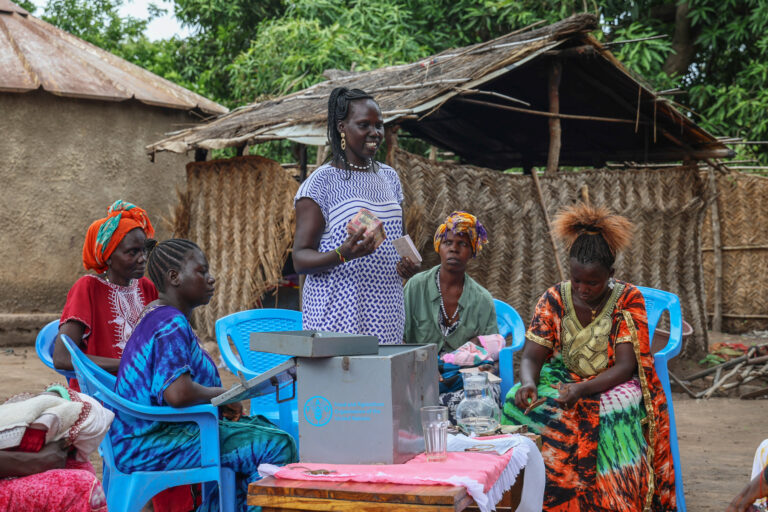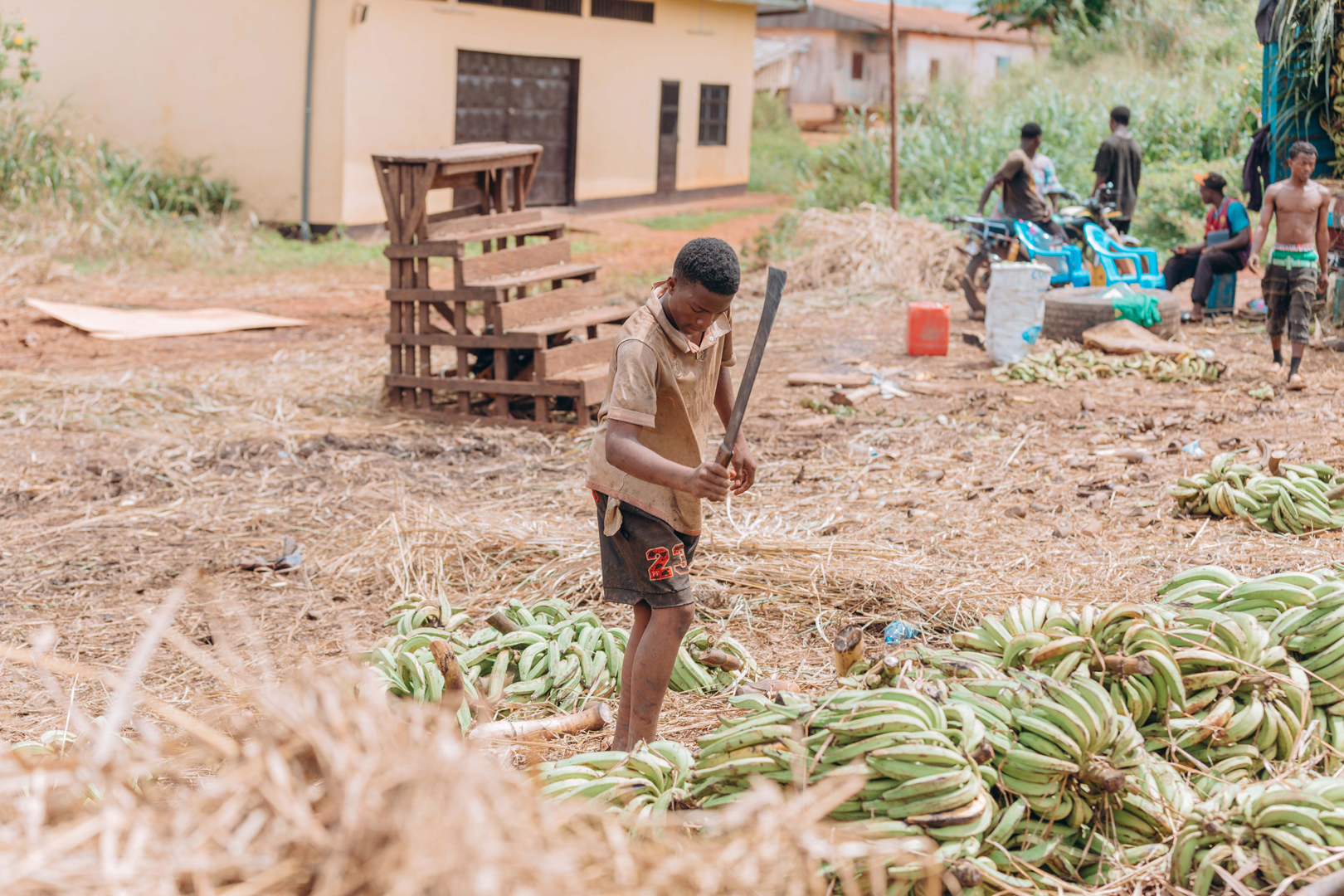
For the Baka people living in Mayos, a village in eastern Cameroon, the impact of climate change has been profound. Hunting and gathering from the forest no longer yield enough to support their food and nutrition security. ©FAO/ Glen Amungwa
Climate Pressures Push Baka Toward New Livelihoods
Farming and Beekeeping Help Baka Face Food Insecurity
In the vast equatorial forest of eastern Cameroon, the Baka people have lived for centuries in close relationship with their environment, sustaining their way of life through hunting, gathering and reliance on nature’s abundance.
In recent years, however, growing pressures have put this delicate balance under strain. Repeated climate shocks such as droughts and floods, combined with economic instability, encroachment on ancestral territories and conflicts—both within Cameroon and in neighbouring Central African Republic—have contributed to a significant influx of refugees and internally displaced people, intensifying pressure on natural resources.
For the Baka living in Mayos, a village in Dimako district with nearly 600 inhabitants, the impact has been profound. Food scarcity has forced families to undertake long and exhausting treks into the forest. Children have missed school to accompany their parents in search of cassava leaves, sometimes walking more than 50 kilometres. Elders increasingly fear that traditional knowledge is being lost, with no clear alternative livelihoods to replace it.
“Today, we live from farming, but that wasn’t always the case. Our parents lived from hunting, gathering and foraging,” says Dieudonné Noutcheguenou, an elder of the Baka community in Mayos.
Between April 2024 and June 2025, the Food and Agriculture Organization of the United Nations (FAO), in partnership with the Government of Cameroon and with funding from the World Bank, implemented the Emergency Project to Combat the Food Crisis in Cameroon (PULCCA). The project aimed to support households most affected by climate shocks by introducing new food production options and livelihood activities.
In Mayos, the Baka people received structured, participatory support that combined traditional knowledge with modern agricultural techniques. Production kits distributed through the project included plantain and cassava cuttings, yam seedlings, small ruminants and poultry. More than 30 training sessions were introduced, covering farming and beekeeping practices adapted to local environmental conditions.
From the outset, FAO prioritised consultation with the Baka people and communication in their own language. Community members were closely involved through project monitoring committees, helping shape interventions while ensuring that traditional knowledge and cultural practices were respected.
FAO Representative in Cameroon, Antonio Querido, explains, “PULCCA is not only an emergency response to the food crisis. It is a commitment to strengthen the resilience of communities in situations of vulnerability, especially Indigenous Peoples, so that they become full actors in their own development.”
The project also established a farmer field school focused on cassava cultivation. It now serves as a collective learning space, where men and women experiment together, exchange experiences and build shared knowledge.
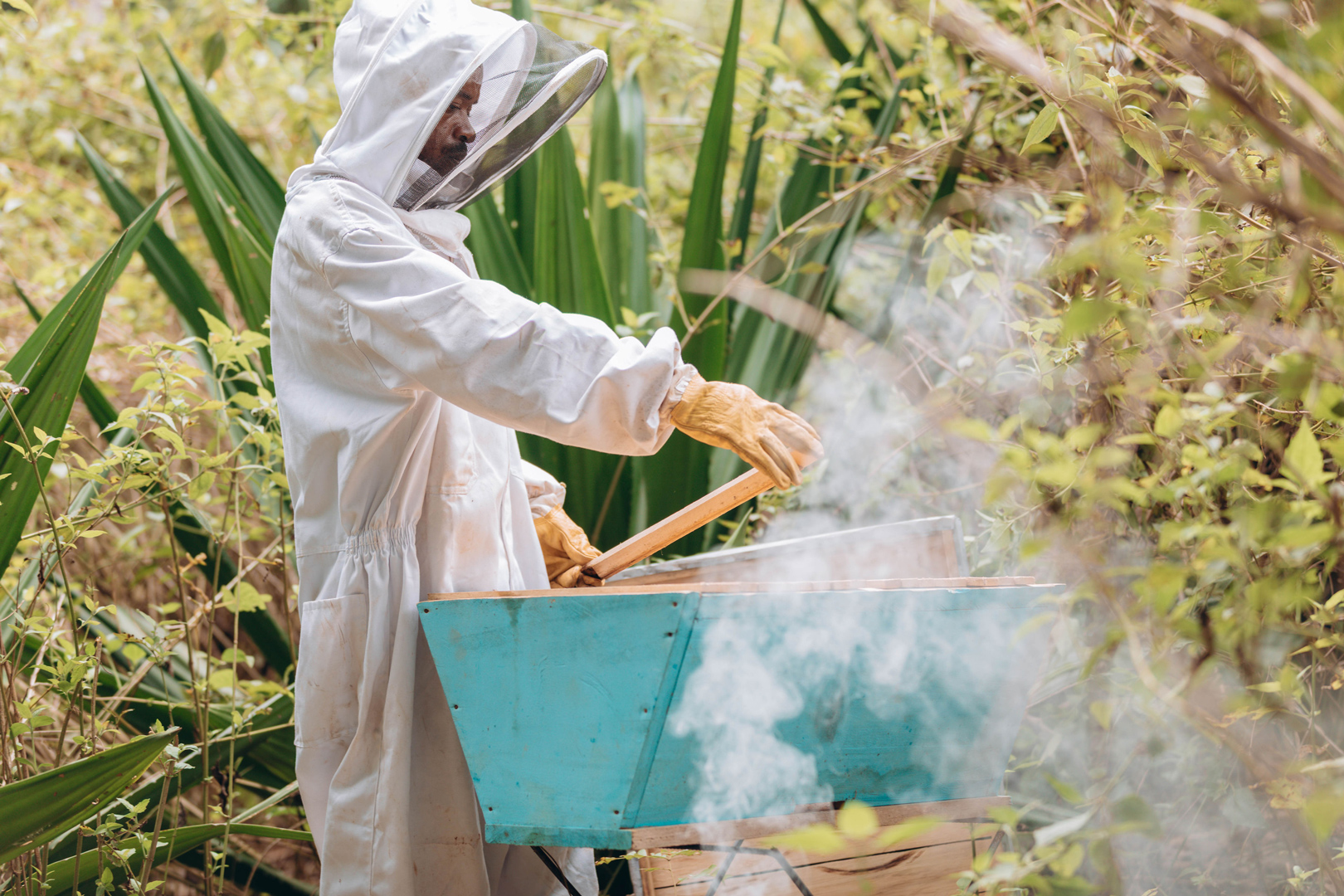
Beekeeping has emerged as a particularly important new activity, creating additional sources of income that have contributed to improved nutrition and school attendance. “Before, collecting honey meant cutting trees and making long, uncertain trips,” says Angoula Nestor, a newly trained Baka beekeeper. “Now, with training and protective gear, we harvest clean, high-quality honey and earn enough to support our families. I enjoy this activity and hope to learn how to build hives myself so I can become self-sufficient.”
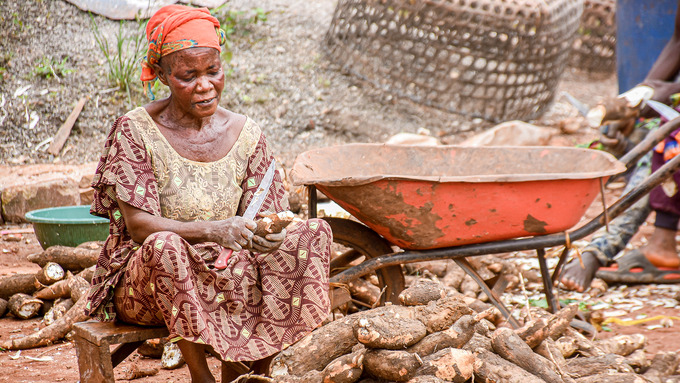
For Mama Angelina Efouma, a grandmother in her seventies caring for 10 grandchildren, the project has provided vital support. “My main concern is being able to keep working and feeding my family,” she says. “I’m still active. I know the land well. I plant cassava and macabo. This project helps us enormously.”
Today in Mayos, cassava—once difficult to obtain—is cultivated locally, while honey harvested safely through improved practices has become both a source of income and a source of pride. As Elder Noutcheguenou reflects, “This project allows us to produce for ourselves, without depending on others. Our children can eat at home and go to school more easily. It’s a real step forward for our village.”
A total of 374 people have directly benefited from activities in Mayos. Overall, the PULCCA project has reached nearly 25,000 households across the eastern region departments of Lom-et-Djerem, Haut-Nyong, Boumba-et-Ngoko and Kadey.
Source: The FAO News And Media Office, Rome
– global bihari bureau