ARIES Study Ties Himalayan Air to Farmers’ Future
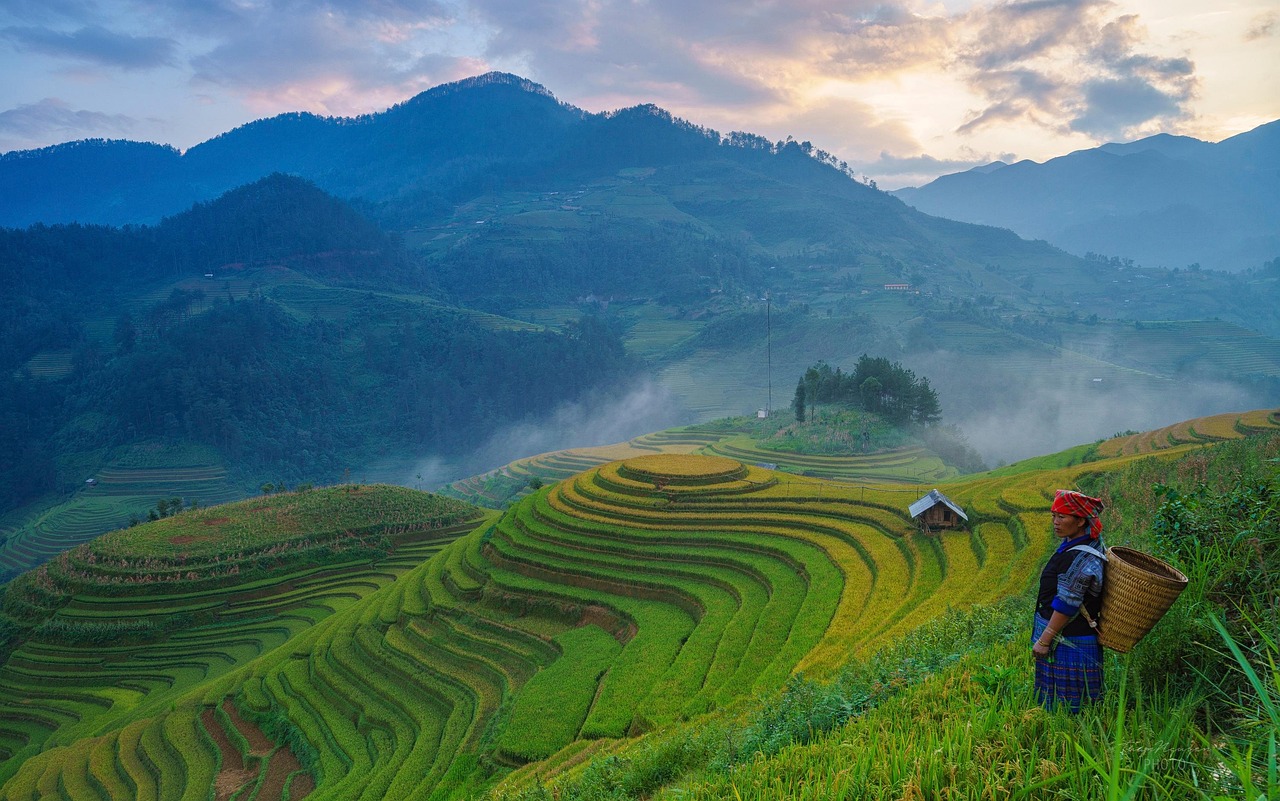
Nainital: At a high-altitude observatory in Nainital, scientists have decoded the intricate patterns of greenhouse gases, revealing how natural processes and human activities shape the air that sustains Central Himalayan communities. A team from the Aryabhatta Research Institute of Observational Sciences (ARIES), an autonomous institute under the Department of Science and Technology (DST), led by Dr. Priyanka Srivastava and Dr. Manish Naja, conducted a five-year study at Manora Peak, capturing continuous, high-resolution measurements of carbon dioxide (CO₂), methane (CH₄), and carbon monoxide (CO) using advanced online monitoring systems. For residents like Anil Joshi, a Nainital farmer whose rice fields depend on the region’s fragile ecosystem, these findings shed light on the environmental forces affecting his harvests, linking his daily life to the global climate crisis.
The study addresses a critical gap in ground-based atmospheric data for South Asia’s mountain regions, which have long been underrepresented in global climate monitoring. Located at 1,940 meters above sea level, the Nainital observatory’s position enabled researchers to separate the effects of biospheric uptake, regional emissions from the Indo-Gangetic Plain, and complex meteorological patterns, such as mountain-valley breezes, on greenhouse gas levels. Data shows that concentrations of CO₂, CH₄, and CO in the Central Himalayas exceed those at remote sites like Mauna Loa in Hawaii, reflecting emissions from local sources, such as agricultural burning, and upwind regions, yet remain lower than urban or semi-urban areas. Daily cycles reveal CO₂ dropping during daylight hours due to photosynthesis, while CH₄ and CO peak as mountain winds transport pollutants from lower elevations.
Seasonal patterns are evident: CO₂ rises in spring, driven by biomass burning and limited vegetation cover, while CH₄ peaks in autumn, linked to agricultural activities like rice cultivation, a practice central to Anil’s livelihood. CO peaks in late spring, influenced by regional pollution transport from the Indo-Gangetic Plain. Long-term trends show CO₂ increasing at 2.66 parts per million per year and CH₄ at 9.53 parts per billion per year, outpacing Mauna Loa’s rates, highlighting the growing impact of human activities in the region. In contrast, CO declines at 3.15 parts per billion per year, possibly due to improved combustion efficiency or changes in emission sources. Factors like solar radiation, temperature, and the atmospheric boundary layer—the altitude limit for pollutant dispersal—are as significant as agricultural or urban emissions in shaping these patterns.
These continuous measurements, collected using precise instruments that monitor gas concentrations in real time, provide a robust baseline for validating satellite data, such as those from NASA’s Orbiting Carbon Observatory-2 (OCO-2), and refining emissions inventories for South Asia. For Anil, whose crops face risks from shifting climate patterns, the data offers insights that could guide sustainable farming practices, ensuring his fields remain productive. The research also equips policymakers and climate modellers with localised data to develop targeted climate mitigation strategies, offering hope to rural communities reliant on environmental stability.
Globally, similar efforts highlight the universal importance of such research. In Peru, the Amazon Research Institute’s Andean station monitors CO₂ and CH₄ to assess deforestation’s impact, engaging indigenous farmers in conservation efforts that resonate with Anil’s reliance on his land. In Switzerland, the Jungfraujoch observatory, at 3,580 meters, has tracked greenhouse gases for over 20 years, providing data for global climate policies, much like ARIES’s contributions in Nainital. In China, the Waliguan Observatory, at 3,800 meters, has monitored CO₂, CH₄, and other gases since 1994, producing the “Waliguan Curve” that aligns with Mauna Loa’s data and supports international climate agreements. In Nepal, the Climate Observatory-Pyramid at 5,079 meters, part of the Global Atmosphere Watch network, measures CO₂, CH₄, and aerosols, revealing how pollutants from the Indo-Gangetic Plain affect Himalayan air quality, complementing ARIES’s findings.
For Nainital residents like Anita Rawat, a schoolteacher, the study carries personal weight. “This research shows how the air we breathe affects my students’ families, who farm like Anil,” she said, noting its potential to shape policies that protect her village from climate impacts like water scarcity and reduced crop yields. By mapping the interplay of natural and human-driven factors, the ARIES team’s work not only advances science but also fosters hope for communities across the Himalayas and beyond. From Nainital’s fields to observatories in Peru, Switzerland, China, and Nepal, this research weaves a global narrative of science serving people, driving a shared commitment to a sustainable future.
– global bihari bureau