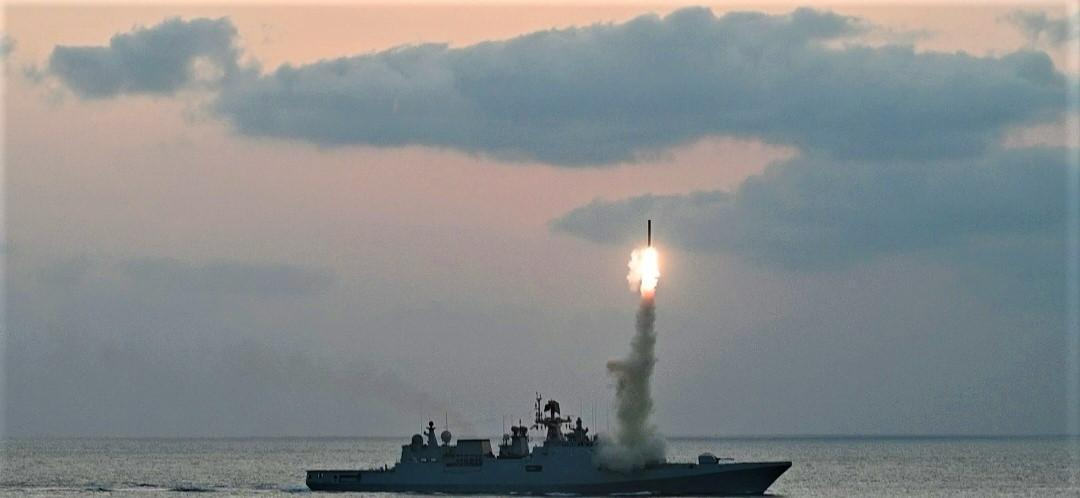
File photo of Indian Navy Ships undertaking successful multiple anti-ship firings to revalidate and demonstrate readiness of platforms, systems and crew for long-range precision offensive strike on April 27, 2025.
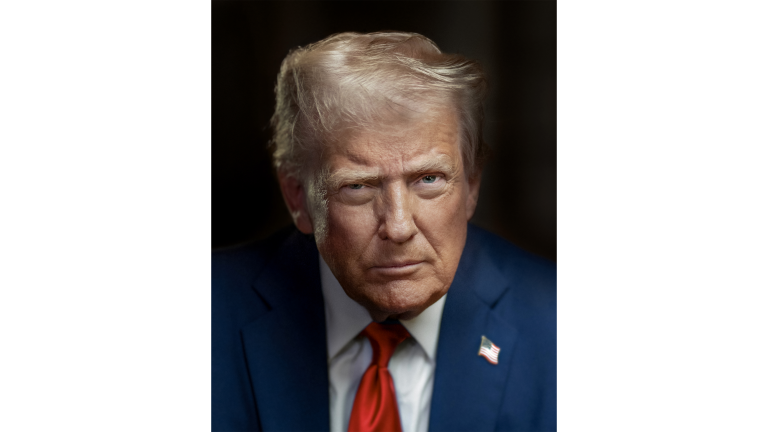
New Delhi: The United States Secretary of Defense Pete Hegseth today called Indian Defence Minister Rajnath Singh to offer condolences for the “tragic loss of innocent civilian lives” in the April 22, 2025, Pahalgam terror attack, affirming that the “US stands in solidarity with India and supports India’s right to defend itself”.
This high-level gesture has sharpened global focus on the escalating India-Pakistan crisis, with China’s ambiguous stance complicating efforts to address the attack linked to Pakistan-based terrorists. US State Department spokesperson Tammy Bruce, in an April 29, 2025, briefing, confirmed US efforts to engage both nations’ leadership to urge de-escalation, with the Secretary of State planning to speak to foreign ministers to curb tensions. Just a day after the Pahalgam killings, on April 23, 2025, Bruce described the attack as a “horrible situation,” noting the US was “monitoring it closely” while avoiding comment on Pakistan’s role or Kashmir’s status. Earlier, on April 30, the US Secretary of State Marco Rubio spoke with Prime Minister of Pakistan Muhammad Shehbaz Sharif and stressed the need to condemn the terror attack on April 22 in Pahalgam. The Secretary urged Pakistani officials’ cooperation in investigating “this unconscionable” attack. He also encouraged Pakistan to work with India to de-escalate tensions, re-establish direct communications, and maintain peace and security in South Asia. On the same day, Rubio also spoke with Indian External Affairs Minister Dr Subrahmanyam Jaishankar. The Secretary expressed his sorrow for the lives lost in the “horrific” terrorist attack in Pahalgam, and reaffirmed the United States’ commitment to cooperation with India against terrorism.
Russia, the United Kingdom, and the United Nations have condemned the attack, but Pakistan, backed by China, diluted a UN Security Council press statement (SC/16050) issued on April 25, 2025, omitting references to the terror group – The Resistance Front (TRF), and the word “Pahalgam,” as Pakistani Foreign Minister Ishaq Dar admitted in Pakistan’s National Assembly on April 29, 2025, following negotiations from April 23–25, 2025, with China’s support reaffirmed during a call with Foreign Minister Wang Yi on April 27, 2025. On April 29, China called on India as well as Pakistan to “exercise restraint, properly handle differences through dialogue and consultation, and jointly keep the region peaceful and stable”.
Rajnath Singh’s charge today during his conversation with Hegseth that “Pakistan has been exposed as a rogue state, fuelling global terrorism, and destabilising the region” drives India’s demand for accountability, which clashes with some international calls for restraint, risking Pakistan’s diplomatic isolation but also India’s frustration if punitive measures falter. Singh today asserted that it is important for the global community to explicitly and unequivocally condemn and call out such heinous acts of terrorism. The US Secretary of Defense reiterated full support of the US government in India’s fight against terrorism.
India’s suspension of the Indus Waters Treaty (IWT), leveraging its upstream position, has sparked Pakistan’s legal threats, though these are unlikely to succeed given the treaty’s arbitration framework, which mandates slow, technical dispute resolution processes, as seen in the 2016 Kishenganga case.
The IWT’s arbitration framework, outlined in Article IX and Annexures F and G, requires disputes to be addressed first through the Permanent Indus Commission, then by a World Bank-appointed Neutral Expert for technical issues or a seven-member Court of Arbitration for legal disputes, with the World Bank facilitating but not adjudicating.
Pakistan’s threats to challenge India’s suspension at the International Court of Justice or through the IWT are weakened because the treaty lacks termination provisions, and disputes must be handled within its internal mechanisms.
The 2016 Kishenganga case illustrates this: Pakistan challenged India’s Kishenganga Hydroelectric Project, alleging water diversion and improper sediment flushing violated the IWT. A 2013 Court of Arbitration ruling allowed India’s project but restricted flushing, and Pakistan’s 2016 objections led to a Neutral Expert process, which was paused for bilateral talks, showing the framework’s protracted nature and focus on technical compliance. The World Bank’s limited enforcement role, as clarified in 2016, further weakens Pakistan’s leverage against India’s suspension, especially given India’s upstream control.
The UNSC press statement (SC/16050, April 25, 2025) condemned the “terrorist attack in Jammu and Kashmir” on April 22, 2025, which killed 26 people, but avoided naming TRF or Pahalgam, reflecting Pakistan’s negotiations, supported by China, to weaken the original US-proposed draft during April 23–25, 2025. Ishaq Dar claimed Pakistan’s effort ensured the statement’s generic language, urging cooperation with “all relevant authorities” rather than India specifically, unlike the 2019 Pulwama statement. China’s support was facilitated through its UNSC delegation, with Wang Yi’s April 27, 2025, call with Dar reaffirming Pakistan’s call for an “impartial investigation,” aligning with the diluted statement’s outcome. This dilution frustrated India, which sought explicit condemnation of TRF, linked to Lashkar-e-Taiba.
China’s broader response, articulated by Foreign Minister Wang Yi and spokesperson Guo Jiakun, balances condemnation with strategic alignment. On April 23, 2025, China’s ambassador to India condemned the attack, stating, “We mourn the victims and extend our sincere sympathies to the families of the victims and the injured,” and opposed “terrorism of all forms.” However, on April 27, 2025, Wang Yi supported Pakistan’s call for an “impartial investigation” into India’s allegations, affirming China’s role as Pakistan’s “ironclad friend”. Guo Jiakun, on April 28, 2025, urged both nations to “exercise restraint” and backed a “fair and just investigation.”
China’s role in diluting the UNSC statement aligns with Pakistan’s narrative, frustrating India. This reflects China’s prioritisation of its alliance with Pakistan, bolstered by the China-Pakistan Economic Corridor, while avoiding direct confrontation with India amid post-Ladakh détente efforts. However, China’s equivocation risks alienating India, which views it as tacit support for Pakistan’s denials, especially given TRF’s links to Lashkar-e-Taiba and evidence of safe houses in Muzaffarabad and Karachi.
The attack, executed by three Pakistani nationals—Hafeez Saeed, Saifullah Kasuri, and Hashim Moosa—and a local recruit, Adil Thoker, as identified by India’s National Investigation Agency, involved a 20-22 hour trek through Baisaran Valley to unleash AK-47s and M4 rifles. The NIA uncovered 15 overground workers supporting the assault, exposing a sophisticated terror network. India’s response is resolute: banning Pakistani airlines from its airspace, closing the Attari-Wagah border, and granting its armed forces operational freedom, signalling potential for strikes akin to the 2019 Balakot operation.
Rajnath Singh stressed global responsibility, stating, “The world can no longer turn a blind eye to terrorism,” and urged nations to “explicitly and unequivocally condemn and call out such heinous acts.” Ceasefire violations along the Line of Control heighten the risk of miscalculation, though nuclear deterrence ostensibly limits full-scale conflict.
Pakistan denies involvement, with Defence Minister Khawaja Asif dismissing allegations as “frivolous,” but its actions—enhancing security for Lashkar-e-Taiba chief Hafeez Saeed, mirroring airspace closures, and mobilising forces—suggest fear of Indian retaliation. Its economy, with a GDP of $348.72 billion compared to India’s $4.2 trillion, faces strain from trade suspensions and airspace closures, limiting its capacity for prolonged confrontation. In India, public outrage and opposition demands, including calls from Congress leaders Rahul Gandhi and Mallikarjun Kharge for a parliamentary session, push the Narendra Modi government toward decisive action, but precision is critical to avoid destabilising South Asia.
The NIA’s pursuit of perpetrators like Hashim Moosa, a former Pakistani paramilitary operative, should prioritise intelligence-driven operations. India could amplify its diplomatic campaign, leveraging US support to push for sanctions on terror groups, while exploring backchannel talks through mediators like Iran to ease border tensions.
Strengthening counterterrorism measures in tourist hubs like Pahalgam is essential to dismantle resilient terror networks. The Rs 60 lakh bounty on three suspects reflects India’s resolve, but navigating this crisis, with China’s role in diluting the UNSC statement on April 25, 2025, complicating multilateral efforts, demands a careful blend of justice for the lives lost, diplomacy, and vigilance to prevent regional chaos.
– global bihari bureau