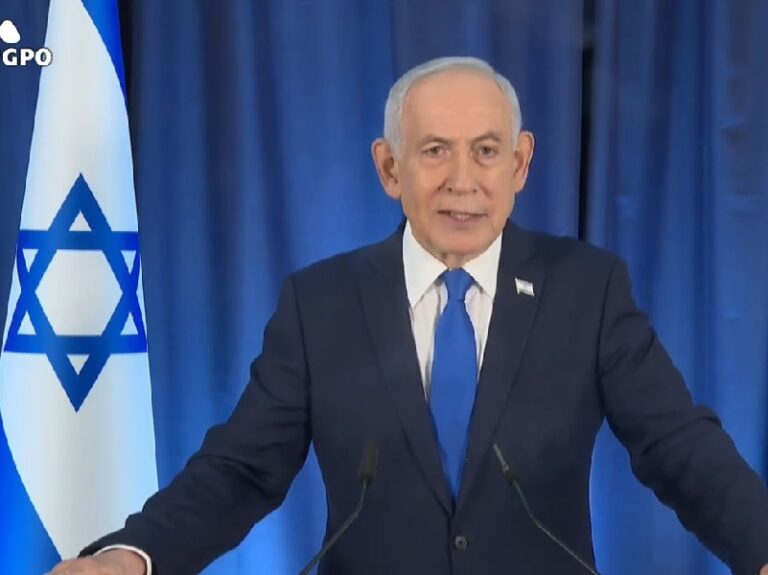
Photo source: interpol.int

By Deepak Parvatiyar and Nava Thakuria
Interpol faces significant limitations in processing Bangladesh’s request for a Red Notice against former Prime Minister Sheikh Hasina and 11 associates, submitted by the National Central Bureau (NCB) of Bangladesh Police around April 19, 2025.
The request, tied to allegations of mass killings, genocide, and conspiracy during the July–August 2024 uprising, however, challenges Interpol’s mandate to avoid politically motivated actions under Article 3 of its constitution. The political rivalry between Hasina and interim leader Muhammad Yunus, coupled with Hasina’s exile in India, may lead Interpol to scrutinise or reject the request, as seen in past high-profile cases. Turkey’s 2016 Red Notice requests against journalists and Gülen movement members, Russia’s notices against financier Bill Browder from 2013 to 2017, and Bahrain’s notices against dissidents in 2012–2014 were rejected or removed for political motivations, illustrating Interpol’s strict neutrality enforcement.
The establishment narrative, as reflected in some sources, may lean toward framing Hasina’s prosecution as straightforward justice. However, the political context and lack of Interpol confirmation suggest a more nuanced reality, where legal accountability and political vendettas may intertwine.
The NCB’s request targets Hasina and former ministers, including Obaidul Quader and Asaduzzaman Khan, for serious crimes, seeking their location and provisional arrest pending extradition. Interpol has not publicly confirmed receipt or status as of April 21, 2025. The organisation’s process requires robust judicial evidence and compliance with neutrality rules, a task complicated by the case’s political undertones, as noted by the International Bar Association.
In 2016, Turkey requested over 60,000 Red Notices post-coup against figures like journalist Can Dündar and Fethullah Gülen, accusing them of terrorism, but Interpol’s Commission for the Control of Files rejected them for targeting political opponents, suspending Turkey’s database access in 2017. Russia’s notices against Bill Browder, a Kremlin critic, from 2013 to 2017 for alleged tax evasion were removed after Interpol deemed them politically motivated retaliation for his anti-corruption activism, per Interpol’s 2017 press release. Bahrain’s 2012–2014 notices against dissidents like Ali Mushaima, accused of incitement during the Arab Spring, were deleted after Amnesty International flagged them as targeting free speech, prompting Interpol’s review reforms.
These precedents suggest Bangladesh’s request faces delays or rejection if evidence or intent is deemed politically driven, given the Yunus-Hasina rivalry reported by Reuters.
Interpol’s history reveals falterings in issuing notices later found political, like Bahrain’s, delaying reviews, as with Browder’s detentions, and managing mass requests, as in Turkey’s case, per Interpol’s 2015 and 2017 reports.
Political blockades arise from Article 3, member state discretion, and geopolitical sensitivities, with India’s silence on Hasina’s asylum exemplifying the latter. Interpol acknowledged these issues through reforms and Browder’s 2017 statement, but has not commented on Bangladesh’s request, potentially delaying action due to the case’s high-profile nature.
Also read: Can Professor Yunus ban the Awami League in Bangladesh?
The interim government in Dhaka, led by Yunus, pursues Hasina’s repatriation to face hundreds of legal cases across Bangladesh. The administration’s actions also appear aimed at pressuring India, where Hasina has resided since fleeing in August 2024 after a student-led uprising. India granted asylum to the 77-year-old Awami League leader, daughter of Bangladesh’s founder Sheikh Mujibur Rahman, without a formal announcement.
At the 6th BIMSTEC summit in Bangkok recently, Yunus reiterated the demand for Hasina’s repatriation during a meeting with Indian Prime Minister Narendra Modi. India remained non-committal and urged Dhaka to ensure the safety of religious minorities in Bangladesh, a Muslim-majority nation.
India has not publicly reacted to Bangladesh’s Interpol request as of April 21, 2025, maintaining silence on the move. The government, Prime Minister, and Ministry of External Affairs have avoided commenting on Hasina’s status or extradition, a stance reflecting the sensitivity of hosting a former ally amid strained bilateral relations. India’s focus on minority rights, as urged during the BIMSTEC summit, underscores its priority to stabilise ties with Bangladesh while navigating the political fallout of Hasina’s asylum.
Exiled Bangladeshi-Swedish author Taslima Nasrin, residing in India, expressed empathy for Hasina in an interview, noting their shared displacement. Nasrin, whose passport was not renewed under Hasina’s government, posed a rhetorical question about losing one’s homeland.
The Bangladesh Nationalist Party (BNP), a rival to the Awami League, has labelled Hasina an agent of India. BNP vice-chairman Shamsuzzaman Dudu recently claimed Hasina fled to her “actual address” in India and would have integrated Bangladesh with India if possible, speaking at a public event.
Meanwhile, the abduction and killing of Bhabesh Chandra Roy, a 58-year-old Hindu minority leader, sparked outrage. India described the incident as a systematic murder of minorities. Roy, an office bearer of Biral Upazila Puja Udjapan Parishad, was kidnapped from his home in Basudebpur village, Dinajpur, on April 17, 2025, and beaten to death by four individuals.
According to Roy’s wife, Shantana Roy, the perpetrators confirmed his presence by phone before arriving on two bikes to take him toward Narabari village. Roy was returned by vehicle, nearly unconscious, and declared dead at a nearby hospital. India’s foreign ministry spokesman, Randhir Jaiswal, stated on social media that Roy’s killing reflects a pattern of persecution against Hindu minorities under the interim government. He called on Dhaka to protect minorities and hold perpetrators accountable.
India’s opposition Congress party condemned Roy’s killing, urging the government to press Dhaka for a credible investigation. Congress leader Jairam Ramesh described the incident as part of a broader pattern of attacks on minorities, including desecration of Hindu temples and targeting of minority-owned businesses. He emphasised the growing insecurity among religious minorities in Bangladesh.
A report by Dhaka-based human rights group ‘Aain O Salis Kendra’ documented 147 incidents of vandalism targeting Hindu houses, temples, and businesses in the past month. It recorded 408 affected households, including 36 arson cases, 113 attacks on Hindu-owned businesses, and 32 incidents of vandalism against temples and Ahmadiyya mosques.
Incidentally, the United States recently renewed its travel advisory for Bangladesh, citing elevated risks of violence, terrorism, and kidnapping, particularly in the Chittagong Hill Tracts region, urging citizens to reconsider travel.
*Senior journalists