Chanting Strength and Clarity: Hanuman Chalisa Reimagined
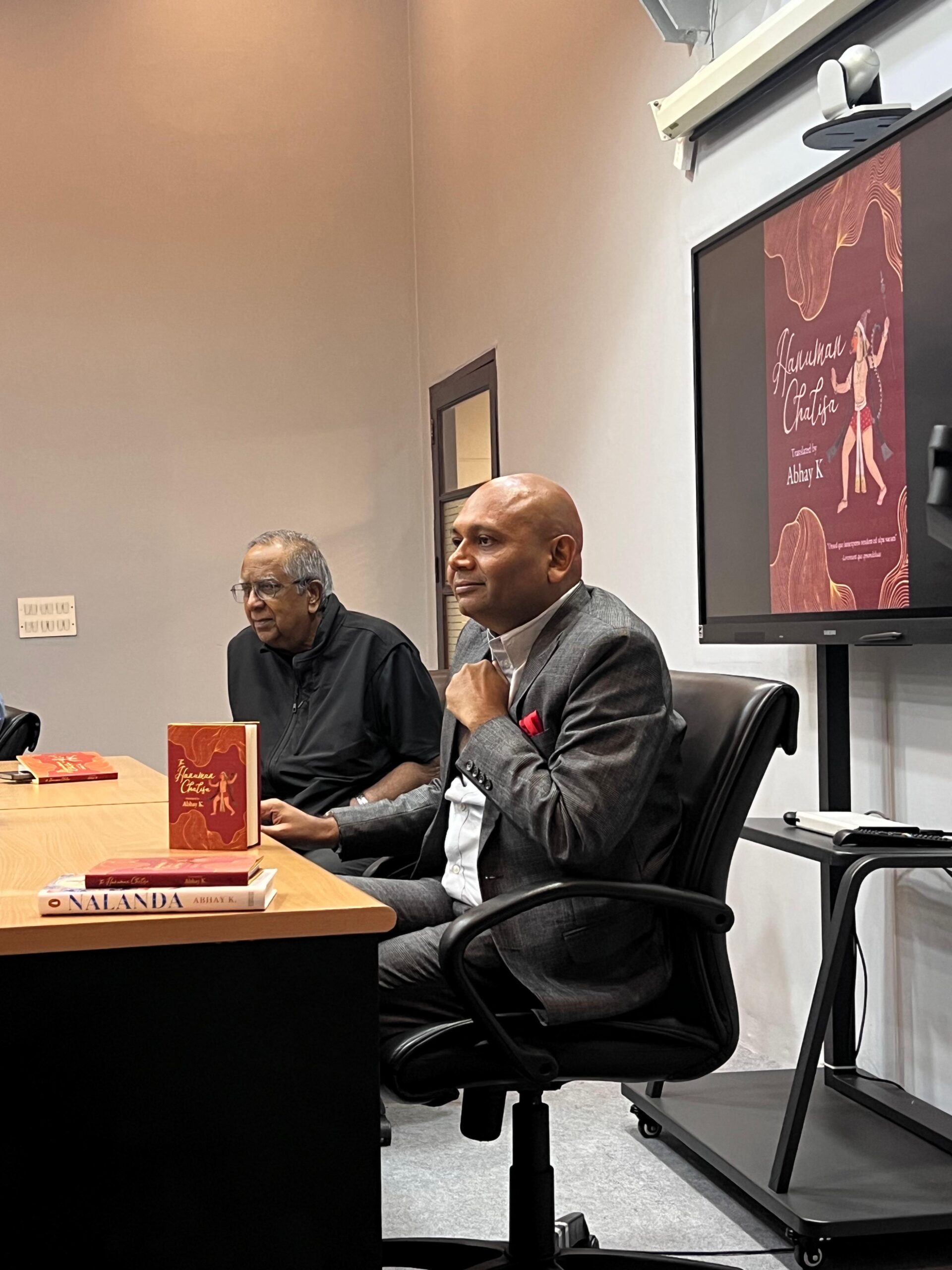
New Delhi: It was not just a book launch — it was an evening of rediscovery. At IILM, a leading institution in Business Management Education, on Tuesday, poet-diplomat Abhay K. unveiled his lyrical and singable English translation of Goswami Tulsidas’ Sri Hanuman Chalisa, turning a modern campus into what felt like a reflective satsang.
Seated beside Prof. Rajendra Srivastava, former dean of the Indian School of Business, Abhay spoke with warmth about how this 40-verse hymn had been with him since childhood. “I was introduced to the Hanuman Chalisa by my parents,” he said. “When I recently met people of Indian origin who wanted to sing it but could not read Devanagari, I knew it was time to make an English version that could be sung.”
But for Abhay, this was more than translation — it was transmission. “The Hanuman Chalisa is multilayered,” he explained. “It can be read as poetry, as philosophy, even as a manual for leadership. At its heart lies Hanuman’s humility — the humility of someone who is immensely powerful yet chooses to serve, to build alliances, to troubleshoot for others rather than himself.”
Prof. Srivastava noted that this model of “leading from the back” could teach management students and CEOs about balancing authority with humility.
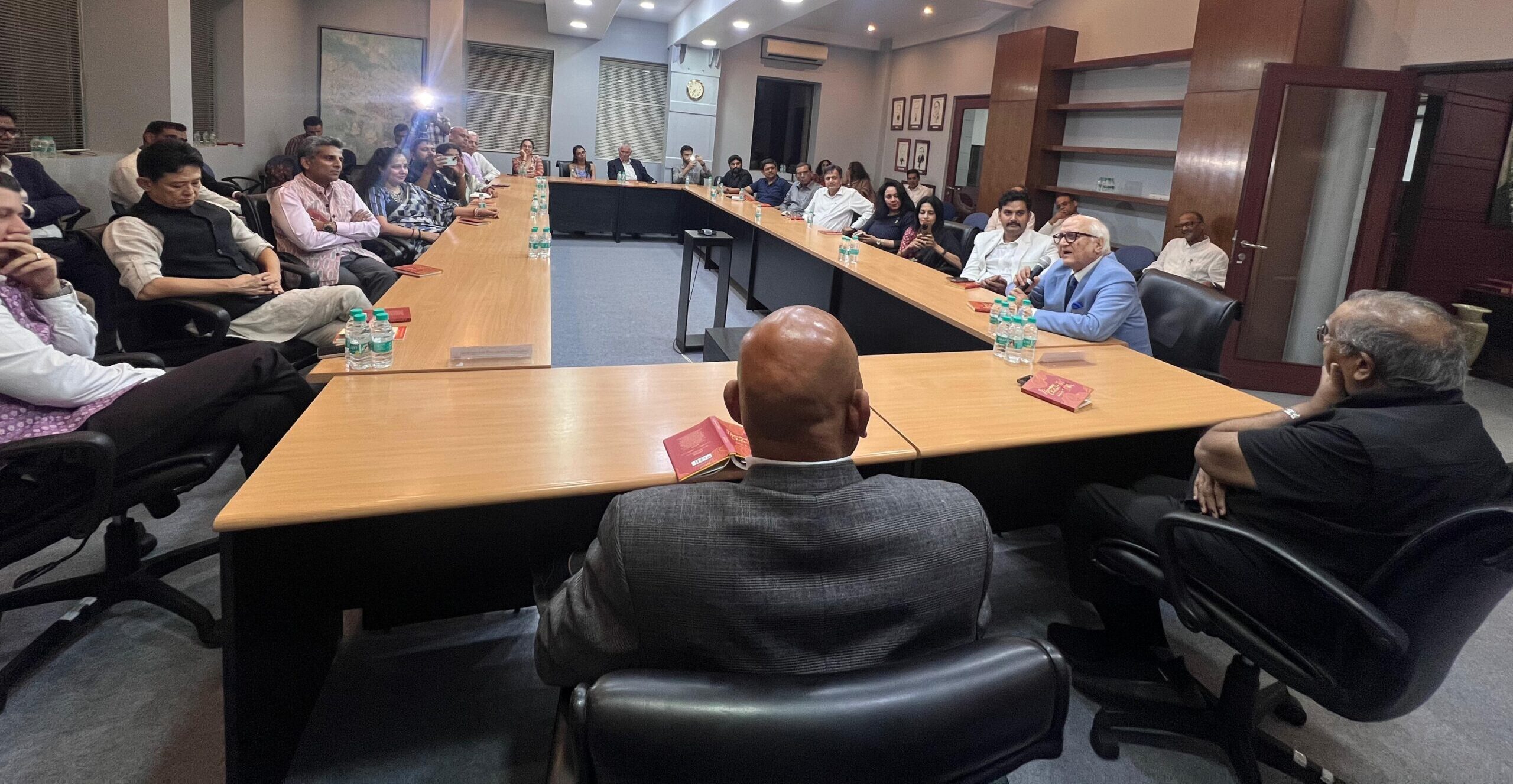
The event drew an eclectic audience — Ambassador Sang Woo LIM, Deputy Chief of Mission of South Korea; nine-time European Parliamentarian Hervé Juvin; IILM chairman Anil Rai; faculty, students, and thought leaders from across sectors. Together, they turned the launch into a living dialogue, quoting their favourite chaupais and sharing personal reflections.
Also read: Abhay K.’s Hanuman Chalisa: A Lyrical Global Bridge
One participant brought focus to a central prayer in the Chalisa: bal, buddhi, vidya dehu mohe — grant me strength, intellect, and wisdom. “Tulsidas never asks for wealth,” they said. “He asks for courage to act, clarity to think, and wisdom to choose rightly. If we sought these three over possessions, our politics, diplomacy, and leadership would look very different.”
Others reflected on Hanuman as the mirror of integrity, whose open heart reveals Ram and Sita to the devotee. Another quoted sab sukh lahe tumhari sarna — “all joy comes to those who take refuge in you” — as a call for inner strength and resilience in a world of fear and uncertainty.
Leadership metaphors surfaced naturally. “Hanuman knows when to be fierce and when to step back,” said one CEO. “That is what great leaders do — they take charge when necessary, and then let the team work.”
One participant narrated the dramatic episode where Mahiravana captures Ram and Lakshman and takes them to Paataal. Hanuman disguises himself as Goddess Kali, beheads Mahiravana, and rescues them. “He is not just a servant,” they said, “he is the ultimate protector.”
The conversation moved from mythology to geopolitics. Abhay asked why nothing was written about Hanuman for nearly 9,500 years until Tulsidas. “When Tulsidas finally wrote the Hanuman Chalisa, he distilled the essence of Hanuman’s character in Awadhi — a language now recited by millions daily. He was in distress when he wrote it. Perhaps that is why anyone in distress finds solace in it even today.”
Abhay also drew attention to the political and even technological undertones of the Ramayana. “Ravana was perhaps the most technologically advanced ruler of his time — he had the Pushpak Vimana. In contrast, Ram relied on an army of monkeys and an alliance painstakingly built with Hanuman’s help. That is why Hanuman is the bridge — between power and humility, between strategy and service.”
Several participants connected this to the present day. “Those who are powerful must not turn arrogant,” one warned. “Arrogance means ignorance — and today’s world suffers from both.” Hervé Juvin echoed this sentiment, saying that Abhay’s translation makes Hanuman’s message of humility accessible to the non-Hindi-speaking world. “It gives us the power to listen,” he said.
Ram Divedi, co-founder of Pravaig Dynamics & Kutniti, read from his father’s French version of the Chalisa and presented a copy to Abhay — a symbolic bridging of continents and cultures through devotion.
The evening closed with a reminder of the significance of Hanuman’s days — Tuesday and Saturday — both powerful and testing. “They are days of trial and of courage,” Abhay said, “just as the Chalisa is a hymn that turns adversity into strength.”
As the gathering slowly dispersed, the mood remained contemplative. The launch had done more than present a book. It had offered a quiet invitation — to seek bal, buddhi, vidya, to turn power into service, to meet life’s trials with humility, and to rediscover the Ram within one’s own heart.
– global bihari bureau