Photo source: CENTCOM
Gulf Crisis Tests Energy Flows, India Holds Steady
Oil, LNG Shock: India Activates Safeguards
Washington/New Delhi/Jerusalem/Tehran: Launching one of the most significant escalatory moves in the ongoing conflict, Iran in the past 24 hours carried out coordinated missile and drone strikes on major oil and gas installations across the Gulf, targeting facilities in Qatar, Saudi Arabia, United Arab Emirates and Kuwait, marking a decisive shift from battlefield engagements to direct attacks on global energy infrastructure with wide economic implications and prompting a calibrated, multi-sector response from the Government of India to safeguard energy supplies, trade flows and its citizens.
In New Delhi, an inter-ministerial briefing on March 19 brought together officials from key ministries overseeing petroleum, shipping, external affairs and information, outlining preparedness measures in view of disruptions, including the possibility of a closure of the Strait of Hormuz, a critical artery through which an estimated 40 per cent or more of India’s crude oil imports transit and a substantial share of its liquefied natural gas supplies are routed. Recent warnings to commercial vessels operating in the Gulf and heightened security alerts around offshore energy installations have added to concerns over navigation safety and supply continuity. Officials indicated that global energy markets have reacted with volatility following the strikes, even as India moved to insulate domestic supply chains. Authorities said all domestic refineries are operating at high capacity with adequate crude inventories, and there have been no reports of fuel shortages at retail outlets. Citizens were advised against panic buying, with panic bookings of liquefied petroleum gas declining to around 57 lakh even as supply chains remain stable and monitored, officials said.
To strengthen oversight, the Petroleum Planning and Analysis Cell has been designated as the nodal agency for real-time data collection and analysis across the petroleum value chain, covering production, refining, storage, transportation and distribution. Enforcement measures have been intensified under statutory provisions including the Essential Commodities Act, 1955, the Petroleum Act, 1934 and the Petroleum Rules, 2002, with more than 6,000 raids conducted nationwide leading to the seizure of over 11,000 cylinders, according to officials. States and Union Territories have been directed to maintain strict vigilance against hoarding, black marketing and diversion, supported by district-level enforcement drives, control rooms across 31 jurisdictions and daily public briefings to ensure dissemination of verified information.
The government said priority supplies of natural gas continue for domestic piped natural gas and compressed natural gas transport segments, while supplies to industrial and commercial users are being regulated. City Gas Distribution networks are being expanded with a push to prioritise piped natural gas connections for commercial establishments, supported by incentives and fast-tracked approvals. These measures are complemented by a reform-linked proposal offering additional allocation of commercial liquefied petroleum gas to States undertaking steps to accelerate the transition from cylinder-based supply to piped systems, aimed at easing pressure on demand.
Additional allocations of kerosene have been made as an alternative fuel, while public advisories have urged consumers to rely on official platforms and avoid fraudulent messages, including malicious applications linked to fuel bookings. Authorities have emphasised the need for judicious energy use alongside uninterrupted distribution, with oil marketing companies carrying out daily inspections at retail outlets and distributorships.
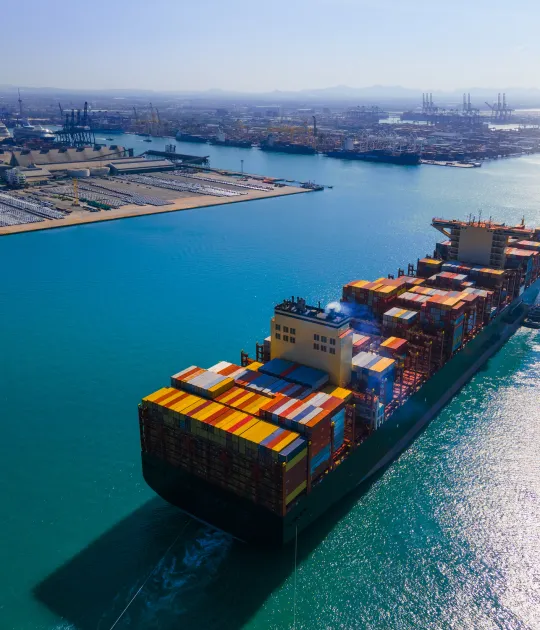
The maritime dimension is being closely monitored by the Ministry of Ports, Shipping and Waterways, which reported that 22 Indian-flagged vessels with 611 Indian seafarers remain in the western Persian Gulf region, with no incidents involving Indian vessels in the past 24 hours. Ports across India, including facilities such as Jawaharlal Nehru Port Authority and Deendayal Port Authority, are operating without congestion while augmenting storage capacity and extending operational support to maintain cargo flows. Continuous monitoring systems remain in place to ensure the smooth functioning of maritime trade.
The Ministry of External Affairs said it continues to closely track developments across the Gulf and wider West Asia region, with the safety, security and welfare of Indian nationals remaining the highest priority. Indian missions are functioning round the clock, coordinating assistance for seafarers, students and other citizens. Since late February, around 2.8 lakh passengers have returned to India, with flight operations being managed through a mix of scheduled and special services despite airspace restrictions in parts of the region, including closures in Kuwait and Bahrain and transit arrangements through Saudi Arabia.
As part of diplomatic outreach, Prime Minister Narendra Modi held discussions with leaders including Haitham bin Tariq, Anwar Ibrahim, Emmanuel Macron and Abdullah II, emphasising the need for de-escalation, dialogue and diplomacy while underlining the importance of safe and uninterrupted navigation through the Strait of Hormuz and stability in energy flows.
To mitigate the impact on trade, the government has approved a ₹497 crore package titled ‘Resilience and Logistic Intervention for Export Facilitation’ under the Export Promotion Mission, aimed at supporting exporters facing disruptions in global supply chains and logistics. The initiative has been developed through an inter-ministerial mechanism on supply chain resilience, reflecting a coordinated policy response to external shocks.
Even as India moved to stabilise the domestic situation, the conflict continued to intensify across West Asia. The strikes by Iran followed Israeli attacks on the South Pars gas field, a vast offshore reservoir in the Persian Gulf shared between Iran and Qatar, where it is known as the North Field. Recognised as the world’s largest natural gas field, South Pars holds an estimated 14 trillion cubic metres of gas and constitutes a major share of global proven reserves, forming the backbone of Iran’s domestic energy supply while underpinning Qatar’s position as a leading exporter of liquefied natural gas. Reports of damage and operational disruptions at key facilities have heightened concerns over global liquefied natural gas availability. The targeting of such a critical, transboundary energy asset signals a shift towards economically consequential infrastructure strikes, with potential implications for global gas supply, liquefied natural gas trade flows and energy-importing economies such as India, which has in recent years diversified crude sourcing toward suppliers including the United States, Russia and parts of Africa, while also expanding long-term liquefied natural gas contracting to reduce exposure to concentrated geopolitical risk.
Israel, backed by the United States, has intensified strikes on Iranian military and nuclear-linked facilities, while the strategic Strait of Hormuz remains under strain. There have also been reports of attempted strikes in northern Israel, including near energy facilities around Haifa, though the extent of damage and operational impact remains unclear.
On the northern front, hostilities between Israel and Hezbollah have escalated, with sustained rocket fire into Israeli territory and Israeli airstrikes across Lebanon, including in and around Beirut. Reflecting Israel’s position, Israel Defense Forces International Spokesperson Nadav Shoshani said, “Since Hezbollah decided to support the Iranian regime and attack Israel on March 2nd, they have fired ~700 rockets, missiles and UAVs toward Israel from areas south of the Litani River. Those same areas south of the Litani were supposed to be cleared of Hezbollah’s terror by the Lebanese army, yet they failed to do so. We have no choice but to operate against the threat Hezbollah poses to our civilians.”
From Tehran, Seyed Abbas Araghchi said, “Our response to Israel’s attack on our infrastructure employed FRACTION of our power. The ONLY reason for restraint was respect for requested de-escalation. ZERO restraint if our infrastructures are struck again. Any end to this war must address damage to our civilian sites.” In a separate remark, he added, “We’re only three weeks into this war of choice, imposed on both Iranians and Americans. This $200b is the tip of the iceberg. Ordinary Americans can thank Benjamin Netanyahu and his lackeys in Congress for the trillion-dollar ‘Israel First tax’ that’s about to hit U.S. economy.”
Iran’s President Masoud Pezeshkian said, “Such aggressive actions will yield no gains for the Zionist American enemy and their supporters. Rather, they will complicate the situation further and could lead to consequences beyond control, the scope of which would engulf the entire world.”
The conflict has also affected Palestinian areas, with casualties reported in the West Bank, indicating a widening geographic spread and reinforcing concerns over further regional spillover.
With the situation evolving across military, economic and diplomatic fronts, India’s response reflects a combination of supply-side management, regulatory enforcement, maritime vigilance, diplomatic engagement and citizen outreach, even as the broader conflict shows no immediate signs of de-escalation.
– global bihari bureau