Deadly Goa Blaze Raises Questions Police and Regulators Dodged
Panaji: A fierce public debate over law, enforcement and impunity has overshadowed the immediate horror of the blaze that tore through Birch by Romeo Lane in Arpora, Goa, on the night of December 6, 2025. The fire killed 25 people and injured several others, and the questions now dogging investigators and grieving families are not only who lit the spark that night but also how a high-profile venue with a history of violations was allowed to operate with so little effective supervision. The catastrophe has exposed a legal and administrative ecology in which paltry statutory penalties, lax inspections and opaque permit practices combined to turn a single event into a mass fatality.
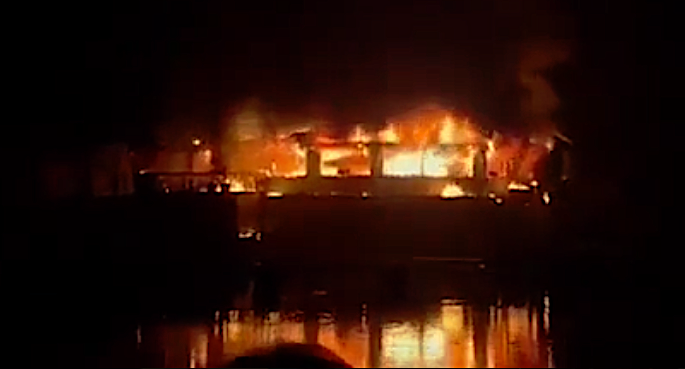
The flames began during a live performance shortly before midnight; patrons and staff reported a sudden flash and choking smoke within minutes. Forensic teams working at the scene say the most credible current hypothesis is that indoor pyrotechnics or an electrical spark near the stage ignited highly combustible decorative materials and drapery, producing a rapidly spreading blaze and dense smoke that filled the basement and kitchen levels. Early media accounts and witness statements had also suggested a possible gas-cylinder blast; investigators now treat the cylinder theory as an alternative line of inquiry rather than a confirmed cause, and forensic analysis of wiring, pyrotechnic residue and any gas connections is ongoing. Whatever the exact ignition mechanism, the lethal speed of the fire was amplified by features that should have been basic safety measures: there were no functioning sprinklers, no effective smoke-extraction in the lower levels, emergency exits were inadequate or obstructed, exit signage and emergency lighting were absent or non-operational, and staff training and evacuation procedures were either missing or ignored.
The human cost was immediate and stark. Twenty-five people died; the bulk were employees — kitchen staff and service workers who were trapped below while the upper floors filled with smoke — and among the dead were also tourists, including four members of a single family. Six survivors with severe injuries were hospitalised and treated for smoke inhalation and burns; hospitals treating the injured reported that most were in stable condition as operations and intensive care continued. Identification and handover of bodies proceeded over the following days, with some families arranging repatriation of remains; the process intensified calls for prompt compensation and clearer administrative responsibility.
A clear timeline is now part of the public record and central to accountability. Witnesses place the first visible signs of fire at roughly 11:40–11:50 p.m.; club staff and patrons attempted an ad hoc evacuation within the first five to ten minutes. Emergency calls were logged within minutes, but response and rescue were severely hampered: the single narrow service lane leading to the club forced fire tenders to stop approximately 400 metres from the entrance because they could not negotiate parked vehicles and the congested approach. Firefighters and rescue teams say the distance and access constraints delayed direct intervention and complicated entry with heavy rescue equipment, a factor that likely increased fatalities among those trapped in lower-floor enclosures.
Birch club blaze turns into indictment of Goa regulations
The licensing and compliance record of the club has become a central thread in the inquiry. Court and administrative records uncovered during the post-fire review show that the venue had received trade licences in the past, even as it faced demolition notices, environmental objections, and earlier complaints about unsafe operations. Fire-safety clearances were either expired, not renewed, or not properly verified; inspection logs, where available, show perfunctory checks that failed to record essential equipment or schedule follow-ups. According to documents and interviews that municipal officials have referenced in closed briefings, some inspections were signed off despite obvious non-compliance, and appeals and stays allowed continued operation after enforcement notices were issued. The state has suspended several local officials and municipal functionaries and has opened an administrative probe into how permits were granted and renewed.
Criminal proceedings have moved in parallel. Police filed an FIR naming the club’s proprietors, Saurabh Luthra and Gaurav Luthra, along with several senior managers and event organisers, under provisions appropriate for large-scale loss of life through alleged criminal negligence. Arrests were made of senior operational staff and managers; the two principal owners were reported to have left Goa hours after the fire, boarding an international flight, and police issued a Look-Out Circular while seeking wider assistance to locate them. Rumours about the owners’ whereabouts circulated almost immediately: some reports suggested they flew to Phuket shortly after the blaze; other accounts said they had already left the state by road and then by air. Authorities have pursued immigration and flight records and alerted agencies to prevent further travel; the possibility of international extradition or Interpol involvement remains a live contingency if formal requests are lodged. For the public, the image of owners absent while families bury loved ones has hardened the sense of impunity.
How weak laws let a Goa nightclub become a deathtrap
Legal scrutiny now focuses not only on individuals but on the law itself. Goa’s fire-safety framework, still rooted in legislation enacted decades ago, imposes surprisingly low financial penalties for failure to comply with fire-safety directives and limited custodial sentences only in narrowly defined obstruction cases. Critics point out the perverse economics: for high-revenue venues, token fines are absorbed as a cost of doing business, while the capital and operational expense of installing compliant suppression, detection and egress systems is avoided. Legislators, safety experts and civil-society campaigners have responded in public statements demanding immediate amendments that would raise penalties, introduce mandatory, frequent third-party audits, require continuous certification for event safety, and create a transparent registry of NOCs and inspection reports accessible to the public and enforcement authorities.
Officials have taken interim measures: the state government ordered a magisterial inquiry to reconstruct the permitting history, inspection records and chain of approvals, and to recommend disciplinary or criminal action for administrative lapses. The government also announced financial relief packages for victims’ next of kin and interim assistance for the injured; central funds and state ex gratia payments were pledged to address immediate needs while prosecutions proceed. In addition, authorities have sealed properties linked to the same promoters and directed a state-wide audit of nightlife and entertainment venues to identify similar compliance gaps and to suspend operations where life-safety is compromised.
The industry has felt the shockwave. Several venues voluntarily closed or were ordered to shut temporarily while audits are performed; trade bodies are warning of economic fallout during peak tourist season, but most publicly support rigorous compliance checks. For worker groups and migrant rights advocates, the disaster highlights deeper vulnerabilities: low-paid staff working in poorly regulated environments, with limited social protection, bore the brunt of the loss. Families of deceased workers have demanded swift prosecution and meaningful compensation rather than token gestures.
Nightlife profits vs lives: Goa blaze sparks legal reckoning
Those investigating the blaze stress that several pieces of evidence remain provisional. Forensic analysis of wiring, pyrotechnic residues, gas fittings and structural failures is expected to take weeks; only then can officials issue a final causation statement and prosecutors compile a complete case file. The magisterial inquiry, too, has a broader remit: to examine whether past enforcement actions were suppressed, whether political or bureaucratic interference occurred, and whether systemic corruption or negligence allowed an unsafe environment to persist.
The question now confronting Goa’s authorities is both legal and moral: will the deaths at Birch by Romeo Lane force a durable rewrite of fire-safety law and enforcement practices, or will they become a savage but isolated episode that dissipates amid reparations and rhetoric? The answer will be measured not only in prosecutions but in whether the state upgrades its codes, strengthens inspections, increases penalties to meaningful levels, and ensures that compliance with life-safety standards is neither negotiable nor optional. For the families who have lost breadwinners, for the injured recovering in hospital, and for a tourism sector that depends on safety as much as spectacle, any reform that arrives too late will be of little consolation.
– global bihari bureau
(Editor’s integrated note: legal references and statutory penalties cited in this report are derived from the state fire-safety framework and the relevant rules that govern fire force operations and penalties. The report is based on official statements, investigative documents released to authorities, inspection and permit records reviewed by the inquiry, police filings and interviews with emergency responders and victims’ families; certain technical findings described here are provisional pending final forensic and magisterial reports.)