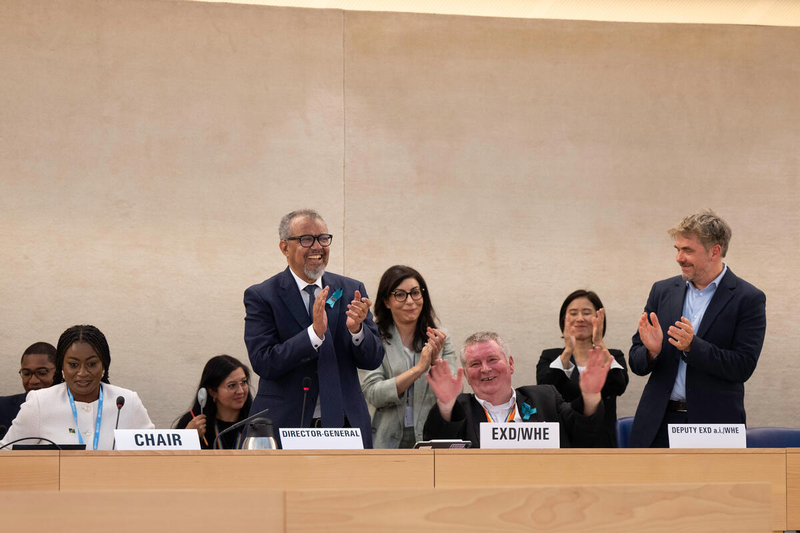
Celebrations at the World Health Assembly. Photo: Christopher Black/WHO
Geneva: In a historic milestone, the 78th World Health Assembly, the World Health Organization’s highest decision-making body, adopted the world’s first Pandemic Agreement by consensus today, concluding over three years of intense negotiations. Triggered by the stark inequities and shortcomings exposed during the COVID-19 pandemic, this landmark accord aims to strengthen global collaboration, ensuring a more equitable and robust response to future pandemics. The adoption, finalised in a plenary session, followed a decisive vote on May 19, 2025, in the Committee, where 124 Member States endorsed the agreement, with zero objections and 11 abstentions, signalling a global commitment to safeguarding humanity from future health crises.
The journey to this agreement began at the height of the COVID-19 crisis, when governments worldwide recognised the urgent need to address gaps in national and global pandemic responses. The resulting framework emphasises equitable and timely access to vaccines, therapeutics, and diagnostics, ensuring that no nation is left vulnerable. WHO Director-General Dr. Tedros Adhanom Ghebreyesus hailed the agreement as a triumph for public health, science, and multilateral action. “The world is safer today thanks to the leadership and commitment of our Member States,” he said, emphasising that the accord protects societies and economies from the devastating losses endured during COVID-19 by fostering collective preparedness and response.
Dr. Teodoro Herbosa, Philippines Health Secretary and President of this year’s World Health Assembly, presided over the adoption and described it as a once-in-a-lifetime opportunity to learn from the COVID-19 crisis. “Governments acted with great purpose and urgency, exercising their national sovereignty to negotiate this historic agreement,” he said. “Now, we must implement its critical elements with the same urgency, ensuring equitable access to life-saving health products.” The agreement explicitly safeguards national sovereignty, stating that the WHO, including its Director-General, has no authority to direct or alter domestic laws or policies, such as imposing travel bans, vaccine mandates, therapeutic or diagnostic measures, or lockdowns, balancing global cooperation with national autonomy.
At its core, the agreement establishes mechanisms to enhance pandemic prevention, preparedness, and response. A key component is the Pathogen Access and Benefit Sharing (PABS) system, with negotiations set to begin through an Intergovernmental Working Group for consideration at the 2026 World Health Assembly. Under PABS, pharmaceutical manufacturers will play a pivotal role by providing the WHO with rapid access to 20% of their real-time production of safe, quality, and effective vaccines, therapeutics, and diagnostics during a pandemic. These products will be distributed to countries based on public health risk and need, with particular attention to the needs of developing nations, addressing the inequities seen during COVID-19.
The agreement also lays the foundation for a Coordinating Financial Mechanism and a Global Supply Chain and Logistics Network to facilitate rapid, safe, and affordable access to pandemic-related health products during public health emergencies, including pandemics, and for their prevention. These mechanisms aim to remove barriers and ensure equitable distribution, particularly for countries in need. Once the PABS annexe is adopted, the agreement will open for signatures and require 60 ratifications to enter into force, marking a critical step toward global implementation.
Negotiated under Article 19 of the WHO Constitution, the Pandemic Agreement is only the second international legal agreement of its kind, following the 2003 WHO Framework Convention on Tobacco Control, which entered into force in 2005. Its adoption reflects a global resolve to prevent the vulnerabilities exposed by COVID-19. The World Health Assembly’s resolution also outlines immediate next steps, including launching the PABS negotiation process and initiating efforts to establish the financial and logistical frameworks. As the world moves forward, this agreement stands as a testament to the power of collective action, offering a blueprint for a safer, more equitable response to future pandemics.
– global bihari bureau