Satya Nadella Prime Minister Narendra Modi with Satya Nadella, Chairman and CEO of Microsoft, in New Delhi today.
AI and Chips Drive Big Corporate Push Toward India
Microsoft, Intel, Cognizant, Signal India Tech Pivot
New Delhi: A rare convergence of three top global technology leaders in New Delhi on December 9, 2025 — Satya Nadella of Microsoft, Lip-Bu Tan of Intel, and Ravi Kumar Singisetti of Cognizant — offered a revealing snapshot of how India is positioning itself at the centre of the next technological shift. While each meeting with Prime Minister Narendra Modi was framed around partnership and optimism, the substance of their respective corporate commitments indicates something deeper: global tech is recalibrating its Asia strategy with India as the anchor.
Microsoft delivered the most consequential announcement. Satya Nadella committed US$17.5 billion, the company’s largest-ever investment in Asia, to expand cloud and AI infrastructure, support skilling programmes, and accelerate integration of AI tools across India’s public digital systems. The investment, spread across four years, includes new hyperscale data-centre capacity expected to go live by mid-2026 and an expanded national skilling programme aimed at training 20 million Indians by 2030. These elements form the backbone of Microsoft’s plan to position India as both a production base and a population-scale AI deployment environment.
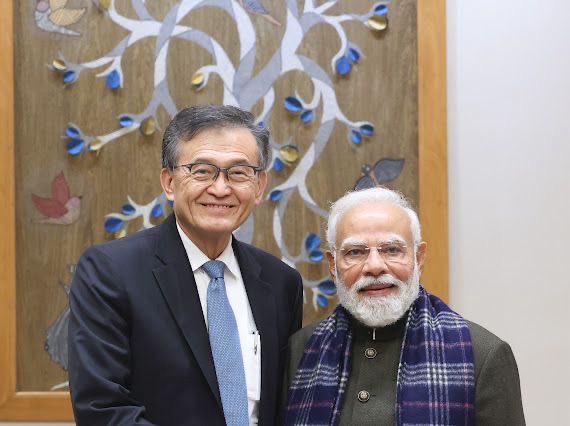
Intel’s engagement came with fewer headline numbers but with strategic weight. Lip-Bu Tan reaffirmed Intel’s commitment to India’s semiconductor ambitions under the India Semiconductor Mission, at a time when the country is offering aggressive incentives for chip manufacturing and packaging facilities. Intel has already moved toward closer collaboration with the Tata Group in chip design, assembly, or testing — an alignment that suggests multinational chipmakers now see India not merely as an assembly location but as a potential ecosystem hub. Reuters has reported that Tata has signed Intel as a key customer in its US$14 billion semiconductor foray, a sign that multinational supply chains may gradually begin to stitch India into core hardware manufacturing operations.
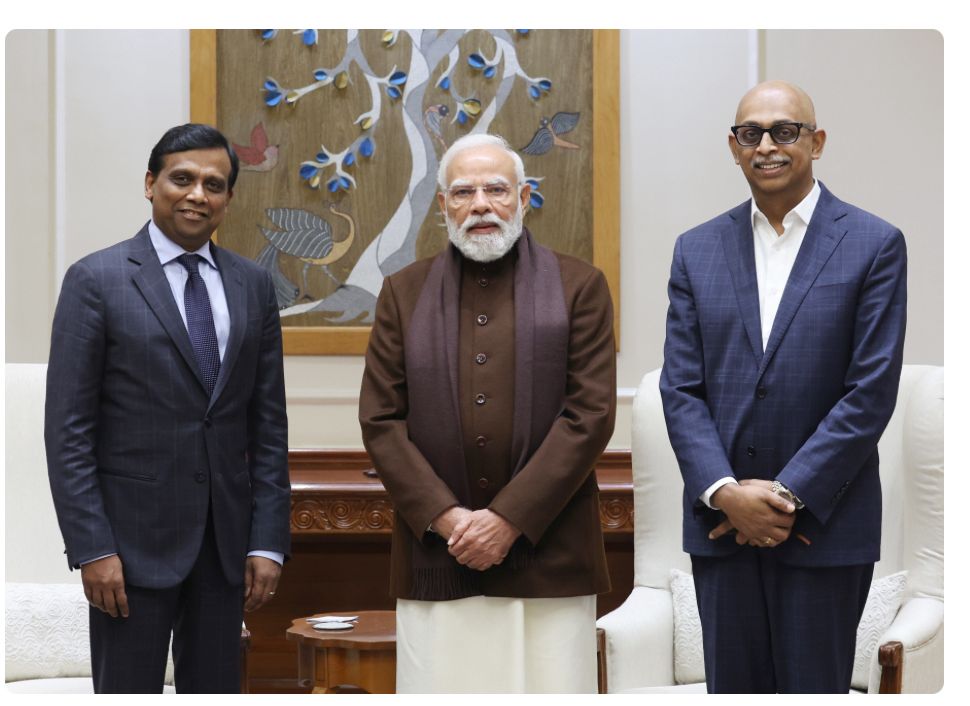
Cognizant’s discussions with the Prime Minister emphasised growth in “futuristic sectors,” but the underlying strategy points toward geographic diversification and workforce deepening. Company leaders Ravi Kumar S. and Rajesh Varrier indicated that expansion will go beyond traditional urban corridors into emerging cities, reflecting the firm’s intent to tap India’s wider talent pool and spread its delivery footprint. This aligns with Cognizant’s recent pattern of capability-building in AI, cloud, and advanced services in India — an attempt to reposition itself in an increasingly competitive IT-services landscape.
Viewed together, the three meetings reveal a broader narrative: global technology firms now see India not only as a high-volume market or a back-office engineering base but as an indispensable arena for next-generation technological development and deployment. The simultaneous interest in AI infrastructure, semiconductor capability, and advanced IT services suggests the early contours of a more integrated tech ecosystem, where software, hardware, and talent pipelines reinforce each other.
The government’s messaging amplified this direction. Modi framed India’s youth — particularly in artificial intelligence and advanced digital skills — as the key draw for multinationals. For companies, this demographic appeal blends with a policy environment that has shifted decisively in favour of high-value manufacturing, cloud expansion, and sovereign-ready digital systems. Yet the scale of the commitments also raises the stakes. Execution gaps in infrastructure, supply chains, and regulatory clarity could determine how much of these pledges translate into operational reality. For the moment, however, the alignment of corporate strategy and national ambition appears unusually strong.
At a geopolitical moment when countries are competing to anchor the AI and semiconductor value chains, the sight of three global CEOs arriving in quick succession in New Delhi serves as both a signal and leverage — India is increasingly a place where the world’s biggest technology bets are being placed.
– global bihari bureau