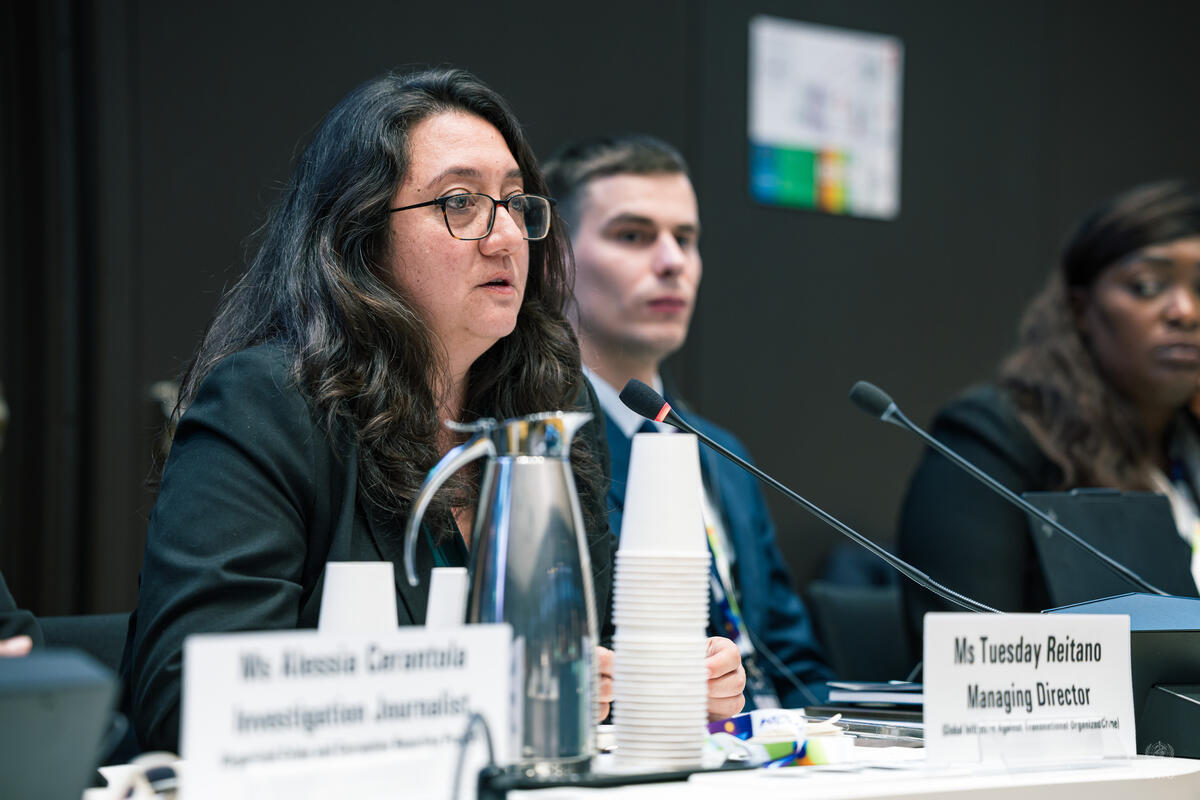
Fourth session of the Meeting of the Parties (MOP4) to the Protocol to Eliminate Illicit Trade in Tobacco Products, Geneva, Switzerland, 24-26 November 2025. Copyright WHO/FCTC/Antoine Tardy
New tobacco control rules target waste and crime
Geneva: A major international effort to stamp out the illegal trade in tobacco products formally began today at the World Health Organization (WHO) headquarters in Geneva, only two days after the conclusion of a landmark global tobacco control conference that adopted far-reaching decisions on environmental protection, industry liability, and sustainable funding.
The Fourth Meeting of the Parties (MOP4) to the Protocol to Eliminate Illicit Trade in Tobacco Products opened this morning and will continue until 26 November. Seventy-one countries that have ratified the Protocol, the first and only protocol to the World Health Organization Framework Convention on Tobacco Control (WHO FCTC), are taking part. The Protocol, which entered into force in 2018, is a stand-alone international treaty designed to eliminate all forms of illicit trade in tobacco products through coordinated national measures and cross-border cooperation. Delegates have chosen the theme “United for justice, against illicit tobacco trade” for this session.
According to the latest estimates, illicit trade currently represents approximately one in every nine tobacco products sold worldwide, or around 11 per cent of the total market. If this illegal activity were eliminated, governments around the world could collect an additional US$47.4 billion in tax revenue each year while simultaneously reducing the availability of cheap tobacco and weakening criminal networks that profit from smuggling, counterfeiting, and tax evasion.
Andrew Black, Acting Head of the Secretariat of the WHO FCTC, told reporters that the illicit trade “undermines public health, fuels organised crime and deprives governments of vital revenue.” He described the Meeting of the Parties as a crucial platform for strengthening international cooperation and ensuring countries receive the technical and financial support needed to fulfil their obligations.
The opening day featured a high-level segment titled “Justice and Prosecution: Strengthening Legal Action to Eliminate Illicit Trade in Tobacco Products.” Speakers included senior officials from the International Criminal Police Organisation (INTERPOL) and public prosecutors from Gabon and Latvia who presented concrete cases of cross-border tobacco smuggling and the legal tools used to dismantle the networks behind them. The session also saw the official launch of a new global progress report compiled from data submitted by the 71 Parties, detailing advances and remaining gaps in implementing the Protocol.
Over the next two days, delegates will examine a wide range of technical and policy issues, among them the strengthening of international cooperation mechanisms, the mobilisation of financial resources and technical assistance for developing countries, the introduction or improvement of licensing systems for tobacco manufacturers, importers, exporters, and distributors, and the adoption of enhanced supply-chain control measures such as tracking and tracing systems and security features on packaging.
The Geneva gathering follows immediately after the Eleventh Session of the Conference of the Parties (COP11) to the parent treaty, the WHO Framework Convention on Tobacco Control, which closed on 22 November after six days of negotiations involving 160 of the Convention’s 183 Parties. That meeting, which drew a record of more than 1,600 registered delegates, including government representatives, non-governmental organisations, and youth observers, reached decisions on several long-standing and emerging challenges in tobacco control.
Among the most significant outcomes was a new decision on tobacco and the environment. Acknowledging that trillions of cigarette butts containing non-biodegradable plastic filters are discarded annually and release toxic chemicals into soil and waterways, Parties invited governments to explore comprehensive regulation of tobacco product components and associated electronic devices that increase environmental harm, always with public health considerations taking priority.
Another decision reaffirmed that raising and earmarking domestic resources remains the cornerstone of predictable, long-term funding for national tobacco control programmes. On industry liability, Parties agreed to encourage stronger implementation of Article 19 of the Convention, which calls for legislative action on criminal and civil responsibility for tobacco-related harm, and emphasised the value of increased cooperation between countries in pursuing such cases.
The Conference also adopted forward-looking measures under Article 2.1 that allow Parties to go beyond the minimum obligations of the treaty and endorsed a complete ban on the sale and use of all tobacco products, heated tobacco products, electronic nicotine delivery systems (ENDS), electronic non-nicotine delivery systems (ENNDS), nicotine pouches, and disposable devices in all United Nations premises worldwide, both indoor and outdoor.
Delegates further stressed the continuing importance of Article 5.3, which obliges Parties to protect tobacco control policies from commercial and vested interests of the tobacco industry, particularly in light of aggressive marketing of novel products accompanied by unproven health claims.
In a closing announcement, Armenia was confirmed as the host country for the next full cycle of meetings: the Twelfth Session of the Conference of the Parties (COP12) and the Fifth Meeting of the Parties (MOP5) to the Illicit Trade Protocol will both take place in Yerevan in 2027.
Taken together, the decisions reached in Geneva over the past ten days represent one of the most ambitious updates to the global tobacco control framework since the original WHO Framework Convention on Tobacco Control was adopted in 2003. With the Convention now covering more than 90 per cent of the world’s population and the Illicit Trade Protocol steadily gaining ratifications, the back-to-back meetings have sent a clear signal that governments intend to intensify action on multiple fronts: public health protection, environmental sustainability, revenue security, and the fight against transnational organised crime linked to tobacco smuggling.
– global bihari bureau