Export Prices Ease Globally; Supply Buffer Grows
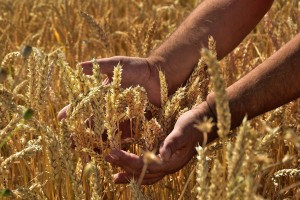
New Delhi/Rome: The Food and Agriculture Organization of the United Nations (FAO)’s Cereal Supply and Demand Brief projected world cereal production for 2025 at 3.003 billion tonnes, the first time global output is expected to exceed three billion tonnes. Coarse grains and rice are also expected to increase, with rice output growth led by Bangladesh, Brazil, China, India, and Indonesia. World cereal utilisation in 2025/26 is forecast to rise 2.1 per cent from the previous year, stocks are projected to reach 925.5 million tonnes, and global cereal trade is expected to increase 3.3 per cent to 500.6 million tonnes.
The Brief also provides early observations on winter wheat sowing in the northern hemisphere and coarse-grain planting in the southern hemisphere, noting seasonal conditions and planting progress.
Meanwhile, global food commodity prices continued their downward trend in November 2025. The FAO Food Price Index (FFPI), which tracks international export quotations for cereals, vegetable oils, dairy, meat, and sugar, weighted according to 2014–2016 export shares, averaged 125.1 points, down 1.2 per cent from October and 2.1 per cent below its November 2024 level. This represents the third consecutive monthly decline, and the index remains 21.9 per cent below its March 2022 peak. The index reflects global export quotations but does not directly capture domestic retail prices, which are influenced by transport, storage, taxes, tariffs, and exchange rates.
While prices for vegetable oils, dairy, meat, and sugar fell, in the cereal markets, the FAO Cereal Price Index rose 1.3 per cent, with wheat prices increasing, maize firming, and rice quotations declining. Global wheat prices increased 2.5 per cent in November, supported by reports of potential Chinese interest in United States of America supplies, ongoing hostilities affecting Black Sea export routes, and reduced planting expectations in the Russian Federation for the 2026 harvest. Maize prices strengthened on demand for Brazilian exports, while rice quotations declined amid subdued import demand for Indica and fragrant varieties.
Vegetable oil prices fell 2.6 per cent, as palm, rapeseed, and sunflower oil quotations declined on ample supplies, offsetting a modest increase in soyoil, which was supported by biodiesel demand in Brazil. Meat prices edged down 0.8 per cent, with poultry and pig meat softening amid abundant exportable supplies and heightened competition, while bovine meat prices remained broadly stable and ovine prices increased. Dairy prices decreased 3.1 per cent, led by butter and whole milk powder, reflecting rising milk production and readily available exportable supplies. Sugar prices fell 5.9 per cent, reflecting strong global production in Brazil, India, and Thailand.
India’s position in the global food market is particularly relevant. The country remains a major importer of edible oils, with import dependence estimated at 55–63 per cent in recent seasons and total imports around 16 million tonnes. India maintains domestic procurement and buffer-stock schemes for staple cereals through the Food Corporation of India (FCI) and applies Minimum Support Prices for wheat, rice, and other designated crops. Government notifications also regulate imports and exports of edible oils and certain staples. This combination of import exposure and domestic policy instruments provides a factual context for understanding how international price movements interact with India’s markets.
From a business perspective, the decline in international export prices for vegetable oils, sugar, and dairy may influence procurement costs for processors, distributors, and retailers in India, while rising wheat and maize prices may affect inventory strategies and sourcing decisions. Regional cereal production in India, combined with export capacity in rice and wheat, also positions the country as a key player in South Asia’s food-security landscape.
The data highlight that although international prices for some commodities have softened, retail costs in India continue to be shaped by transport, storage, taxes, and local supply conditions. The intersection of global commodity prices, domestic procurement policies, and buffer-stock levels demonstrates India’s dual role as a participant in international markets and a manager of domestic food security.
Taken together, the November 2025 figures depict a global food market characterised by declining prices for most commodities, rising cereal quotations, record projected production and stocks, and a complex interplay with domestic market conditions in major consuming countries such as India.
– global bihari bureau