Gaza’s High Literacy Legacy Shattered by War
Gaza’s Children Face Education Crisis Amid Ruins
Gaza/Geneva: Before the conflict, Gaza had some of the highest literacy rates in the region, and schools, universities, and libraries served hundreds of thousands of children and young adults. Education was a central part of daily life, providing structure and opportunities for learning. Today, nearly two and a half years of war have left more than 90 per cent of schools damaged or destroyed, and around 60 per cent of school-aged children without access to in-person learning, according to the United Nations Children’s Fund (UNICEF).
“Almost two and a half years of attacks on Gaza’s schooling have left an entire generation at risk,” said James Elder, UNICEF spokesperson. “Schools, universities, and libraries have been destroyed, and years of progress have been erased. This is not just physical destruction. It is an assault on the future itself.”
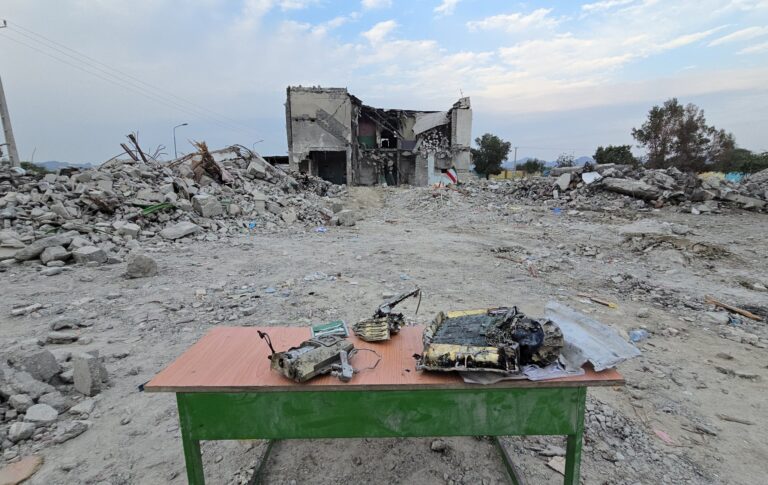
With almost half of Gaza’s population under 18, the disruption to education affects hundreds of thousands of children. Classrooms lie in rubble, libraries are damaged, and university buildings have been partially or fully destroyed.
Temporary Learning and Essential Services
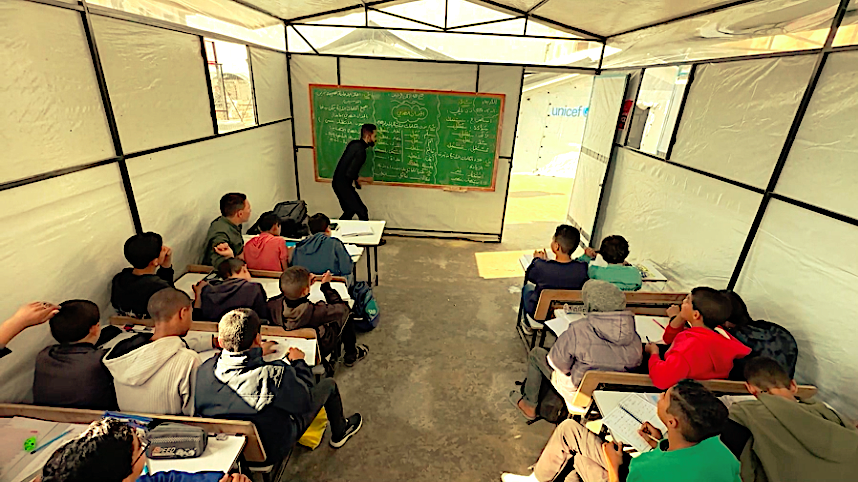
In response, UNICEF, together with the Palestinian Ministry of Education, the United Nations Relief and Works Agency for Palestine Refugees in the Near East (UNRWA), and other partners, has expanded its “Back to Learning” programme. The initiative aims to reach 336,000 children in 2026, providing structured lessons in temporary learning centres. These centres also connect children to health care, nutrition support, sanitation, and mental health and psychosocial services.
“The demand for spots is overwhelming,” Elder said. “Each centre has long waiting lists. When I was in Gaza, I had dozens of parents outside learning centres pleading for places for their children. Children cannot wait for brick-and-mortar schools. Learning must restart immediately, even under canvas.”
Many of the temporary classrooms operate in tents or community halls, which offer limited protection from Gaza’s seasonal temperatures — cold in winter and extreme heat in summer. Despite these conditions, children attend classes wherever possible, maintaining access to learning and essential services.
Costs and Funding Needs
Providing education for one child in these temporary centres for a year, including psychosocial support, costs around 280 United States dollars. To reach 336,000 children, UNICEF has identified an urgent funding requirement of 86 million dollars.
Humanitarian Access and the Rafah Crossing
Restoring education is closely linked to humanitarian access. The Rafah border crossing between Egypt and southern Gaza, described by UNICEF as a “lifeline” for medical evacuations, family reunification, and essential supplies, has been mostly closed since May 2024. Although the ceasefire agreement in October 2025 envisioned reopening the crossing, it remains largely inaccessible.
“Families are desperate for the crossing to open,” Elder said. “How many families have been separated? There is a great sense of urgency on a personal level.”
Today, a United Nations spokesperson in New York said Secretary-General António Guterres urged all parties to move forward “in good faith, and without delay” with the next phases of the United States-led ceasefire plan. Guterres highlighted that sustained and unhindered access, particularly through Rafah, is essential for the delivery of critical services, including education.
Media reports indicate that Israel has agreed to reopen Rafah once the remains of the last Israeli hostage held in Gaza are recovered. On Monday, January 26, 2026, reports confirmed the retrieval of Ran Gvili, who was among more than 250 Israeli and foreign nationals abducted during the 7 October 2023 attacks. Until the crossing reopens, teachers, learning materials, and other essential supplies face logistical challenges.
Maintaining Continuity and Supporting Children
UNICEF emphasises that education in Gaza is more than academic instruction. Structured learning provides children with routine and access to services that support their physical and mental well-being. Temporary learning centres allow children to continue attending school and accessing essential services, even as reconstruction of permanent facilities proceeds.
Experts warn that prolonged disruption to schooling may have long-term effects on academic achievement, social development, and psychological health. Mental health and psychosocial support, integrated into the temporary centres, helps children cope with the trauma of conflict while maintaining structured daily activity.
Rebuilding the System
The long-term challenge remains substantial. Hundreds of schools will require reconstruction, thousands of teachers need support, and hundreds of thousands of children need safe access to learning. Temporary programmes are critical to prevent further interruption in education while full reconstruction takes place.
“Education was a source of stability and opportunity for generations in Gaza. Today, that system has been heavily affected, and urgent support is needed to restore it,” Elder said.
The Stakes for Gaza’s Children
The contrast between Gaza’s pre-war educational achievements and current conditions illustrates the scale of the crisis. Children without access to classrooms risk falling behind academically and socially, while also losing contact with the support services that schools provide.
UNICEF and partners continue to expand programmes and advocate for funding and humanitarian access. The ability of Gaza’s children to resume learning safely, consistently, and fully will depend on immediate support from the international community.
– global bihari bureau