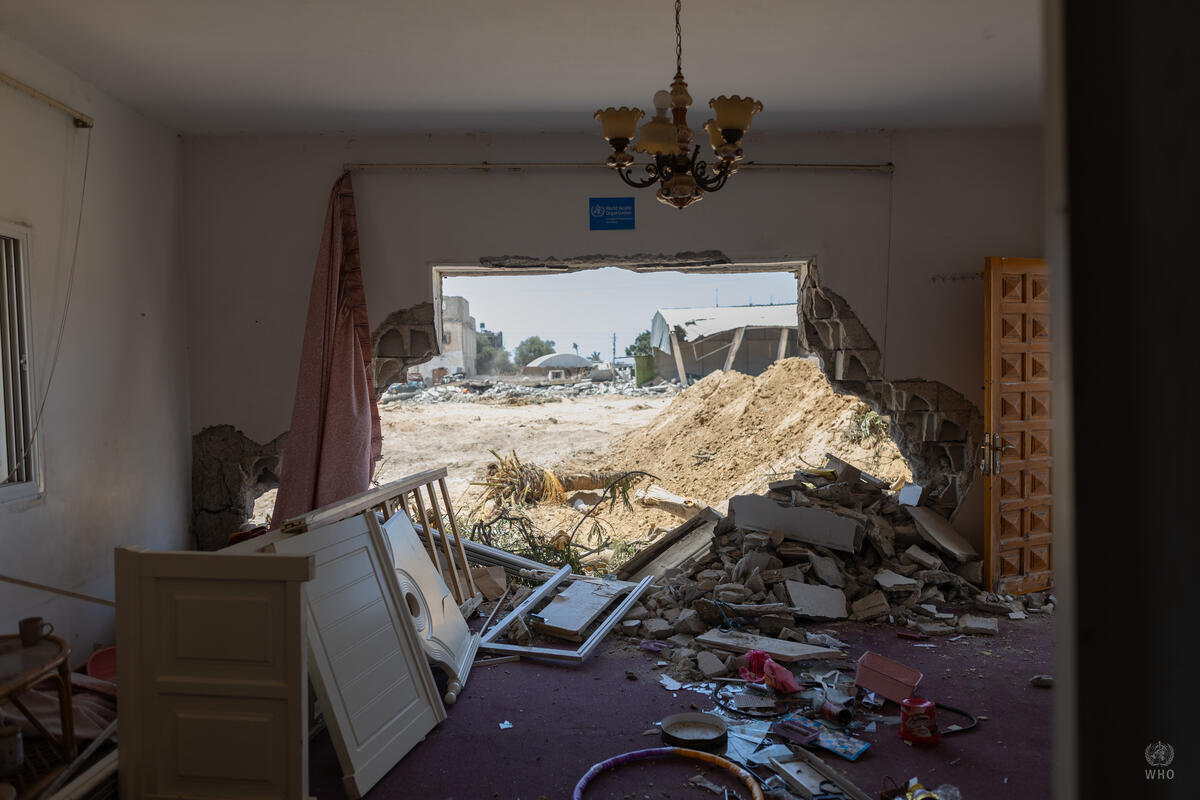
Attacks on a building housing WHO staff in Deir al Balah in Gaza, the mistreatment of those sheltering there, and the destruction of its main warehouse.
Geneva: The Gaza Strip faces a spiralling humanitarian crisis, with the Palestinian Ministry of Health reporting 61,158 deaths and 151,442 injuries since October 7, 2023. These include 1,655 fatalities and over 11,800 injuries since May 27, 2025, largely from violence near food distribution sites run by the Israeli and US-backed Gaza Humanitarian Foundation or during aid drops.
The United Nations, hampered by restricted access and Israeli military displacement orders covering 86% of Gaza, has called for a unified, UN-led aid system based on international humanitarian law, warning that current efforts are woefully inadequate.
Dr. Rik Peeperkorn, WHO Representative in the occupied Palestinian territories, told journalists in Geneva that Gaza’s health system is on the verge of collapse, with less than 50% of hospitals and 38% of primary healthcare centres partially functional.
Hospitals are overwhelmed, with Al-Shifa Hospital at 240% bed capacity and Ahli Hospital at 300%, grappling with persistent shortages of blood, plasma, and 52% of essential medicines, alongside 68% of medical consumables like syringes and bandages. Malnutrition has killed 147 people in 2025, including 98 adults and 49 children, 39 under five. In July, 12,000 children under five were identified with acute malnutrition, including 2,562 severe cases, the highest monthly figure recorded.
Since August 7, 452 suspected meningitis cases and 76 cases of Guillain-Barré syndrome, a post-infection disorder causing muscle weakness or paralysis, have emerged, exacerbated by collapsed water, sanitation, and hygiene systems, overcrowded shelters, and malnutrition. Critical treatments like intravenous immunoglobulin and plasma exchange are unavailable, and anti-inflammatory medicines are out of stock.
WHO has delivered 80 trucks of medical supplies since June, but entry processes are slow, with items like ICU beds, anaesthesia machines, and assistive devices often denied. Israeli evacuation orders have placed the WHO’s Gaza City warehouse, one primary healthcare centre, and a medical point in military zones, with four hospitals, including a field hospital and an ambulance centre, at risk of being overwhelmed by evacuees. Dr. Peeperkorn stressed the urgent need to restock hospitals and rebuild WHO reserves, a task hindered by ongoing restrictions and the looming evacuation of Gaza City, which the UN condemns as a violation of humanitarian law.
– global bihari bureau