Children at Acute Risk as Gaza Floods Hit Camps
Gaza/Geneva: Winter has arrived in Gaza, but with it, a deeper and more ruthless threat than the cold: a confirmed famine gripping large swaths of the enclave, even as a fragile peace plan offers new diplomatic hope. Over half a million people are now living in conditions described as “catastrophic,” with food, fuel, and medical aid barely keeping pace with need — and aid access still hamstrung by the deadly legacy of conflict.
The famine declaration, issued in recent months by a broad body of international food-security agencies, is unprecedented in Gaza’s history. It confirms that three grim benchmarks — extreme food deprivation, widespread malnutrition, and starvation-linked deaths — have been breached. The analysis warns that the situation may worsen, expanding to other parts of Gaza in the coming weeks if large-scale assistance and safe access are not urgently secured.
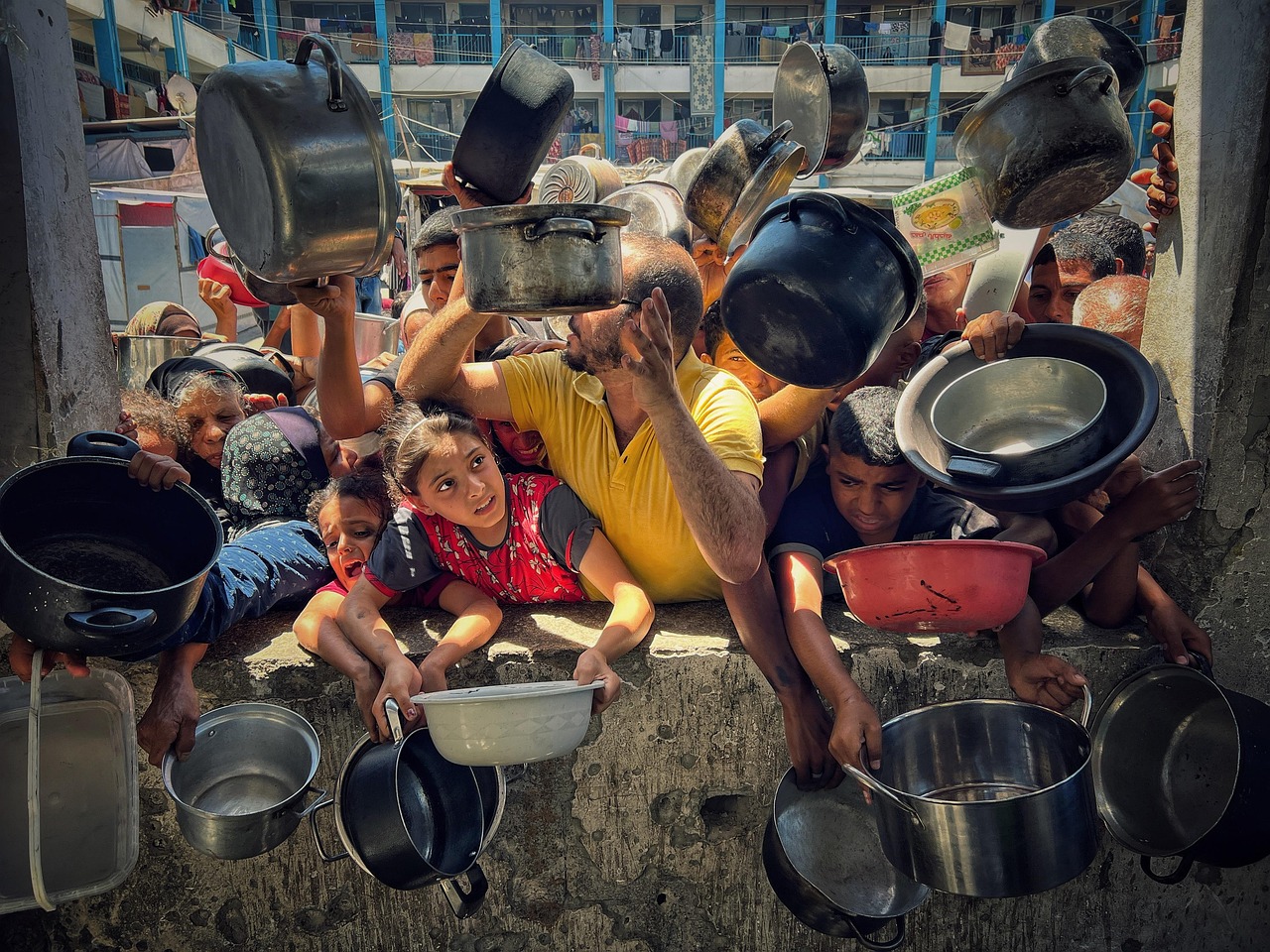
Many families now shelter in temporary camps carved out of concrete ruins or crowded public buildings, displaced multiple times, and hunkered down in flimsy tents. When rain falls, those tents flood; when fuel runs out, water pumps stall, and kitchens go cold. For children already weakened by months of poor nutrition, the risk of hypothermia and infection is no longer hypothetical — it is a daily reality.
Even before the rain hit, food systems in Gaza were collapsing. Virtually all farmland is either devastated or inaccessible, cutting off much of the local food supply. At the same time, prices for what little food is available have soared, pushing basic staples out of reach for many. Aid trucks carry in food, but independent agencies report that only a fraction of what is needed can be reliably delivered. In some cases, dozens of tanker lorries carrying aid have been looted or turned back. Trucks that do make it in often face delays, security inspections, and operational bottlenecks that drastically reduce the volume that ultimately reaches the most vulnerable.
Fuel — the lifeblood of infrastructure during this crisis — is in seriously short supply. Hospitals, water treatment plants, and bakeries are running on dwindling reserves. Without fuel, even mobile clinics lack power, and the system that purifies drinking water or warms tents falters. Sanitation risks rise, heating options disappear, and medical services risk collapse just when they are needed most.
Aid workers note that even when crossings open, the flow of relief is not enough. One of the few entry points recently reopened has been used to deliver high-calorie biscuits into the famine-stricken north, but that effort alone cannot make up for the scale of the crisis. Internally, humanitarian corridors must be kept open without interruption — but insecurity, bureaucratic hurdles, and competing political interests continue to block full access.
Against this bleak backdrop, a recent vote at the United Nations Security Council offered a rare glimmer of strategic optimism. The Council endorsed a plan calling for a transitional “Board of Peace” in Gaza, and the deployment of a temporary international force — a move designed to stabilise the enclave, restore essential services, and support reconstruction. Aid agencies welcomed the resolution, but stressed that political progress must be matched by operational change: safe and sustained access for relief, not just promises on paper.
Humanitarian officials argue that the plan’s real success will be measured not in boardroom agreements but in the practical relief it unlocks: more food, uninterrupted fuel, and protection for aid convoys. Without that, the famine’s grip could tighten even as the world watches a fragile political architecture take form.
In the camps, parents speak in whispers of their children’s frail bodies and the constant fear that the storm outside their tents may be matched only by the storm inside them. Aid workers move among them, distributing blankets, checking for malnutrition, trying to stay one step ahead of disease. The rare deliveries of food are met with gratitude and grief: gratitude that they have enough to feed their children today, and grief at how little certainty there is for tomorrow.
This is not simply a humanitarian crisis born of war — it is a structural catastrophe. The famine reflects not just the destruction of crops and displacement of people, but a breakdown of food systems, markets, and institutions. These are not emergencies that can be patched over; reversing them will require large-scale, sustained aid — and the political will to ensure that every corridor, crossing, and concession translates into real relief.
For Gaza’s most vulnerable — especially its children — the stakes could not be higher. The coming weeks may test whether international promises can keep pace with their most urgent needs, before hunger claims even more lives.
– global bihari bureau