© UNICEF
Gaza Food Crisis Still Acute Despite Famine Rollback
Rome/Geneva/New York: Famine conditions in the Gaza Strip have been pushed back following the ceasefire declared on October 10, 2025, but United Nations agencies warn that the situation remains highly fragile, with large sections of the population still facing extreme hunger, malnutrition and the risk of renewed catastrophe if humanitarian access falters.
The latest Integrated Food Security Phase Classification (IPC) analysis confirms that no area of Gaza is currently classified as being in Famine (IPC Phase 5), marking an improvement from the August 2025 assessment, which detected famine conditions, particularly in the Gaza Governorate. The shift reflects improved humanitarian and limited commercial access since the ceasefire, alongside a reduction in the intensity of hostilities, rather than any recovery of livelihoods or food systems. The overall picture remains dire, with the entire Gaza Strip assessed to be in Emergency (IPC Phase 4) through mid-April 2026 and pockets of Catastrophe persisting.
According to the IPC findings, around 1.6 million people—approximately 77 per cent of Gaza’s population—continue to face high levels of acute food insecurity. This includes more than 500,000 people experiencing Emergency conditions and over 100,000 people assessed as being in a Catastrophe during October and November 2025. Emergency classification indicates large food consumption gaps, high levels of acute malnutrition and an elevated risk of excess mortality if conditions persist. While the population facing the most extreme conditions is projected to decline sharply to around 1,900 people by mid-April 2026, the analysis stresses that these projections are entirely conditional on the continuation of current ceasefire conditions and sustained, expanded and predictable humanitarian and commercial access.
Acute malnutrition remains at alarming levels. Gaza Governorate continues to be classified as Critical for acute malnutrition, while Deir al-Balah and Khan Younis are assessed at Serious levels. North Gaza could not be formally analysed due to data gaps, though nutrition partners report persistently severe conditions. Across the Strip, an estimated 101,000 children aged six to 59 months are projected to suffer acute malnutrition through October 2026, including more than 31,000 cases of severe acute malnutrition. A further 37,000 pregnant and breastfeeding women are expected to require urgent nutrition support. Health actors warn that roughly one in ten severely malnourished children is likely to develop medical complications requiring inpatient treatment, placing additional pressure on a health system that remains only partially functional.
Despite better market availability following increased food inflows, most households remain unable to afford nutritious diets. No children aged six to 23 months are meeting minimum dietary diversity requirements, and two-thirds of children are experiencing severe food poverty, consuming only one or two food groups. Protein-rich foods remain scarce and prohibitively expensive, leaving nearly four out of five households unable to meet basic food needs or access safe drinking water.
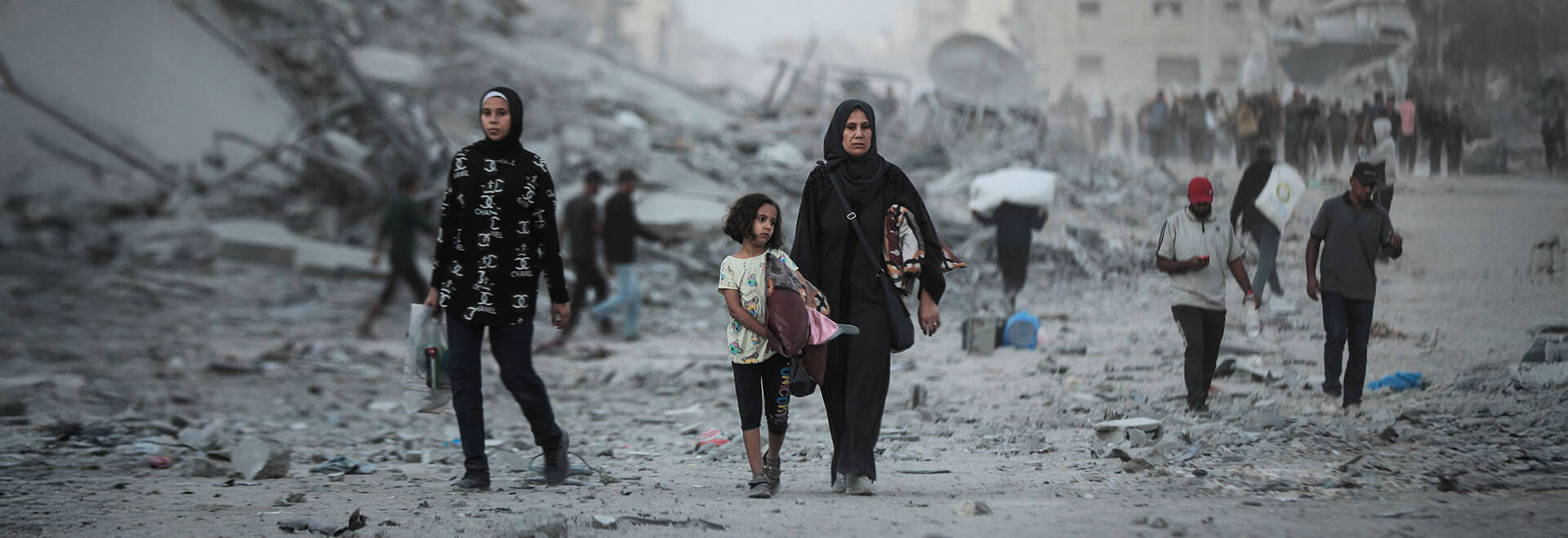
Living conditions continue to compound nutritional and health risks. More than 730,000 people have been displaced since the ceasefire, many sheltering in overcrowded and makeshift conditions. Damage to water, sanitation and hygiene infrastructure remains extensive, with only about half the population having access to basic sanitation services. Combined with winter weather, families are resorting to burning wood or waste for warmth, accelerating the spread of respiratory infections, diarrhoeal disease and skin conditions, particularly among children.
The IPC analysis highlights the near-collapse of local food systems as a central driver of ongoing food insecurity. More than 96 per cent of cropland has been damaged or rendered inaccessible, fishing remains largely prohibited, livestock losses are widespread, and unemployment is estimated at around 80 per cent. While some humanitarian deliveries of food, animal feed and essential goods have resumed, livelihoods remain shattered and dependency on aid remains overwhelming.
Although conflict-related fatalities have declined since the ceasefire, insecurity persists. Hundreds of deaths and injuries were recorded between mid-October and late November, alongside the destruction of more than 1,500 buildings. Restrictions linked to shifting security lines have further limited access to farmland and intensified overcrowding in accessible areas. The IPC Secretariat noted that page 2 of the Special Snapshot and pages 3 and 5 of the Special Report were amended on 19 December to correct the number of fatalities reported since the ceasefire. These technical corrections do not alter the overall findings, projections or recommendations of the analysis.
Given the proximity of current indicators to famine thresholds, the IPC Famine Review Committee remains actively engaged in monitoring the situation. It concluded that the persistence and spread of famine beyond the Gaza Governorate has been avoided for now, but warned that the gains remain fragile and reversible.
In a joint statement, the Food and Agriculture Organization of the United Nations (FAO), UNICEF, the World Food Programme (WFP) and the World Health Organization (WHO) welcomed the fact that famine has been pushed back, while stressing that hunger, malnutrition and disease remain widespread and severe.
FAO said the ceasefire has opened a narrow window to restart local food production, but only if farmers, herders and fishers gain immediate access to basic inputs and funding. UNICEF warned that while children are no longer facing widespread famine conditions, they remain in grave danger after more than two years of conflict. WFP said the current moment demonstrated that famine can be prevented when access, security and funding align, urging donors to consolidate gains. WHO underscored that only half of Gaza’s health facilities are partially operational and many lack essential supplies, while malnutrition remains high among children and women.
The agencies warned that under a worst-case scenario—marked by renewed hostilities and a halt to humanitarian and commercial inflows—the entire Gaza Strip would again face a credible risk of famine through mid-April 2026. They called for sustained, safe and unimpeded access, the lifting of restrictions on essential imports, rapid scaling up of funding, and urgent support for the restoration of local food production and basic services.
Only access, supplies and funding at scale, they said, can prevent famine from returning and allow Gaza to move from survival toward recovery.
– global bihari bureau