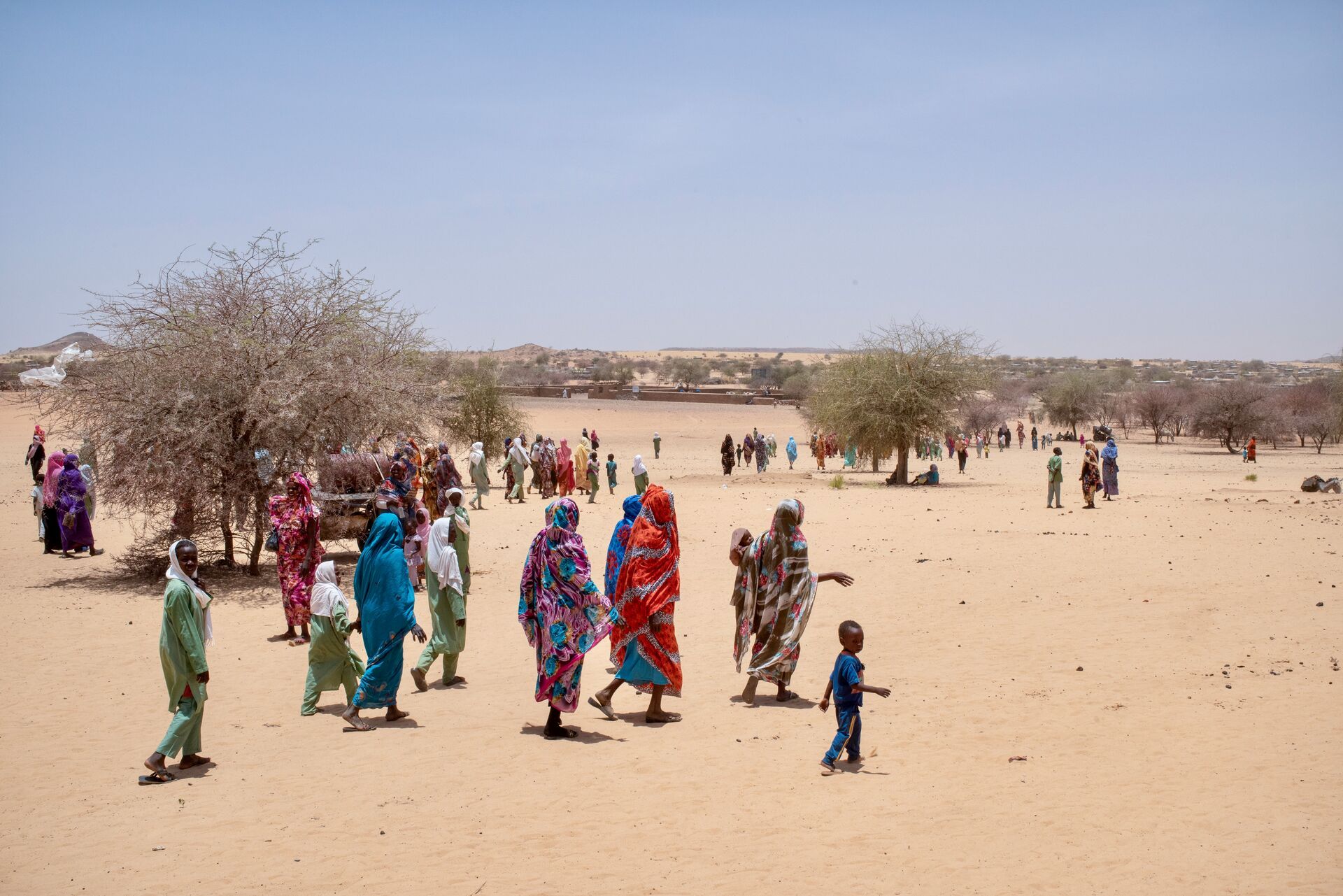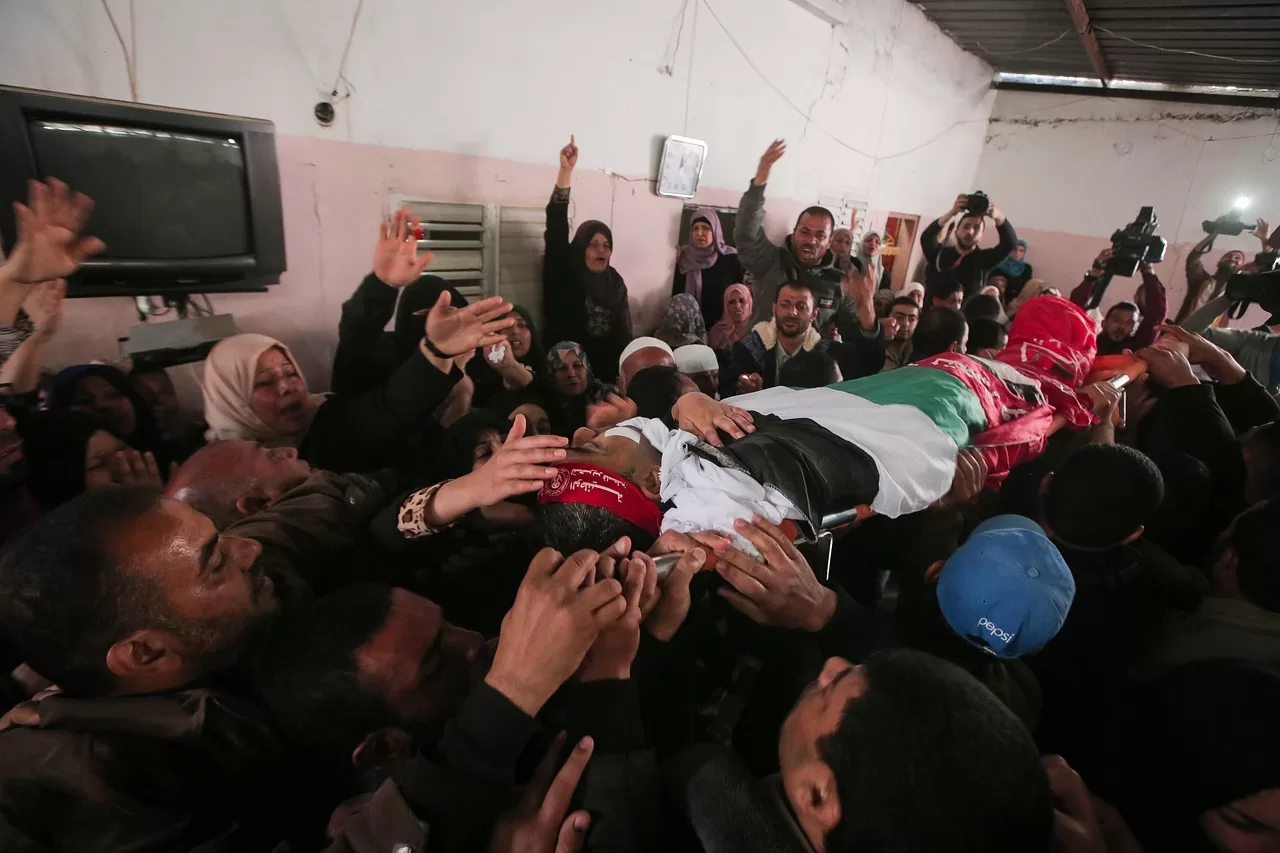
File photo of a Gaza death.
US Visa Ban, Fund Cuts Strain UN Ties
New York/Washington/Geneva: Tensions between the United States and the United Nations have reached a critical juncture, as the US’s decision to deny visas to Palestinian officials and block significant UN funding threatens to undermine diplomatic cooperation and exacerbate the humanitarian crisis in Gaza ahead of the United Nations General Assembly in September. The convergence of these actions, set against the backdrop of escalating violence and famine in Gaza, has raised concerns about the US’s adherence to its obligations under the 1947 UN Headquarters Agreement, prompting urgent discussions between UN and US officials.
On August 29, 2025, the US State Department announced the denial and revocation of visas for members of the Palestine Liberation Organization (PLO) and Palestinian Authority (PA), citing national security interests and their failure to repudiate terrorism, including the October 7, 2023, massacre, and cease incitement in education.
The US also criticised the PA’s efforts to seek unilateral recognition through the International Criminal Court and International Court of Justice, which it claims have fueled Hamas’s refusal to release hostages and derailed Gaza ceasefire talks.
While waivers will be granted for the PA Mission to the UN, the visa restrictions could prevent key figures, including PA President Mahmoud Abbas, from attending the General Assembly. UN Spokesman Stéphane Dujarric, addressing this on August 29, stated, “We are going to discuss this with the State Department. The Headquarters Agreement deserves to be read—notably, sections 11 and 12. We obviously hope that this will be resolved. It is important that all Member States, permanent observers, be able to be represented—especially with the upcoming two-State solution meeting that France and Saudi Arabia will host at the beginning of the GA.” He further emphasised, “We would like to see all diplomats and delegates who are entitled to come here to be able to travel freely,” underscoring the UN’s position that visa restrictions could violate the agreement’s provisions for unimpeded access to the UN headquarters.
Simultaneously, the White House announced it is withholding $4.9 billion in congressionally approved foreign aid, including $520 million for the UN regular budget and organisations like the United Nations Educational, Scientific and Cultural Organization, plus $838 million for peacekeeping operations. This rare “pocket rescission,” a mechanism not used in nearly five decades, allows the president to cancel funds unless Congress acts within 45 days.
US President Donald Trump justified it as prioritising domestic needs, but critics argue it bypasses legislative intent and jeopardises global stability. Dujarric warned that this would make the UN’s budget situation “that much more challenging,” with plans to seek clarification from US authorities. As the UN’s largest contributor, providing 22% of the regular budget, the US’s financial leverage amplifies the impact of this decision, particularly as the General Assembly approaches.
The visa and funding disputes are unfolding amid a catastrophic humanitarian situation in Gaza, where intensified Israeli military operations have deepened famine and displacement. On August 29, Dujarric expressed alarm that an expanded offensive in Gaza City, now a “dangerous combat zone” with suspended tactical pauses, could have a horrific impact. These pauses had aimed to facilitate humanitarian work, but bombings persisted during designated times. Forcing hundreds of thousands to move south risks forcible transfer, with one in four coordinated aid movements impeded on August 28, affecting cargo collection and road repairs. The UN Office for the Coordination of Humanitarian Affairs (OCHA) reported that between August 20 and 26, only 53 of 89 relief missions were facilitated, with 23 impeded, seven denied, and six withdrawn.
In Geneva, Philippe Lazzarini, Commissioner-General of the United Nations Relief and Works Agency for Palestine Refugees in the Near East (UNRWA), issued an urgent ceasefire plea on August 29, stating, “Every hour today counts, the more we wait, the more people will die.” He noted famine in Gaza, with Jens Laerke, OCHA spokesperson, adding, “We are on a descent into a massive famine, and we need massive amounts of food getting into the Strip and safely distributed across the Gaza Strip.”
The UN-backed Integrated Food Security Phase Classification projects famine spreading to Deir al Balah and Khan Younis by late September, with 500,000 people in catastrophic food insecurity and 160,000 more expected soon. By June 2026, 132,000 children under five are at risk of acute malnutrition, including 41,000 severe cases. Since October 2023, 313 malnutrition-related deaths have been recorded, including 119 children, with 248 since July 1 and 10 in the last 24 hours as of August 27. Lazzarini highlighted deaths from bombardment, lack of assistance, hunger, and attempts to reach aid at Gaza Humanitarian Foundation sites, where 1,857 Palestinians have been killed since May 27, including 1,021 near distribution points, per the UN human rights office.
Despite restrictions, UNRWA provides 15,000 daily medical consultations, screens children for malnutrition, manages waste, and ensures water access, sheltering 100,000 in its schools. However, food distribution has been constrained since the March ceasefire collapse. The Al Mawasi area, hosting hundreds of thousands with minimal services, is unsafe, with bombings reported. Nearly 120,000 displacements occurred in the past two months, with 23,000 in the last week and over 833,000 since March 18, often multiple times per person. Six evacuation orders since early August, including one on August 26 affecting Gaza City infrastructure like water wells, have disrupted aid, with only one in 10 desalination equipment import requests approved since June.
Health risks are rising, with the World Health Organization reporting 94 suspected cases of Guillain-Barré syndrome, requiring treatments unavailable due to aid restrictions. Acute respiratory infections, watery diarrhoea, and 1,043 meningitis cases since May dominate illnesses. Hospitals like Al-Shifa and Al-Ahli operate at triple capacity and risk closure, with Gaza’s bed capacity at 2,085. Medical evacuations—63 patients to the UAE on August 20 and 19 to Jordan on August 27—continue, but over 15,800 need specialised care abroad.
In the West Bank, settler violence has displaced 873 Palestinians this year through August 26, half children, due to home demolitions for lacking Israeli-issued permits. Between August 20 and 26, 15 attacks injured eight Palestinians and displaced six herding families, totalling 15 adults and nearly 20 children. Since October 2023, 64 families in one Bethlehem area have fled due to violence, affecting over 100 adults and 80 children. The UN has called for civilian protection and an end to demolitions and settler attacks.
Additional pressures on the UN include a letter from over 500 staff at the Office of the High Commissioner for Human Rights urging High Commissioner Volker Türk to label the Gaza war as genocide. Dujarric reiterated the Secretary-General’s “full and complete confidence” in Türk, stating, “The labelling of an event as a genocide for us is up to a competent legal, judicial authority,” and noting Türk’s vocal criticism of Gaza’s horrors and Israel’s pointed rebukes. Separately, the Grand National Assembly of Türkiye adopted a motion urging the UN to suspend Israel’s membership over Gaza policies, to which Dujarric responded, “I would encourage you to read the Charter, and all of that is left up to Member States.”
With the General Assembly looming, the visa restrictions, funding cuts, and Gaza’s worsening crisis risk sidelining Palestinian representation and hampering UN operations. Ongoing US-UN talks will determine whether this escalation can be resolved or if it signals a deeper fracture in their partnership.
– global bihari bureau