Aerial Threats to Venezuela: Inside the Risk Landscape
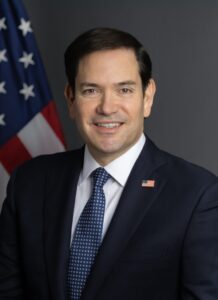
Washington: From unexplained aerial incursions over nuclear facilities to narcotics and Iranian influence networks operating from Venezuela, the United States Secretary of State Marco Rubio painted a stark picture of threats facing the United States in a wide-ranging interview with Fox News’ Sean Hannity on December 2, 2025. Rubio sketched a world where intelligence gaps, failed regimes, and radical movements converge to challenge American security, and where narrowly focused interventions are the only viable response.
Hannity opened with a lighter note, asking about the documentary The Age of Disclosure, which revisited unexplained aerial phenomena. Rubio leaned back. “We know this; this has been documented … there have been things that fly over restricted airspace, and everyone in the government says they’re not ours,” he said. He recalled how, when NORAD activated radars for low-altitude balloons, “Ninety per cent of them were innocent things; a couple of them were Chinese.” Hannity pressed: Were these gaps in detection a failure of intelligence or a signal of foreign capabilities? Rubio was measured. “Adversaries could exploit detection gaps with drones or balloons. We’re looking for missiles and fighter jets, but they’re coming at us in ways we’re not prepared for,” he said. Analysts note that U.S. radar systems are optimised for high-speed threats; low-altitude incursions remain difficult to detect, lending credibility to Rubio’s concern.
The discussion shifted sharply to domestic security and Afghan vetting. Hannity cited statistics from the evacuation of 76,000 Afghan nationals after the U.S. withdrawal in 2021. Rubio did not flinch. “Over 5,000 never should have made it into this country… 886 are at large,” he said. He outlined the limits of screening, emphasising that even thorough vetting cannot predict future radicalisation: “You can vet what people have done in the past. You can’t vet what people might do in the future.” He added that some entrants are especially vulnerable to extremist propaganda due to cultural and linguistic isolation. Public reports confirm that a small but significant fraction of evacuees were flagged for potential security risks, though many cases remain unresolved. Hannity asked how the U.S. could mitigate such threats; Rubio’s response was candid: large-scale screening has intrinsic limitations, particularly in conflict zones with scant documentation.
Venezuela drew one of the sharpest exchanges. Hannity asked about the Maduro regime’s resilience despite U.S. pressure. Rubio leaned forward: “The Maduro regime is not a legitimate government. What it is is a transhipment organisation. It allows cocaine and other drugs produced in Colombia to be trafficked through Venezuelan territory and with the cooperation of elements of the regime.” He cited the 2020 U.S. Department of Justice indictment against Maduro and fourteen officials on narco-terrorism charges. Hannity followed up on Iran’s presence; Rubio did not hesitate. “Iran’s Revolutionary Guard and even Hezbollah have a foothold in Venezuela,” he said. The Secretary underscored regional impact: more than eight million Venezuelans have fled to neighbouring countries, and some criminal networks, such as the Tren de Aragua gang, have reached the United States. Rubio criticised previous diplomatic attempts: “He got the nephews back, the drug dealers. And he never did the free and fair elections. He stole the elections.” Historical records show multiple broken agreements with Maduro dating back a decade, lending context to Rubio’s portrayal of the regime as both criminal and strategically threatening.
Ukraine dominated the latter part of the conversation. Rubio laid out a war of attrition. “7,000 Russian soldiers are being killed a week,” he claimed. Public estimates suggest combined casualties on both sides may exceed 170,000. Hannity asked whether a diplomatic resolution was realistic. Rubio noted that only Russian President Vladimir Putin can end the war, while Ukraine’s government remains steadfast. “We’re not there yet. But that could change. I hope it changes,” he said, framing U.S. involvement as precise, patient diplomacy rather than open-ended funding or intervention. He stressed that the goal is not merely to stop fighting but to secure Ukraine’s long-term sovereignty and economic recovery. “Theoretically, in 10 years, Ukraine’s GDP could be larger than Russia’s,” he added, illustrating the stakes of a sustainable peace.
Throughout the interview, Rubio painted a consistent picture: U.S. security challenges are multidimensional, encompassing domestic vulnerabilities, regional instability, and protracted foreign conflicts. He emphasised selective, high-impact responses while acknowledging limits of knowledge, intelligence gaps, and unpredictable adversaries. Hannity’s questions underscored the interconnectivity of threats—from low-altitude incursions to state-sponsored criminal networks and proxy influence in Latin America—highlighting how the administration communicates and justifies strategic risk-taking. Afghan vetting statistics, Venezuelan indictments, and Ukrainian casualty estimates provide partial verification of Rubio’s assertions, while other claims, particularly regarding aerial incursions, remain anecdotal and unconfirmed.
The interview illustrated a central tenet of current U.S. policy: strategic precision over adventurism, targeted action over broad engagement, and calculated risk management in an environment defined as much by uncertainty as by clear threats. Rubio’s narrative presented a United States acting selectively but decisively, attempting to safeguard domestic security, counter regional instability, and mediate conflict abroad, all while navigating the inherent limits of military and intelligence tools.
Potential headlines under 60 characters include: “From Balloons to Venezuela: U.S. Threats Mapped,” “Afghan Vetting and Ukraine: Security Under Pressure,” “Rubio on Maduro, Drugs, and Regional Instability,” “Ukraine’s War of Attrition: Casualties and Costs,” and “Gaps and Risks: U.S. Security Challenges Explained.”
– global bihari bureau