Niagara Meeting Sets Global Security and Economic Agenda
G7 Pledges Coordinated Action on Conflicts and Maritime Security
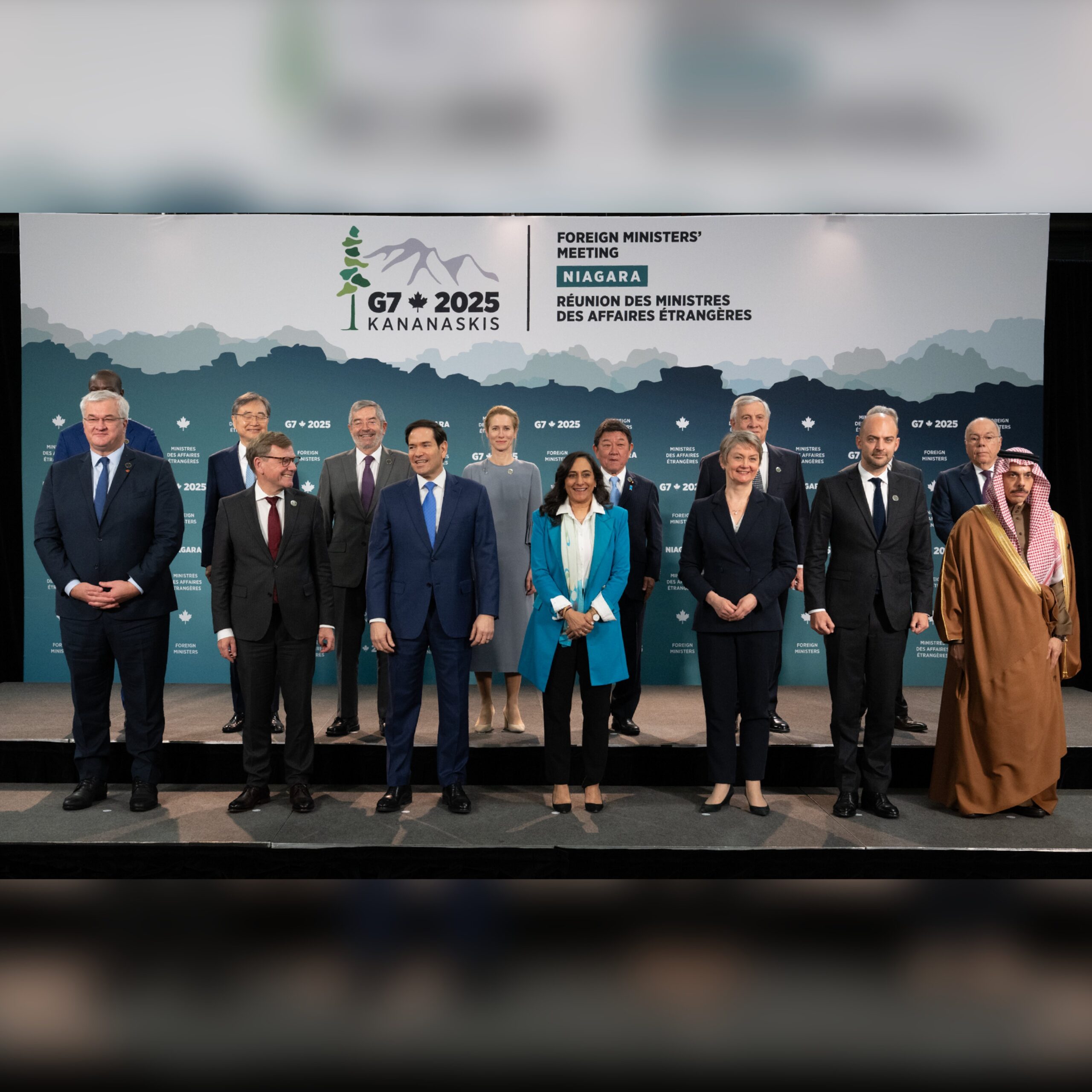
Niagara: The Niagara meeting of the Group of Seven (G7) foreign ministers on November 11 and 12, 2025, concluded with a coordinated global agenda focused on Ukraine, maritime security, economic resilience, and regional crises.
Ministers committed themselves to intensifying support for Ukraine, increasing economic pressure on Russia, and countering military assistance from the Democratic People’s Republic of Korea and Iran, while condemning China for supplying weapons and dual-use components. They endorsed exploring the coordinated use of frozen Russian sovereign assets to support Ukraine and denounced Russian attacks on energy infrastructure, reaffirming support for Ukrainian energy security.
The ministers, representing Canada, France, Germany, Italy, Japan, the United Kingdom, and the United States of America, were joined by the High Representative of the European Union, and welcomed the participation of partner countries including Brazil, India, the Kingdom of Saudi Arabia, Mexico, the Republic of Korea, South Africa, and Ukraine. India actively contributed to discussions on Indo-Pacific stability, maritime security, energy resilience, and critical minerals, highlighting its growing strategic and economic influence while engaging in consultative dialogue rather than formal G7 decision-making.
The ministers welcomed a Gaza ceasefire, the release of hostages, and increased humanitarian aid flows, while urging unrestricted access through the United Nations, its agencies, the Red Crescent, and other organisations. They called for the return of the deceased hostages’ remains and stressed engagement toward peaceful coexistence between Israelis and Palestinians. Iran was urged to comply fully with United Nations Security Council resolutions and the Treaty on the Non-Proliferation of Nuclear Weapons, cooperate with the International Atomic Energy Agency, and engage in direct talks with the United States, supported by France, Germany, and the United Kingdom.
In the Indo-Pacific, ministers reaffirmed support for a free and open region based on the rule of law, condemned unilateral attempts to alter the status quo, and raised concerns over coercive actions in the East China Sea and South China Sea. They emphasised stability across the Taiwan Strait, endorsed Taiwan’s participation in international organisations, and urged China to enhance transparency in military and nuclear developments. North Korea was condemned for advancing nuclear and ballistic missile programs, unresolved abductions, and cryptocurrency thefts. India’s inputs underscored its interest in maritime security, freedom of navigation, and economic resilience, reflecting its rising role as a regional strategic power.
Taiwan’s Ministry of Foreign Affairs noted the G7 foreign ministers reaffirming the importance of Taiwan Strait peace and stability, and that they opposed unilateral changes to the status quo, and backed Taiwan’s participation in international organisations. “Taiwan will work with democracies and advance integrated diplomacy to promote regional peace and prosperity,” it stated.
The summit addressed crises in Haiti, Sudan, and the eastern Democratic Republic of the Congo. Ministers called on Haiti to present a plan for free and fair elections and welcomed a Regional Maritime Security Initiative to strengthen Caribbean stability. In Sudan, they condemned attacks by the Rapid Support Forces on civilians and aid workers, demanding immediate ceasefires and unhindered humanitarian access. In the eastern Democratic Republic of the Congo, ministers pressed for full implementation of peace agreements, civilian protection, and humanitarian access, while welcoming the Paris Conference on Great Lakes regional stability held on October 30, 2025.
Migration, economic disruption, and conflict were recognised as interconnected threats. Ministers reaffirmed maritime security as central to global stability and committed to tackling unsafe or unregulated vessels involved in sanctions evasion, arms transfers, and illicit trade. On economic resilience, energy security, and critical minerals, ministers endorsed partnerships to promote sustainable supply chains, innovation, and shared prosperity. India’s participation reflected its role in global critical minerals markets and energy security, positioning it as a consultative partner in shaping multilateral strategies for resilience.
By the conclusion of the Niagara meeting, the G7 had laid out a coordinated global strategy spanning Ukraine, the Middle East, the Indo-Pacific, Africa, and economic and maritime domains, signalling a mix of sanctions, diplomacy, and multilateral engagement. India’s involvement highlighted its growing strategic influence, particularly in the Indo-Pacific and critical minerals sectors, while maintaining its position as a consultative partner among established Western powers.
– global bihari bureau