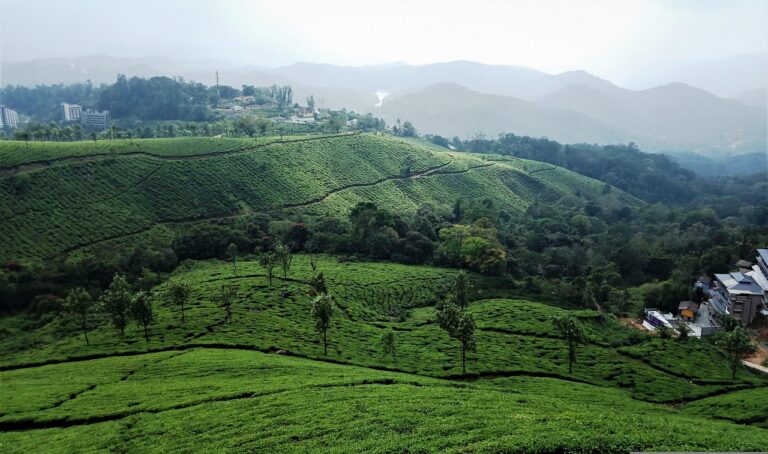
Munnar, Kerala
Cabinet Clears Path for Renaming Kerala as ‘Keralam’
New Delhi: The Union Cabinet, chaired by Prime Minister Narendra Modi, today approved a proposal to alter the Constitutional name of the State of Kerala to “Keralam”, setting in motion a formal process under Article 3 of the Constitution that will require consultation with the Kerala Legislative Assembly and final approval by Parliament.
According to the decision, the Kerala (Alteration of Name) Bill, 2026, will first be referred by the President of India to the Kerala Legislative Assembly for expressing its views, as required under the proviso to Article 3. After the Assembly communicates its response, the Government of India will take further action and obtain the President’s recommendation for the formal introduction of the Bill in Parliament. Only after passage by both Houses will the amendment take effect through a change in the First Schedule of the Constitution, where the state is presently recorded as “Kerala”.
The Cabinet approval follows a unanimous resolution adopted by the Kerala Legislative Assembly on June 24, 2024. That resolution sought alteration of the state’s name to “Keralam”, the term used in the Malayalam language, and linked the demand to the linguistic reorganisation of states on November 1, 1956, which is observed each year as Kerala Piravi Day. It also referred to the long-standing political demand during the national independence movement for the formation of a united Malayalam-speaking state.
The resolution stated that although the people of the state have always used “Keralam” in their own language, the First Schedule of the Constitution lists the state as “Kerala”. It appealed to the Central Government to take urgent steps under Article 3 of the Constitution to modify the name accordingly. Following this resolution, the Government of Kerala formally requested the Union government to initiate the process to amend the First Schedule.
The matter was subsequently examined in the Ministry of Home Affairs. With the approval of Union Home Minister and Minister of Cooperation Amit Shah, a draft Cabinet note on the alteration of the state’s name was circulated to the Department of Legal Affairs and the Legislative Department in the Ministry of Law and Justice for their comments. Both departments concurred with the proposal, clearing it for consideration by the Union Cabinet.
Officials familiar with the process said the Cabinet’s decision represents only an intermediate step in the constitutional procedure. Under Article 3, Parliament is empowered to alter the name of an existing state, but no such Bill can be introduced without the recommendation of the President and without first referring the proposal to the legislature of the affected state for its views within a specified or extended period. The current approval, therefore, initiates consultation rather than completing the legislative exercise.
Kerala Chief Minister Pinarayi Vijayan welcomed the Cabinet decision, stating that it reflected the unanimous will of the state Assembly expressed in 2024. He said the move aligned the constitutional name of the state with its usage in Malayalam and acknowledged the Centre’s action in advancing the proposal through the prescribed legal route.
Opposition leaders in Kerala said they did not oppose the renaming in principle but questioned the timing and political significance of the decision. Senior Congress leaders noted that the Assembly resolution had been pending for nearly two years and described the Cabinet approval as largely symbolic. They argued that while the change addressed a cultural and linguistic concern, it did not engage with the state’s immediate economic or administrative challenges.
Legal experts pointed out that the amendment would be confined to the First Schedule of the Constitution and would not affect the federal distribution of powers or the territorial status of the state. They noted that previous alterations of state names had followed the same sequence of presidential reference, state consultation and parliamentary approval, underscoring that the process is procedural but constitutionally substantive.
Within Kerala, reactions were mixed. Cultural organisations and language activists described the decision as recognition of the state’s linguistic identity. Others questioned its practical consequences, noting that the state continues to be referred to as “Kerala” in English in official and international usage and that the proposed change would primarily operate at the level of constitutional text and formal nomenclature.
Some commentators also pointed to the administrative implications that would follow parliamentary approval, including updates to official notifications, records and databases. However, officials said such steps would be undertaken only after the Bill is passed and the constitutional amendment comes into force.
Union government sources characterised the Cabinet decision as a procedural response to the request made by the Kerala Legislative Assembly rather than a policy initiative originating at the Centre. They said the proposal had been processed after legal vetting and in accordance with constitutional requirements laid down in Article 3.
The sequence now envisaged is referral of the Kerala (Alteration of Name) Bill, 2026, to the Kerala Legislative Assembly for its views, receipt of those views by the Union government, recommendation of the President for introduction of the Bill in Parliament, and passage by both Houses. Until these steps are completed, the state will continue to be officially recorded as “Kerala” in the Constitution.
If enacted, the amendment will substitute the word “Kerala” with “Keralam” in the First Schedule. While limited in legal scope, the change will constitute a formal revision of constitutional text, concluding a demand articulated unanimously by the state legislature in 2024 and reopening questions about the symbolic and political meaning of names in India’s federal structure.
– global bihari bureau