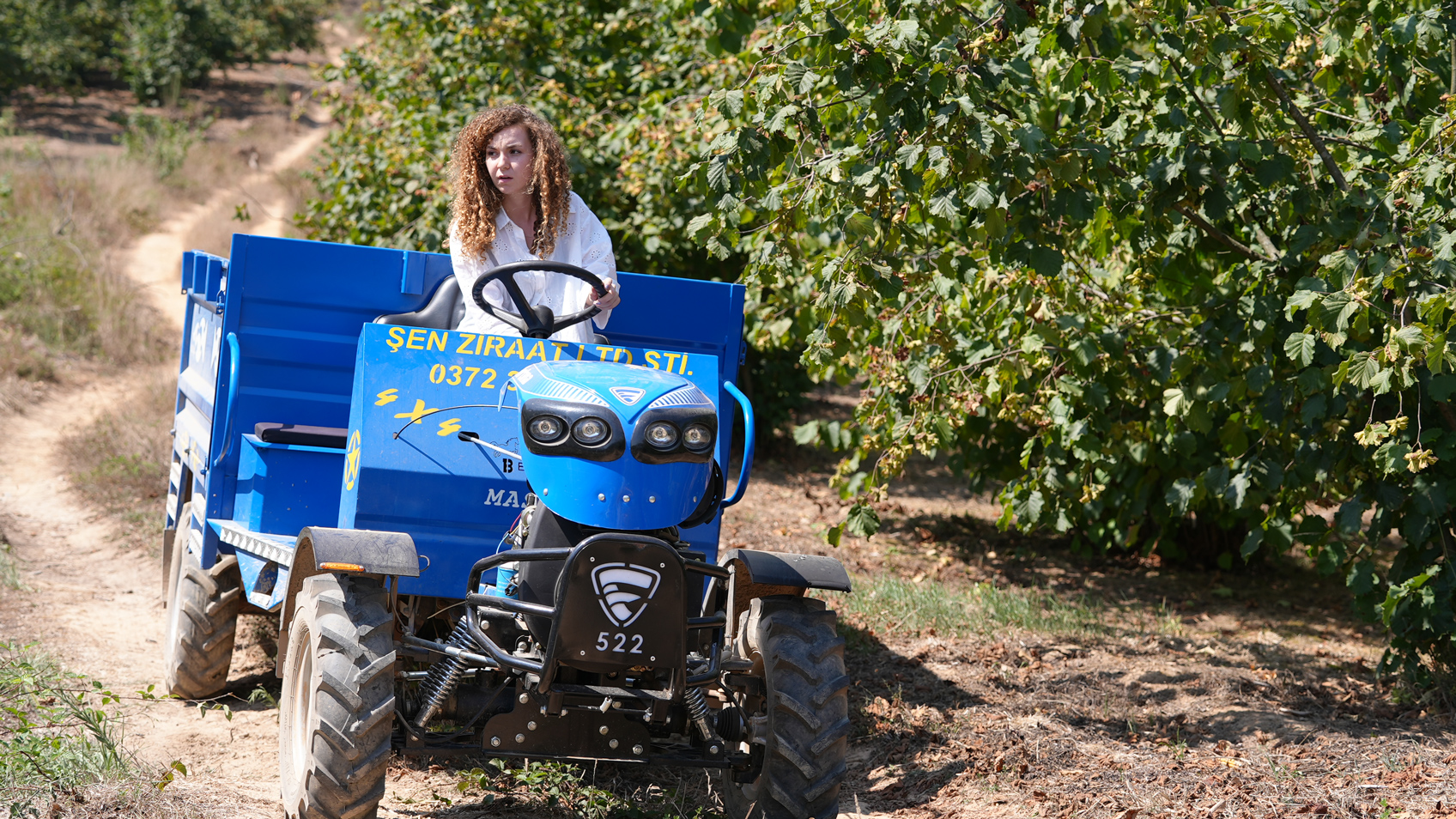
In Düzce, Türkiye, 32 percent of youth are unemployed. Many opt to move to the city in search of work. Beekeeping offers young people an alternative path and income opportunities in rural areas. ©FAO / Turuhan Alkır
Crafting a Future with Honey in Rural Türkiye
Düzce: The sun is just peeking over the hazelnut fields of Düzce, a province 200 kilometres northwest of Ankara, Türkiye, as 22-year-old Züleyha Ceylan navigates her small blue truck down winding village roads. Her destination: a patch of colourful beehives nestled amid the greenery, their vibrant hues standing out like a painter’s palette against the earth.
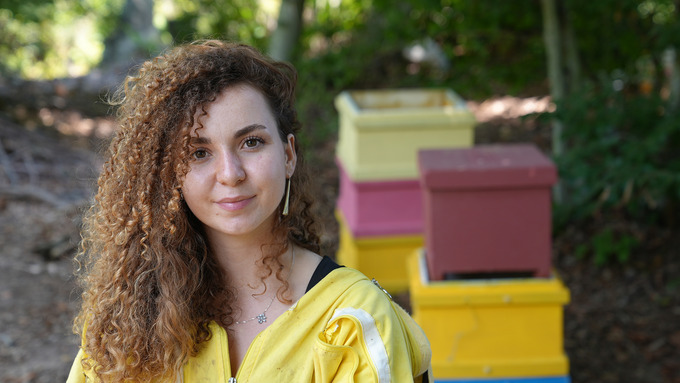
She steps out, pulling on her canary-yellow beekeeping suit, her pink gloves a cheerful contrast. With a strike of a match, she lights her tin smoker, sending a soft curl of smoke to calm the bees. Lifting the lid of the first hive, she’s greeted by a lively hum, the sound of a thriving colony. Her eyes, sharp and focused, scan the frames for honey levels, confirm the queen’s presence, and check for any signs of disease. Some hives take just a few minutes to inspect; others, more complex, demand half an hour or more. Each one, Züleyha knows, has its own rhythm, its own story.
“I’ve loved being outdoors since I was a child, surrounded by animals and nature,” she says, pausing to listen to the bees’ gentle buzz. “An office job in the city? I couldn’t imagine it. The sound of the bees—it’s like therapy. It soothes me, gives me energy for the day.” Her beekeeping journey began just last year, a choice that raised eyebrows in her village. “Some people told me it’s a man’s job,” she recalls with a grin, “as if a woman can’t drive a car. Now, those same sceptics come to me for advice about their own bees.” Her family, though strangers to beekeeping, never doubted her. Even her father, allergic to bee stings, helped her buy her first colonies and equipment. “My parents always said, ‘Do what you love,’” she shares. “Their support gave me the courage to push forward.”
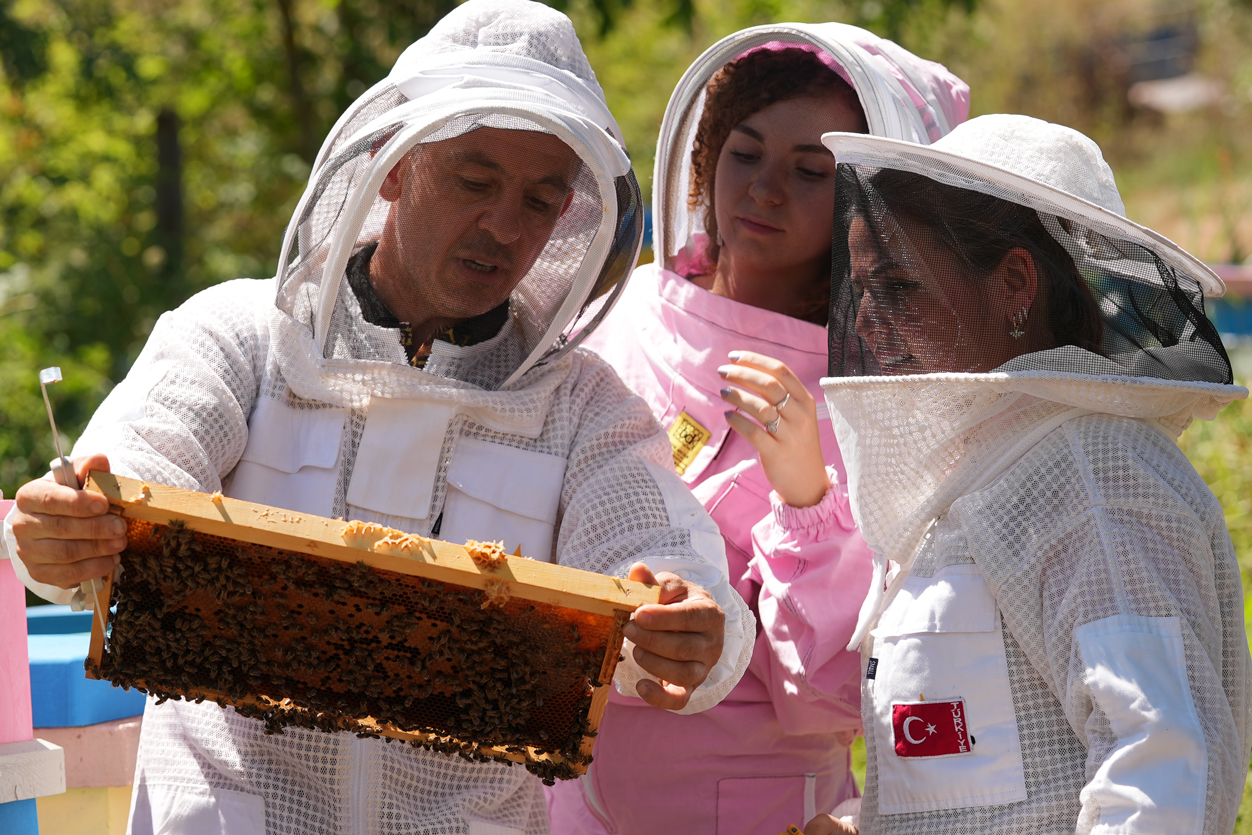
In Düzce, a land rich with farmland and forests, opportunities for young people are scarce. More than 32 per cent of those aged 15 to 24 are unemployed, and many leave their villages for cities, abandoning old farms and emptying rural communities. Beekeeping, however, offers a different path. It requires little land, a modest investment, and offers flexible hours, making it a viable lifeline. The local Yığılca bee, known for its resilience and ability to produce high-quality honey, fuels a strong demand for honey and related products, brightening the sector’s prospects. For Züleyha, who chose to stay in her village, beekeeping has meant both a livelihood and independence. “This year, I produced about 100 kilos of honey,” she says proudly. “It wasn’t a lot, but it sold out quickly through friends and social media. People trust me because they see how much I care for my bees. I even post videos online to share my process and explain my products.”
Her dreams reach far beyond jars of honey. “I want to expand my hives and produce royal jelly, bee bread, propolis—everything bees can offer,” she says, her voice alive with ambition. “One day, I hope to build my own company and create jobs for others in my community.” Her path to success was shaped by a training programme she joined in August 2025, organised by the Food and Agriculture Organization of the United Nations (FAO) and the Provincial Directorate of Agriculture and Forestry. Alongside nine other enthusiastic beekeepers and project participants, she learned critical skills. “Before the training, I didn’t know how to market my products or properly treat bee diseases,” she admits. “The programme taught me how to manage colonies, prevent illnesses, and sell my honey more effectively. It gave me confidence.” More than that, it connected her with experienced beekeepers whose stories inspired her. “I’m only at the start of my journey,” she says, “but I’m determined to become a better producer.”
Düzce itself is a haven for beekeeping, with nearly 60 per cent of its land cloaked in fragrant linden and chestnut forests. The province is home to around 60,000 hives and 800 beekeepers, and it even boasts a university programme dedicated to apiculture. Its dark, rich chestnut honey carries a prestigious geographical indication, and a special isolated zone safeguards the Yığılca queen bee strain.
“A significant part of our agricultural production comes from beekeeping,” says Ezra Uzun, Provincial Director of Agriculture and Forestry. “Düzce’s forests and the unique Yığılca bee give us distinct advantages.”
Yet, challenges persist. The climate crisis is altering rainfall patterns and seasonal cycles, impacting bee health and honey yields. A dwindling rural population further threatens the sustainability of farming. Uzun sees collaboration as the key. “Together with FAO, we’re working on projects to improve production and branding while encouraging young people to stay in rural areas,” he explains. “Our vision is to pass on our agricultural heritage to new generations, blending it with modern knowledge and technology.”
Ayşegül Selışık, FAO Assistant Representative in Türkiye, shares this hope. “Düzce has tremendous natural advantages for beekeeping, but many young people and women face barriers to entering the sector,” she says. “By providing training, technical support, and entrepreneurial skills, we’re helping them turn these assets into sustainable livelihoods. Our goal is not only to strengthen beekeeping today but to ensure future generations can thrive here.”
Standing among her hives, Züleyha radiates optimism about the possibilities ahead. “With FAO’s training and the support of our community, I see a future—not just for me, but for the next generation of beekeepers in Düzce,” she says. Her advice to other young people is heartfelt: “Don’t be afraid to try. With the right information and support, you can succeed. And with modern technology, you can sell your products not just locally but even internationally.”
When winter arrives and her bees rest, Züleyha turns to her other passion: painting. Her canvases capture landscapes, animals, and the tiny buzzing friends she misses during the quiet months. “From now on, my life follows the rhythm of the bees,” she says, her smile as warm as the morning sun. “My art keeps me connected to them, even in winter.”Suggested Headlines:
Source: The FAO News And Media Office, Rome
– global bihari bureau