
Brewing India: Flavour, Sustainability, and Craft
India’s Tea in the Global Spotlight
New Delhi: The first light of dawn lifts the mists over Darjeeling’s Makaibari estate, revealing terraces of emerald leaves glistening with dew. Assam’s Mangalam gardens stretch across the plains, their robust crush-tear-curl (CTC) harvests destined for kitchens and teahouses worldwide. In the Nilgiri hills, tea pickers traverse undulating slopes, gathering leaves that promise smooth, aromatic infusions. These landscapes, steeped in centuries of heritage, are now the laboratories of innovation, where climate-resilient cultivation, signature blends, and sustainability intersect with global consumer trends.
Yet, tradition alone cannot meet the evolving expectations of a global market. International consumers increasingly seek functional teas, provenance-backed authenticity, and artisanal blends. This shift is driving estates and research centres to develop new varietals and experimental blends, ensuring that Indian tea maintains its premium positioning. It is here that innovation, research, and technology converge with centuries-old craftsmanship.
The global tea market, valued at over USD 60 billion, is dominated by premium, wellness, and speciality segments. Sri Lanka, Kenya, and China have captured high-value niches through branded, value-added teas, challenging India to diversify.
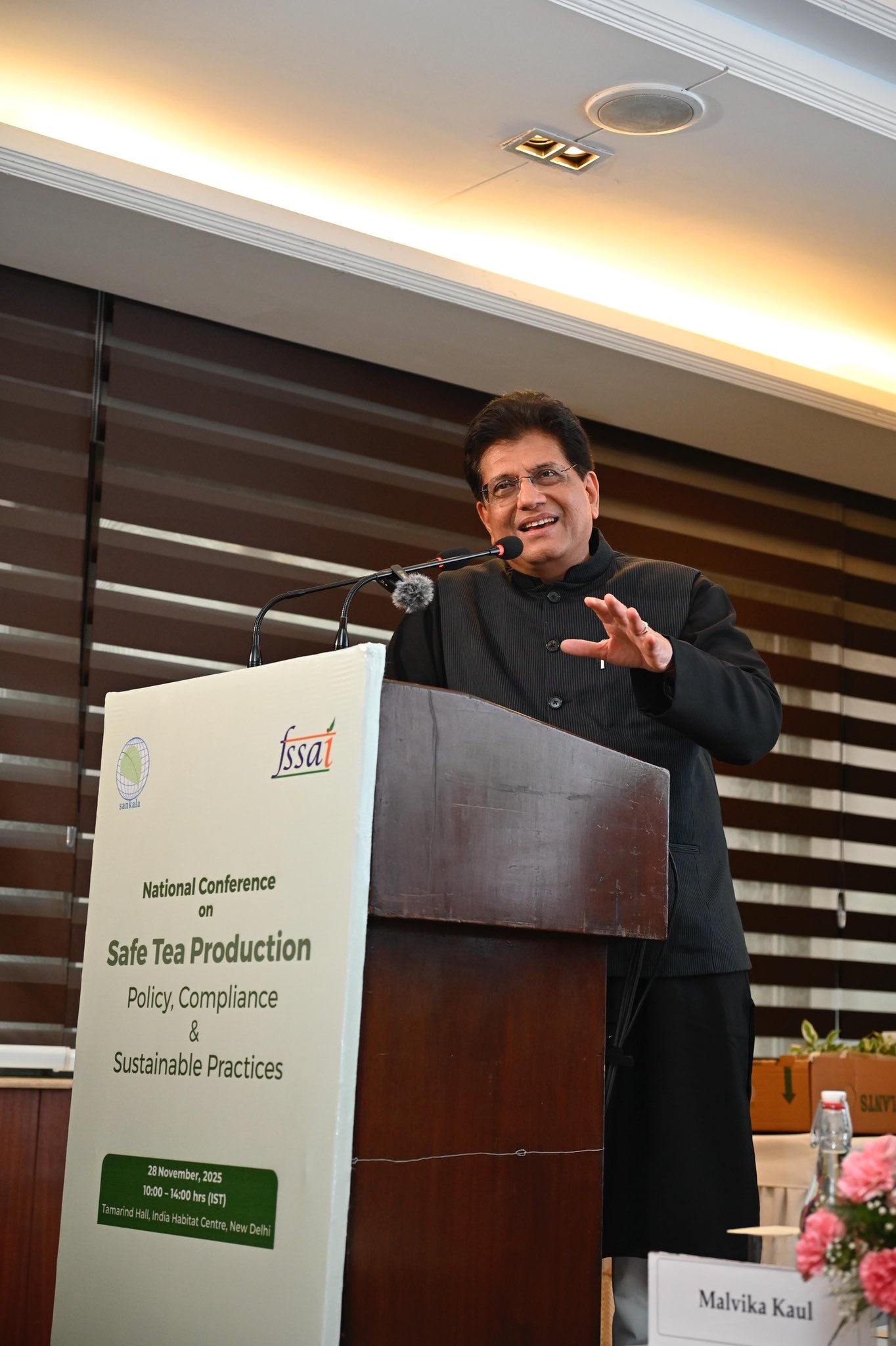
“India must develop new signature blends that resonate with changing consumer tastes, emerging wellness trends, and premium lifestyle markets worldwide,” said the Minister of Commerce and Industry at the National Conference on Safe Tea Production, here today. These words underscore the sector’s urgent mandate: blend heritage with innovation, and cultivate both flavour and economic value.
Across estates, research is yielding climate-resilient clones and hybrids. Darjeeling experiments with first-flush muscatel teas enhanced with herbal infusions, Assam trials high-antioxidant, wellness-oriented blends, and Nilgiri explores single-origin and botanical-enhanced teas. Varietals are selected for yield stability, flavour complexity, and bioactive properties, designed to appeal to both traditional palates and modern wellness markets.

Innovation extends beyond varietals. Drip irrigation, soil health programmes, and eco-friendly packaging enhance sustainability, while blockchain-enabled traceability guarantees provenance from pluck to export, assuring international buyers of authenticity and quality. These measures not only protect India’s tea reputation but also create premiumization opportunities, supporting small growers and high-value export markets.
Small growers are integral to this transformation. Digital marketplaces, skilling initiatives, and weather/pest forecasting tools enable consistent quality, improved yields, and access to niche markets. Government-backed support, including a ₹1,000-crore package and the Chai Sahayog App, helps farmers secure better prices and connect directly with buyers. Social programs improve education and community infrastructure in tea-growing regions, embedding economic growth with social development.
The sensory experience of Indian teas remains unmatched. Assam CTC teas deliver full-bodied malty warmth, ideal for traditional chai. Darjeeling first-flush teas present delicate floral and muscatel notes, while second-flush teas deepen in aroma and robustness. Nilgiri teas offer smooth, fragrant cups with subtle chocolate undertones, versatile for both hot and iced preparations. Experimental blends introduce herbal and wellness components, aligning taste, health benefits, and premium positioning to meet evolving global demand.
Research and experimentation now form the backbone of India’s tea strategy. Scientists and estate agronomists are developing clones and hybrids capable of thriving in varied climates, maintaining distinctive flavours while increasing yields and bioactive properties. Marketing strategies integrate origin storytelling, processing techniques, and flavour profiling, turning each cup into a narrative of heritage, craft, and innovation.
With nearly 255 million tonnes exported annually, Indian tea’s evolution is a strategic imperative. By embracing research, sustainability, traceability, and social responsibility, the sector ensures that each cup represents quality, provenance, and the potential for higher returns for small growers. Estates and growers now navigate a delicate balance: preserving centuries-old craftsmanship while responding to climate pressures, global trends, and high-value market expectations.
From the mists of Darjeeling to the sun-drenched plains of Assam, from Nilgiri slopes to international buyers, Indian tea now stands as a global standard-bearer, where every sip embodies tradition, innovation, and social responsibility. In this evolving narrative, tea is no longer just a beverage; it is a symbol of flavour, heritage, and India’s innovation-driven journey toward Viksit Bharat 2047.
– global bihari bureau