Balancing Ambition: Namchik’s Social-Environmental Tightrope
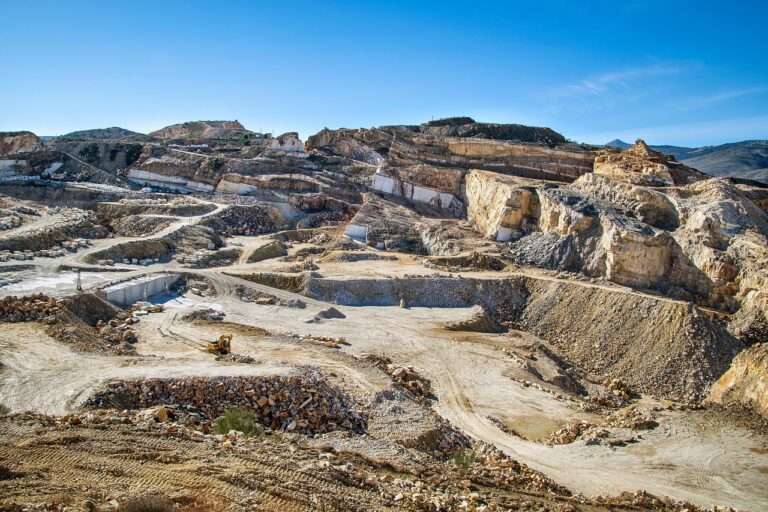
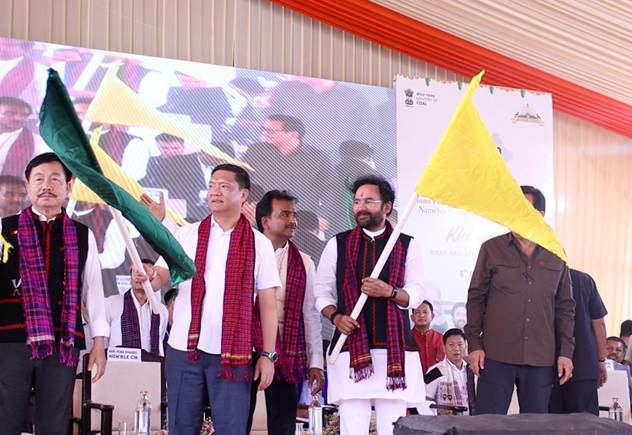
Itanagar: Arunachal Pradesh, a land of untamed rivers and tribal legacies, cracked open its earth on October 6, 2025, launching the Namchik-Namphuk coal mine in Changlang district—its first commercial dig. Union Minister G. Kishan Reddy and Chief Minister Pema Khandu presided, marking the moment with a Bhumi Pujan and a gesture of 100 saplings planted, as the lease passed to Coal Pulz Private Limited (CPPL). The event also witnessed the flagging off of tools and machinery of CPPL to the Namchik-Namphuk Central Coal Block, marking the official commencement of mining operations.
With 1.5 crore tonnes of coal and projections of ₹100 crore in annual state revenue, the mine is cast as a pillar of India’s energy security and Arunachal’s economic ascent.
Yet, this milestone comes after more than two decades of controversy, delays, and contention, reflecting the complex intersection of legal, social, ecological, and economic considerations that define resource development in ecologically sensitive and socially intricate regions.
The mine’s journey began in 2003, when the Arunachal Pradesh Mineral Trading & Development Corporation Ltd (APMTDCL) secured it, only to see it stall amid regulatory chaos and local unrest. The coal block faced repeated suspensions due to regulatory gaps, environmental concerns, social opposition, and security challenges.
The trajectory of Namchik-Namphuk was significantly shaped by Supreme Court interventions for its opaque, cronyist underpinnings. In 2012, the Court suspended all coal extraction in the region, declaring allocations between 1993 and 2011—including Namchik-Namphuk—illegal and arbitrary, citing irregularities in allocation procedures. In 2014, the Court imposed a levy of ₹299 per metric tonne on allottees of these blocks, including a ₹32 crore levy on APMTDCL, the original allottee.
To revive operations, the state government extended an interest-free loan to APMTDCL, a move later scrutinised through an FIR alleging misuse of state funds. Despite these legal interventions, illegal mining persisted, with reports in 2024 from the Arunachal Democratic Party highlighting covert operations involving excavators, dumpers, and unauthorised extraction, even as Anti-Rat Hole Mining Oversight Committees submitted negative action reports to the Deputy Commissioner of Changlang district. By 2025, the Supreme Court had not issued new directives affecting the October inauguration, leaving the legal framework clear under the revised auction-based allocation.
Environmental and social concerns remained central throughout the block’s history. Coal mining’s footprint is brutal, and in Arunachal’s ecological haven, the stakes are dire. Open-cast operations at Namchik-Namphuk risk acid mine drainage, a proven toxin in Himalayan coal belts, with prior digs leaving 7.33 hectares of contaminated, waterlogged pits. Deforestation threatens endemic species and water sources, challenging India’s commitments under the Paris Agreement.
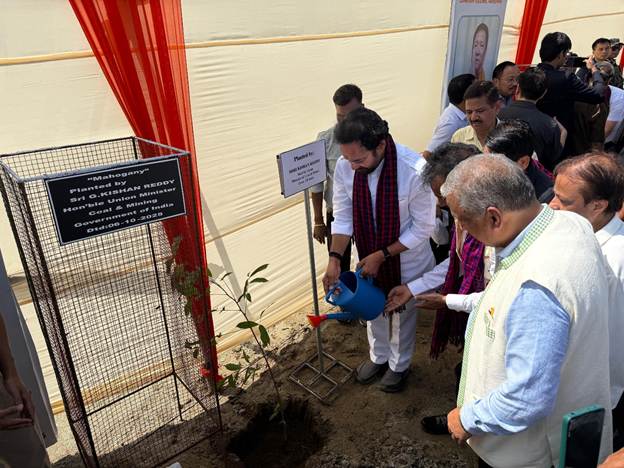
The government points to Mission Green Coal Regions—57,000 hectares reclaimed nationwide, 16,000 more by 2030—and streamlined clearances via the Ministry of Environment, Forest and Climate Change (MoEFCC)’s PARIVESH portal since 2023 as proof of diligence. Environmentalists say the 100 saplings planted at the launch pale against potential forest loss, and official pledges of continuous monitoring hinge on enforcement that has historically wavered.
During this period, Forest and Environmental Clearances underwent repeated revisions, requiring the allottee to submit comprehensive compliance documents addressing Stage-II forest clearances, land acquisition requirements, and modifications to the Environmental Management Plan. Land acquisition under Sections 15 and 16 of the Land Acquisition, Rehabilitation, and Resettlement (R&R) Act, 2013, included draft R&R schemes and extensive consultations with affected communities. Procedural updates between 2023 and 2025, including MoEFCC clarifications and enhancements to the PARIVESH portal, streamlined approvals without compromising statutory safeguards.
Social opposition has been a persistent and defining feature of the project. In early 2025, mass protests erupted in villages such as Longtom-I, Longtom-II, Panchun, and Injan, predominantly inhabited by the Tangsa community. The community’s resistance is unflinching. On February 17, 2025, thousands from these villages marched in Kharsang, led by the Injan, Panchun, Longtom-I, and Longtom-II Committee (IPLLC). Their memorandum, delivered to the Chief Minister via Miao’s Additional Deputy Commissioner, warned of 3,000 people across 500 households facing displacement, ancestral livelihoods at risk, and ecosystems under siege. They condemned auctions for adjacent Namchik East and West blocks as a breach of customary laws and local rights, demanding prior consent that never came.
The 2013 Land Acquisition, Rehabilitation, and Resettlement Act’s processes—consultations, R&R schemes—are dismissed by locals as cursory, failing to address their existential fears. Past insurgent-linked illegal mining, fusing profit with volatility, deepens distrust that worker benefits like insurance and scholarships can’t bridge.
Against this backdrop, the Namchik-Namphuk Coal Mine was formally inaugurated on October 6, 2025, by Union Minister G. Kishan Reddy and Chief Minister Pema Khandu. The event included Bhumi Pujan, a 100-tree plantation initiative, and the handover of the mining lease to Coal Pulz Pvt Ltd. Government statements emphasised that operationalisation marks “a new chapter of regional development, employment generation, and contribution to India’s energy security,” projecting over ₹100 crore in annual revenue for Arunachal Pradesh.
Economically, the mine is pitched as a game-changer, woven into the Empower, Act, Strengthen, Transform (EAST) initiative—which integrates economic growth, infrastructure development, and community participation in the North East—and a post-2014 investment boom, with allocations rising from ₹6,000 crore to over ₹1 lakh crore. Connectivity projects—16,000 km of national highways, 80,000 km of rural roads, 2,000 bridges, and energy and gas grid projects—are presented as enablers of industrial growth, with the Namchik-Namphuk mine positioned to complement these broader objectives. Official narratives promise jobs, critical minerals, and a ₹4,500 crore lifetime haul, aiming to end illegal mining’s grip.
Environmental safeguards have been highlighted in government communications. Continuous monitoring, adherence to forest and environmental clearances, and community engagement are cited as mechanisms to mitigate ecological disruption. Worker welfare initiatives include insurance coverage, ex gratia for fatal accidents, scholarships, uniform schemes to instil identity and cohesion, and improved living conditions for local employees.
But coal’s global decline and India’s 2070 net-zero target cast a long shadow. The Northeast’s mining past—wealth siphoned to outsiders, locals left with polluted rivers—raises doubts about who truly benefits. Without airtight mechanisms for equitable wealth distribution, the economic promise risks ringing hollow.
The Namchik-Namphuk project exemplifies the challenges of resource development in ecologically fragile and socially complex regions. Legal interventions, prolonged regulatory scrutiny, tribal opposition led by the IPLLC, and historical security concerns underscore the need to balance economic ambition with environmental stewardship and social accountability. The inauguration represents the opening chapter of a longer narrative: the project’s sustainability will ultimately depend on whether statutory compliance, rigorous regulatory oversight, and genuine community engagement translate into inclusive and environmentally responsible development.
As Arunachal Pradesh embarks on this path, Namchik-Namphuk is a test of India’s resolve. Khandu and Reddy brim with pride, but a nod to Tai-Khamti heritage reveals cultural stakes sidelined in the rush to extract. The IPLLC’s demands, grounded in centuries of land guardianship, collide with a state chasing revenue.
This mine could chart a path for responsible resource use—or entrench the Northeast’s legacy of exploitation. Its trajectory will influence the future of coal mining in the North East and shape the broader approach to natural resource exploitation in India’s ecologically sensitive and socially intricate regions. Its success depends on unyielding scrutiny, authentic community inclusion, and a reckoning with coal’s heavy toll.
As Arunachal digs, the question lingers: can it unearth wealth without sacrificing what makes it whole? Namchik-Namphuk stands as a test case for harmonising growth with ecological and social responsibility.
– global bihari bureau