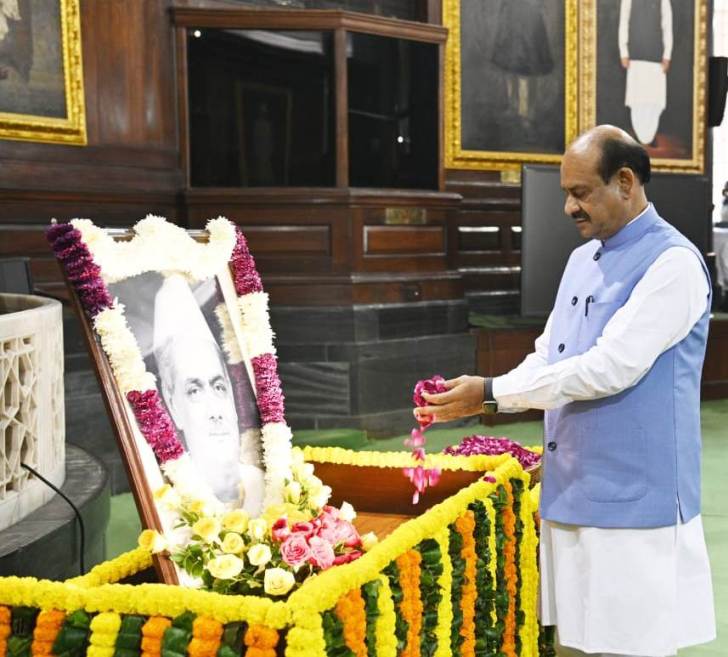
Prime Minister Narendra Modi at the Friendship Park and Friendship Square along with the Ethiopian Prime Minister, Dr. Abiy Ahmed Ali at Addis Ababa, in Ethiopia on December 16, 2025.
India’s West Asia–Africa Push: Strategic Partnerships Announced
Amman/Addis Ababa: India and Jordan today issued a joint statement outlining an expanded framework for bilateral cooperation, even as Prime Minister Narendra Modi’s subsequent visit to Ethiopia produced a detailed list of outcomes that together highlight both the ambition and the limitations of India’s current diplomatic outreach across West Asia and Africa.
In Amman, the joint statement with King Abdullah II reaffirmed political convergence and set out a roadmap to broaden economic engagement that both sides implicitly acknowledged has underperformed its potential. India is Jordan’s third-largest trading partner, with bilateral trade valued at about USD 2.3 billion in 2024, yet the relationship remains narrow and uneven. The statement committed the two governments to diversifying the trade basket, improving logistics and customs cooperation, and encouraging private investment in sectors such as digital services, renewable energy, healthcare, agriculture, fertilisers and manufacturing.
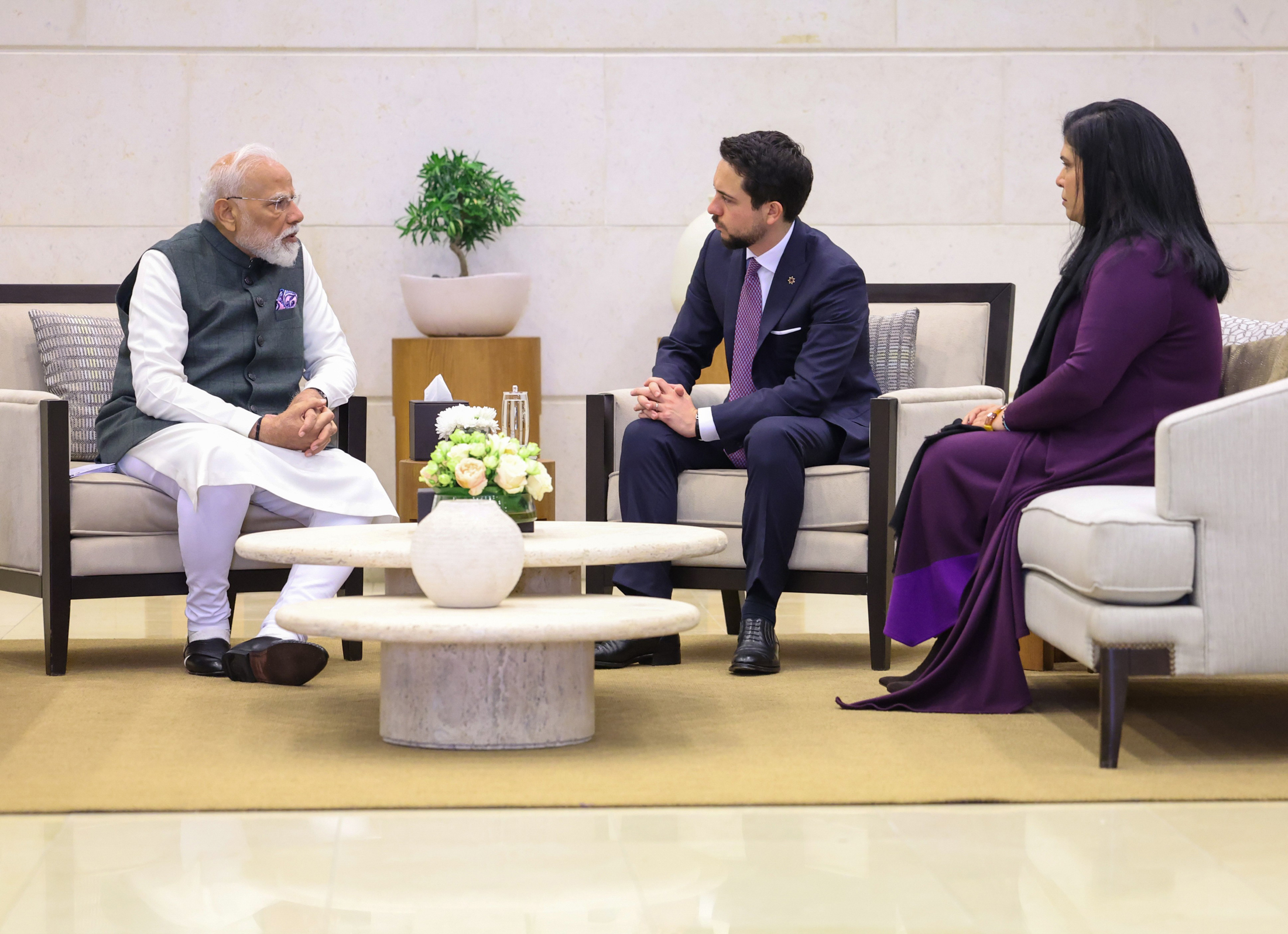
A key institutional outcome was the agreement to convene the 11th session of the India–Jordan Trade and Economic Joint Committee in 2026, intended to review trade barriers and identify commercially viable projects. The statement also called for fuller use of the existing customs cooperation agreement to ease procedures and information sharing—an acknowledgement that technical frameworks already in place have been underutilised.
Alongside the joint statement, the visit yielded a set of memoranda of understanding and renewals covering renewable energy, water resource management, digitalisation, heritage conservation and cultural exchanges, including a twinning arrangement between Petra and Ellora and the extension of the cultural exchange programme through 2029. While these outcomes broaden the scope of engagement, they stop short of binding financial commitments or time-bound investment pledges, reinforcing the sense that the relationship remains driven more by diplomatic signalling than commercial momentum.
In his interactions with business leaders in Amman, Modi proposed doubling bilateral trade over the next five years and again projected Jordan as a potential gateway for Indian firms to West Asia, North Africa and Europe. The argument is familiar and strategically neat, but it places Jordan in competition with better-capitalised regional hubs and assumes a level of risk appetite among Indian companies that has so far been limited. The Jordan leg thus underscored a recurring feature of India’s economic diplomacy: expansive intent tempered by structural constraints on delivery.
From Amman, Modi travelled to Addis Ababa, where the outcomes were more clearly itemised and politically consequential. India and Ethiopia agreed to elevate their relationship to a strategic partnership, providing a formal umbrella for cooperation across political, economic and security domains. Ethiopia’s decision to confer its highest civilian honour on Modi signalled Addis Ababa’s intent to foreground ties with India at a time of intense external courtship of Africa.
The Ethiopian visit produced a detailed slate of agreements and initiatives. The two sides signed an agreement on cooperation and mutual administrative assistance in customs matters to facilitate trade and information exchange. An MoU was concluded to establish a data centre at Ethiopia’s Ministry of Foreign Affairs, marking a concrete step in digital cooperation. An implementing arrangement on training for United Nations peacekeeping operations expanded defence-related collaboration within a multilateral framework.
India also aligned itself with Ethiopia’s debt restructuring process under the G20 Common Framework, a politically significant move that places New Delhi within the group of creditors shaping Ethiopia’s financial stabilisation. On the social and capacity-building front, India agreed to double the number of ICCR scholarships for Ethiopian students, provide specialised short-term training in artificial intelligence under the ITEC programme, and support the upgrading of the Mahatma Gandhi Hospital in Addis Ababa, particularly in maternal and neonatal care.
These outcomes reflect a partnership weighted towards institution-building, skills and technical cooperation rather than large-scale capital flows. That balance mirrors the current reality of India–Ethiopia economic ties. Bilateral trade stands at around USD 550 million, and while more than 600 Indian companies operate in Ethiopia, India’s overall economic footprint remains modest when compared with China and increasingly active Gulf states.
Taken together, the Jordan and Ethiopia engagements illustrate both the coherence and the constraints of India’s external strategy. The joint statement in Amman and the detailed outcome list in Addis Ababa show a deliberate attempt to institutionalise ties, expand sectoral cooperation and project India as a long-term partner offering technology, training and political consistency. At the same time, the absence of large investment announcements, binding financing commitments or immediate project launches underscores a persistent gap between diplomatic articulation and economic delivery.
For India, the challenge now lies less in drafting joint statements or signing MoUs and more in ensuring follow-through—by mobilising private capital, aligning regulatory systems and sustaining engagement beyond high-level visits. As global competition for influence in West Asia and Africa intensifies, the durability of India’s partnerships with Jordan and Ethiopia will ultimately be judged not by the breadth of agreed frameworks, but by whether these outcomes translate into sustained trade growth, visible projects and tangible economic returns.
– global bihari bureau