Women Weave Hope from Sacred Temple Fabrics
New Delhi: In the vibrant heart of Delhi, where the city’s rhythm hums alongside the quiet reverence of ancient traditions, a group of women is weaving a story of renewal and hope. Through Sampurna’s “Punah Arpit” initiative, sacred garments, known as poshaks (temple deity clothing), once offered to deities in temples, are transformed into exquisite, eco-friendly creations that carry the essence of devotion into everyday lives. This is more than a project—it’s a movement that entwines faith, environmental care, and the empowerment of women, stitching together a vision for a sustainable tomorrow.
For centuries, poshaks adorning deities in India’s temples have been treated with profound respect, often immersed in rivers or left to the elements as a final act of worship. Yet, as these sacred fabrics pile up in waterways, they quietly contribute to pollution, straining the rivers revered as sacred. Sampurna, led by the compassionate vision of Dr. Shobha Vijender, saw a different path. “These fabrics hold the prayers of countless hearts,” she says softly. “We’re giving them a new chapter, one that respects our traditions, uplifts our women, and cherishes our earth.” Her words carry a warmth that draws you in, reflecting a deep commitment to blending faith with responsibility.
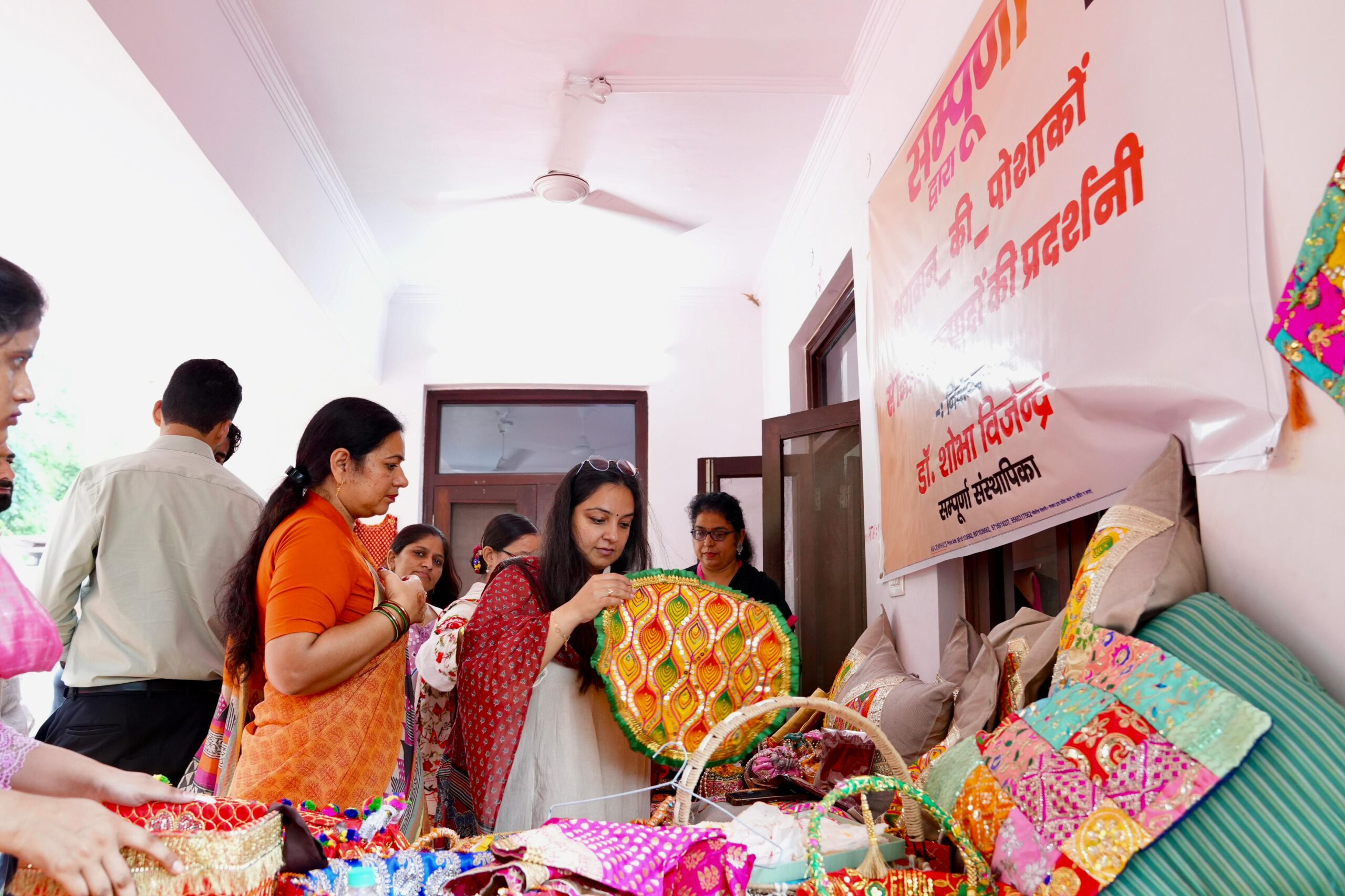
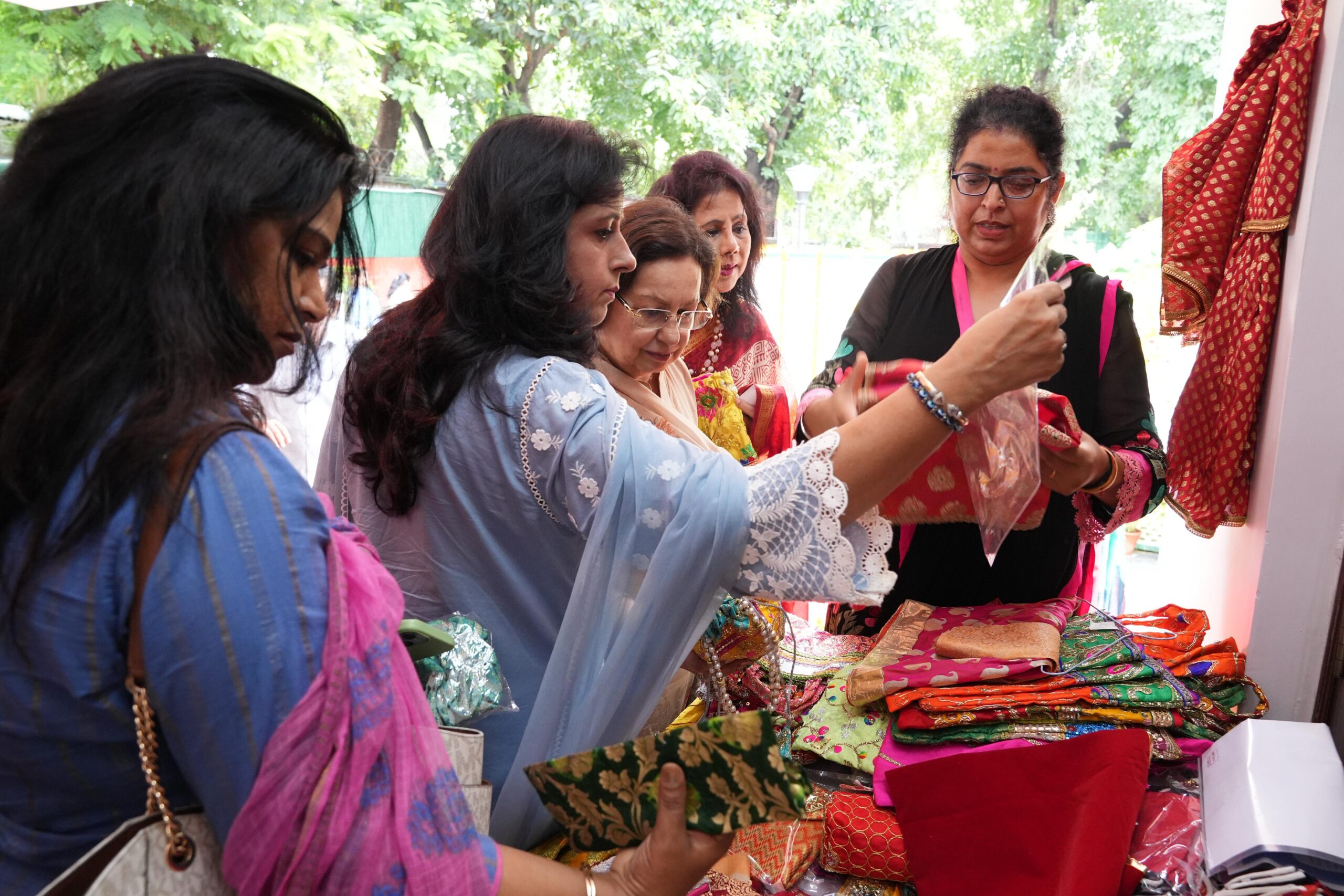
In modest workshops across Delhi, women gather daily, their hands moving with grace over silks and cottons – fabrics that once draped divine idols. These women, many of whom have faced economic hardship or societal barriers, are artisans of transformation. They craft Ram-Sita-Lakshman Saubhagya thailas (auspicious bags inspired by the divine trio), puja asanas (prayer mats), delicate pouches, book covers, thaal-posh (covers for ritual plates), and children’s garments, each piece a blend of artistry and reverence. One woman, her eyes bright with pride, shares, “This work has changed my life. I can now send my children to school, and I feel proud knowing my hands create something sacred.” Another, stitching a vibrant pouch, adds, “When devotees buy our work at temples, it feels like they’re carrying our prayers home.”
The impact of “Punah Arpit” ripples far beyond these workshops. By repurposing sacred textiles, Sampurna is easing the burden on rivers choked by ritual offerings, offering a gentle way to honour faith without harming nature. Nidhi Goel, Sampurna’s executive member, emphasises this dual purpose: “This isn’t just recycling—it’s a celebration of women’s strength and sustainable living. We’re showing that faith can inspire positive change.” Her words resonate with the women who find purpose in their craft and the devotees who carry home these creations.
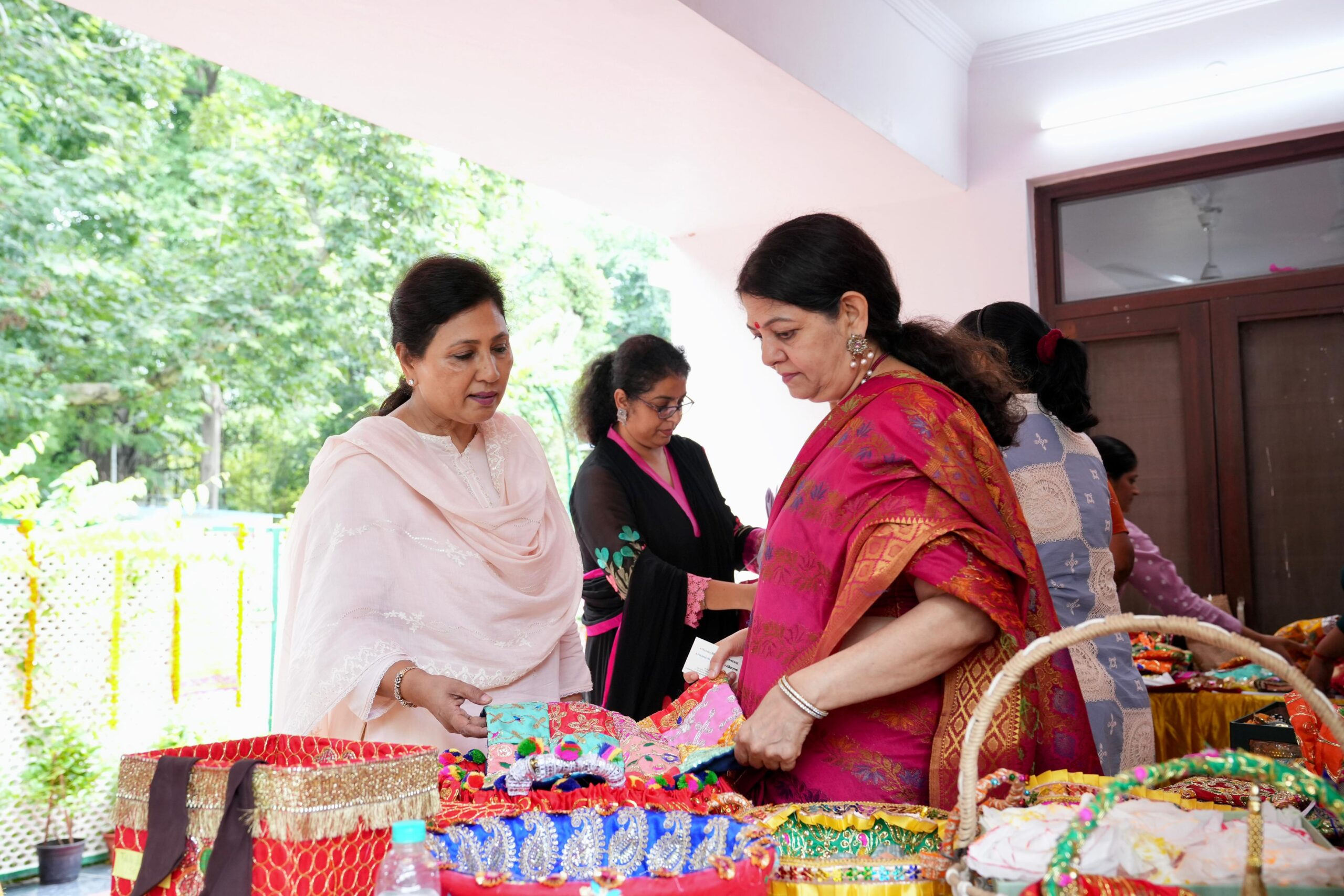
Temples are embracing this vision too. At Khatu Shyam Delhi Dham, devotees eagerly purchase these handcrafted treasures, captivated by their beauty and the story they tell. Chitra Aggarwal, a former municipal councillor, shares her experience at the temple’s Sampurna counter: “The devotion in these products touches everyone. Devotees don’t just see a pouch or an asana—they see a story of faith and care.” Temple committees are joining hands, ensuring poshaks are collected and channelled to Sampurna’s workshops rather than discarded, fostering a cycle of reverence and renewal.
The initiative has also caught the attention of community leaders. MLA Karnail Singh from Shakur Basti constituency of Delhi, moved by the project’s impact, says, “This is a beautiful blend of tradition and progress. It empowers women and protects our environment, setting an example for others to follow.” Similarly, MLA Poonam Sharma from Wazirpur praises the effort: “Sampurna’s work shows how small steps can create big change. It’s inspiring to see women lead this movement with such grace.” Their support underscores the initiative’s growing influence, bridging faith communities and civic responsibility.
As dusk settles over Delhi, the women of Sampurna fold their creations with care, their hearts full of purpose. Through their hands, devotion finds a new expression, lives are transformed, and rivers breathe a little easier. This is a quiet revolution, one that shines in every meticulously crafted piece, every empowered life, and every step toward a greener, more compassionate world.
– global bihari bureau