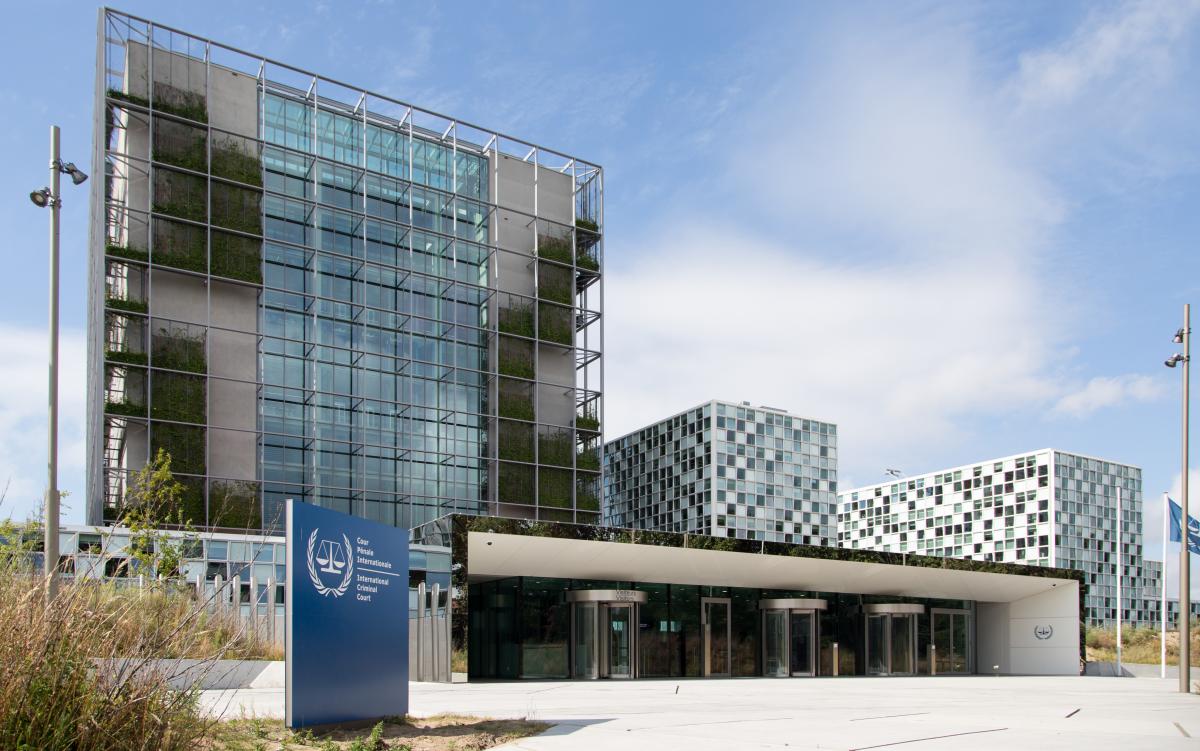
International Criminal Court, The Hague
US. Targets ICC, Echoing Earlier Disputes; ICC Condemns US Sanctions, Defends Role
Washington/The Hague: The United States’ sanctions on four International Criminal Court (ICC) officials, announced today, have reignited a long-standing dispute that tests the global framework for prosecuting international crimes.
Targeting Judges Kimberly Prost of Canada, Nicolas Guillou of France, Deputy Prosecutor Nazhat Shameem Khan of Fiji, and Deputy Prosecutor Mame Mandiaye Niang of Senegal, the sanctions reflect the U.S.’s view that the ICC’s investigations into American and Israeli nationals, without their governments’ consent, encroach on national sovereignty. This marks a continuation of U.S.-ICC tensions, with prior confrontations including the 2002 withdrawal of the U.S. signature from the Rome Statute and sanctions in 2020 against ICC personnel.
The ICC, supported by 125 States Parties, condemned the latest measures as an attack on its independence, highlighting a persistent divide between state sovereignty and international accountability.
The sanctions, enacted under Executive Order 14203 signed by President Donald Trump, follow a pattern of U.S. opposition to the ICC. In a press statement, Secretary of State Marco Rubio described the Court as a national security threat, accusing it of politicisation, abuse of power, and disregard for U.S. sovereignty, particularly in investigations involving Israel, a key ally.
The U.S., which signed the Rome Statute in 2000 under President Clinton but withdrew its signature in 2002 under President George W. Bush, does not recognise the ICC’s jurisdiction over its citizens. In 2002, the U.S. Congress passed the American Service-Members’ Protection Act, authorising measures to prevent ICC prosecution of U.S. personnel, often called the “Hague Invasion Act” due to its provision for using “all means necessary” to secure their release.
During Trump’s first term, in 2020, the U.S. imposed sanctions on ICC Prosecutor Fatou Bensouda and another official over investigations into U.S. actions in Afghanistan, including visa bans and asset freezes, actions later revoked by President Biden in 2021. Rubio urged nations supporting the ICC—many of which, he noted, have benefited from American sacrifices—to reconsider their backing of what he called a “bankrupt institution” engaged in “lawfare.”
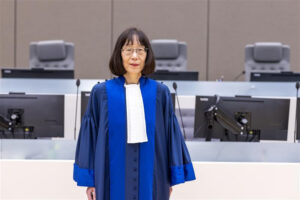
The ICC, headquartered in The Hague, responded by denouncing the sanctions as an assault on its independence and impartiality. ICC President Judge Tomoko Akane expressed deep regret, framing the measures as part of a series of unprecedented actions aimed at hindering the Court’s ability to deliver justice. Established in 2002 under the Rome Statute, the ICC operates as an independent judicial body tasked with prosecuting genocide, war crimes, crimes against humanity, and the crime of aggression.
Akane emphasised that the Court’s work aligns with global interests by enforcing international law, including laws of armed conflict and human rights. She highlighted its role as a vital institution born from the legacy of atrocities like the Holocaust, genocides, and widespread violence, serving millions of victims worldwide. The ICC, she stated, remains committed to its mandate, rejecting attempts to influence its impartiality or politicise its functions.
The Presidency of the Assembly of States Parties, led by President Päivi Kaukoranta of Finland, with Vice-Presidents Michael Imran Kanu of Sierra Leone and Margareta Kassangana of Poland, issued a parallel statement. The Assembly, which oversees the ICC’s management and legislative functions, rejected the U.S. measures as unilateral and detrimental to the Rome Statute system’s integrity. It cautioned that such actions could undermine global efforts to ensure accountability for serious international crimes and weaken the rules-based international order. The Assembly expressed full support for the ICC, its officials, and those contributing to its judicial mandate, urging States Parties and stakeholders to uphold the principles of international justice and defend the Court against external pressures.
The U.S. objections centre on the ICC’s jurisdictional reach, which covers crimes committed on the territory of its States Parties or by their nationals, and can extend to nationals of non-member states like the U.S. or Israel if crimes occur in a member state’s territory or if the UN Security Council refers a situation to the Court. The U.S. argues that this allows the ICC to target its citizens without a legal basis, particularly in investigations involving military actions or alleged crimes in conflict zones, such as those in Afghanistan or involving Israel. The 2020 sanctions, for instance, targeted ICC efforts to investigate alleged U.S. war crimes in Afghanistan, reflecting concerns that the Court lacks sufficient checks on its prosecutor’s authority. The current sanctions, following earlier designations of four other ICC judges and the ICC Prosecutor, indicate a sustained U.S. effort to challenge the Court’s actions.
The ICC maintains that its jurisdiction is grounded in the Rome Statute, agreed upon by its member states. Its officials, drawn from diverse regions, are tasked with impartially determining individual responsibility for international crimes. The Court condemned the sanctions as an affront to its personnel, its States Parties, and the millions of victims relying on it for justice. It pledged to continue its work in accordance with its legal framework, undeterred by restrictions or threats, and called on supporters of humanity and the rule of law to provide consistent backing for its mission.
This dispute reflects a broader divide over the role of international judicial institutions. The U.S. emphasises national sovereignty, viewing the ICC’s investigations as an overreach that threatens its interests and those of its allies. The ICC and its supporters argue that accountability for international crimes requires an independent judiciary that operates beyond national boundaries. As conflicts continue to affect millions globally, the ICC’s mission to uphold justice and accountability remains under scrutiny, with its defenders emphasising its necessity for victims of atrocities.
– global bihari bureau