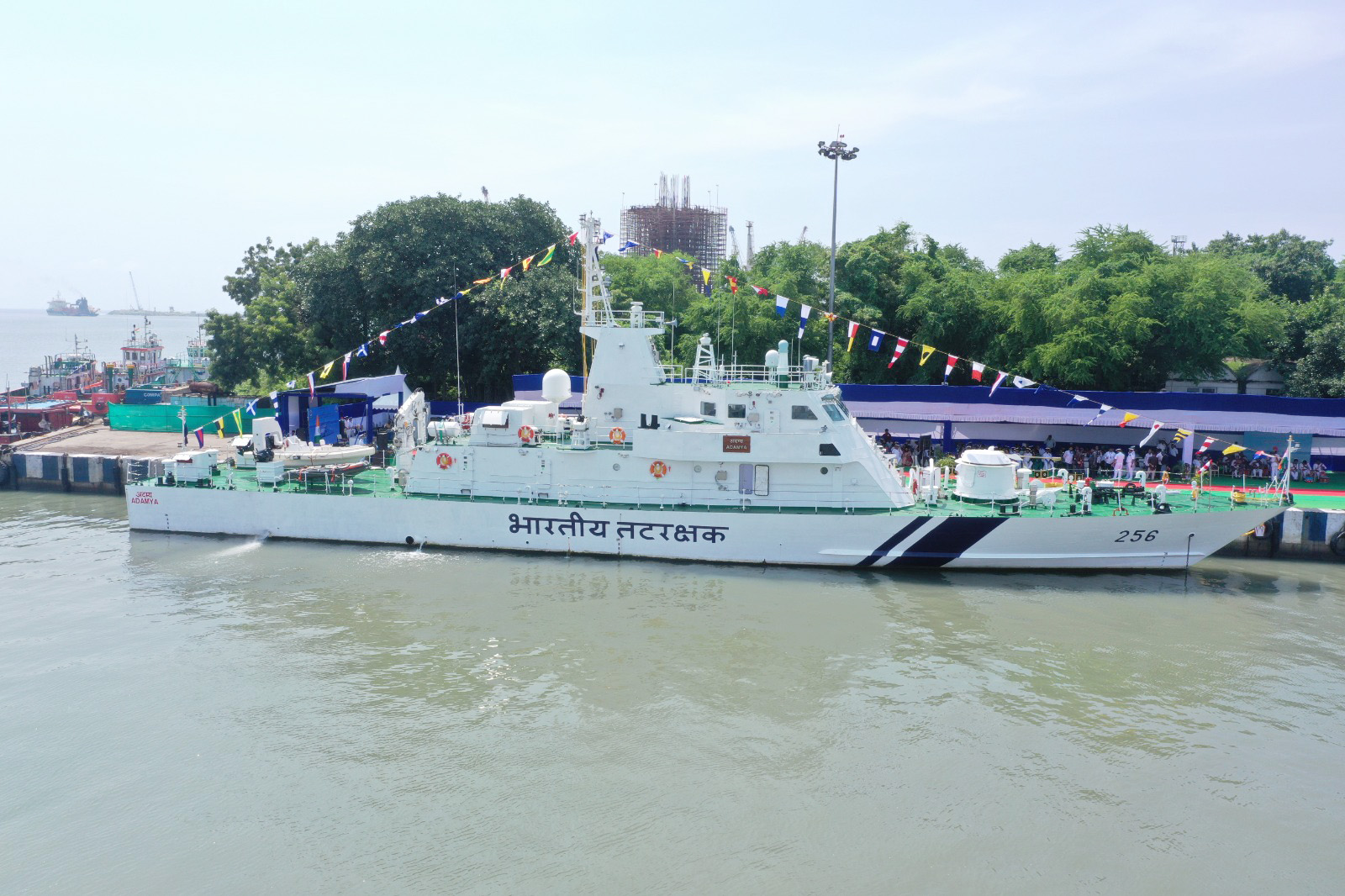
Fast Patrol Vessel ICGS Adamya Commissioned into ICG at Paradip Port, in Odisha on September 19, 2025.
Indian Coast Guard commissions ICGS Adamya
Paradip: The Indian Coast Guard Ship (ICGS) Adamya, the first in a series of eight Adamya-class Fast Patrol Vessels (FPVs), was commissioned today at Paradip Port. Built indigenously by Goa Shipyard Limited, Adamya proudly represents over 60% indigenous content and is a major step forward in India’s push for self-reliance under the ‘Aatmanirbhar Bharat’ initiative.
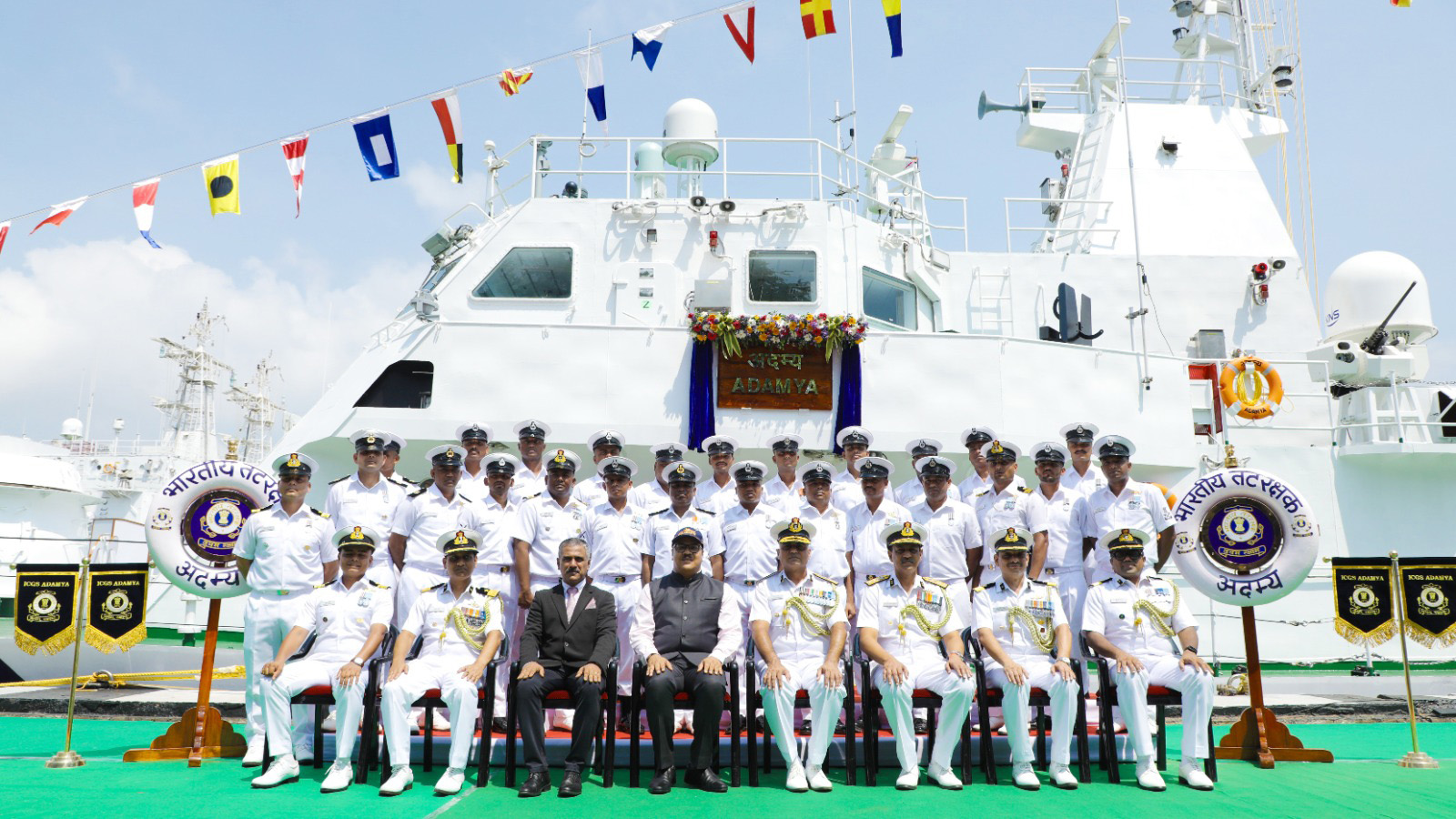
The commissioning ceremony was led by Satyajit Mohanty, Joint Secretary (Armed Forces & Policy), Ministry of Defence, in the presence of Inspector General Yoginder Dhaka, Chief of Staff, Headquarters Eastern Seaboard, along with senior central and state government officials.
Based at Paradip and operationally controlled by the Indian Coast Guard Region (North East) through District Headquarters No. 7 (Odisha), Adamya—meaning ‘indomitable’—symbolizes the Coast Guard’s strong commitment to ensuring safe, secure, and clean seas for the nation. The vessel is manned by five officers and 34 personnel tasked with maritime surveillance and other duties to safeguard India’s maritime interests.
Weighing around 320 tons and stretching 51 meters in length, Adamya is powered by two 3000 KW diesel engines driving indigenously developed controllable pitch propellers and gearboxes. This advanced propulsion system offers superior manoeuvrability, operational flexibility, and enhanced performance at sea, allowing the vessel to achieve speeds of up to 28 knots and an endurance of 1,500 nautical miles at economical speeds.
The ship is armed with a 30 mm CRN 91 naval gun and two 12.7 mm stabilised remote-controlled machine guns, all backed by modern fire control systems. Its technological sophistication includes an Integrated Bridge System, Integrated Platform Management System, and Automated Power Management System, which together enhance operational efficiency and automation, ensuring precision, swift responsiveness, and sustained readiness.
Strategic Implications
The induction of Adamya and the expanding fleet of FPVs bring several key strategic advantages to India. These vessels bolster maritime domain awareness, allowing the Coast Guard to actively monitor vast coastlines and Exclusive Economic Zones, thus strengthening coastal security against smuggling, piracy, and illegal fishing.
By being a product of India’s shipbuilding industry with significant indigenous content, Adamya also reflects the success of ‘Aatmanirbhar Bharat’ in defence manufacturing, reducing reliance on foreign suppliers while driving technological innovation and economic benefits.
Operationally, the vessel’s speed and manoeuvrability enable rapid response to marine emergencies, including search and rescue and law enforcement. Its robust weaponry and advanced systems reinforce India’s coastal defence capabilities in a region witnessing increasing maritime challenges.
Regionally, enhanced patrol vessels like *Adamya* contribute to India’s growing role as a net security provider in the Indian Ocean Region, projecting power and protecting vital sea lanes of communication critical for global trade and security. The vessels also support the blue economy by ensuring maritime stability necessary for sustainable exploitation of marine resources.
Commissioning Timeline
Adamya is the first of eight vessels in the class, with the remaining seven expected to be commissioned in phases over the next two years. Several ships have already been launched or are under construction at Goa Shipyard Limited, with the full series scheduled to be inducted by around 2027. This phased induction will significantly enhance India’s maritime security capabilities along both the eastern and western seaboards.
– global bihari bureau