Noel Bellen Samar
Ambushed Filipino scribe’s death raises alarms over press freedom in the Philippines
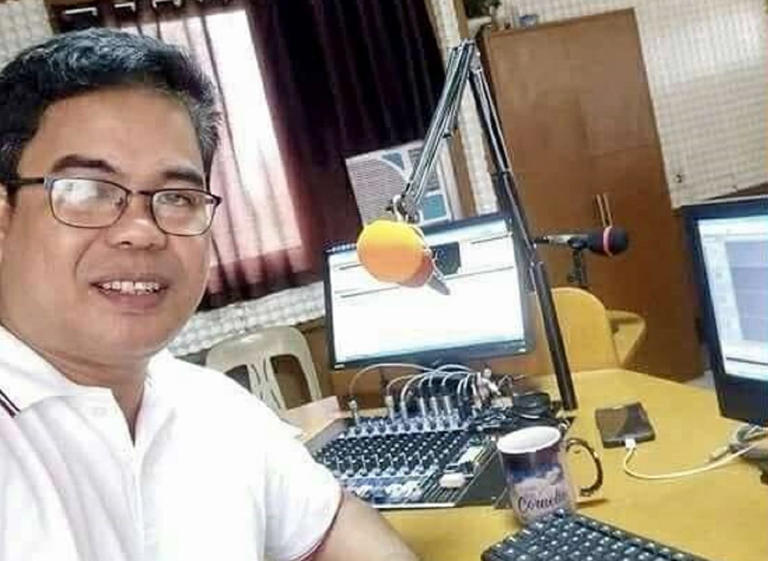
Manila/Geneva: The killing of yet another Philippine journalist has laid bare the persistent dangers facing media workers in the archipelago and the enduring impunity that amplifies those risks. On 21 October 2025, Noel Bellen Samar, a 54-year-old broadcaster, died after being ambushed the previous morning at around 9:05 a.m. along the Maharlika Highway in Barangay Morera, Guinobatan, Albay province. Riding his motorcycle on October 20, Samar was fired upon by two unidentified gunmen on another motorcycle. He sustained four gunshot wounds to his chest and abdomen – left side of chest and the abdominal area – reportedly fired from a .45-calibre pistol. He was carried to the Bicol Regional Hospital and Medical Centre after initial treatment and underwent surgery, but succumbed to his injuries at about 2:20 p.m. the following day.
The brazen daylight attack has reignited concerns over the safety of journalists in the Philippines.
Samar was affiliated with Kadunong Internet TV (Kadunong ITV) and DWIZ News FM 92.3 in Legazpi City. According to his colleagues, he was known for his candid and outspoken commentary on local political and administrative issues. He was reported to have been critical of the administration in Albay and often commented sharply in his programmes.
The Philippine National Police (PNP) has set up a Special Investigation Task Group (SITG) named “Samar” to investigate the murder, collecting ballistic evidence, CCTV footage and witness statements to establish the identity and motive of the attackers. So far, no motive has been publicly confirmed, and no arrests have been made, though a manhunt is ongoing.
The Presidential Task Force on Media Security (PTFoMS) condemned the incident, stating that any attack on a journalist undermines press freedom and democratic discourse. It has promised full cooperation with the investigation and support for Samar’s family. Manila-based journalist organisations and media houses have also expressed outrage, demanding that those behind the crime be brought to justice swiftly and that stronger mechanisms be created to protect journalists, especially in the provinces.
In Geneva, the Press Emblem Campaign (PEC), a global media safety and rights body, has strongly denounced the murder and called for justice for Samar’s bereaved family and the Philippines’ media fraternity. “Noel Bellen Samar is the third journalist based in the Southeast Asian nation and the 147th scribe to be killed globally till date this year,” said Blaise Lempen, PEC president, in a statement issued on 23 October 2025. “We have learned that he was vocal against the administration in Albay and often commented sharply in his programmes. We demand a thorough probe into the murder and punishment for the perpetrators under the law.” Lempen added that the island nation earlier lost two journalists—Juan Johny Dayang and Erwin Labitad Segovia—to assailants since 1 January 2025, underlining a worrying escalation of violence against Filipino media professionals.
Samar’s death follows the earlier killings this year of veteran publisher-journalist Juan “Johnny” Dayang (89), who was shot dead at his home in Kalibo, Aklan, on 29 April, and broadcaster Erwin Labitad Segovia, who was murdered in Bislig City, Surigao del Sur, on 21 July after hosting a morning show. These incidents underscore the peril faced by Filipino journalists, particularly those working in local and community-level outlets.
According to the Centre for Media Freedom and Responsibility (CMFR), between July 1, 2022, and April 30, 2025, 184 incidents of attacks against media workers were documented across the Philippines. These ranged from red-tagging and online harassment to physical assaults and shootings. Around 42 per cent of these cases allegedly involved state actors directly or indirectly. The Bicol region, where Samar was based, has been identified as one of the hot spots for such attacks.
International watchdogs have expressed alarm at the situation. Reporters Without Borders (RSF) on October 21, 2025, urged Philippine authorities to identify both the gunmen and any masterminds behind Samar’s murder and to determine whether the attack was linked to his journalistic work. RSF noted that Samar was the eighth radio journalist killed since President Ferdinand Marcos Jr. took office in June 2022. Similarly, Amnesty International Philippines cited 177 documented attacks on journalists during the same period, calling on the government to move beyond condemnation and adopt concrete reforms to safeguard media workers.
At the heart of the problem lies a deep-rooted culture of impunity. Since the country’s return to democratic governance in 1986, more than 200 media workers have been killed, according to local press organisations, yet the conviction rate remains strikingly low. The CMFR’s 2025 report noted that only about 50 convictions have been secured, with most cases either dismissed, archived, or indefinitely delayed. The 2009 Maguindanao massacre, in which 32 journalists were among 58 victims, continues to symbolise the systemic failure to ensure justice and protect press freedom.
Despite recurring assurances from officials that the Philippines remains committed to a free press, advocates argue that progress has been slow. Investigations are often protracted, transparency remains limited, and very few attacks are conclusively proven to be work-related, allowing perpetrators to escape accountability.
In provincial areas such as Bicol, journalists operate under particularly precarious conditions. With limited security, scarce resources, and powerful local political interests, broadcasters often face intimidation and violence. Radio journalists like Samar are especially vulnerable due to their direct connection with rural audiences and their perceived influence on public opinion.
The death of Noel Bellen Samar is thus not merely a local tragedy but part of a disturbing national pattern. Unless the investigation into his killing leads to tangible results—identifying and prosecuting the culprits and addressing the systemic vulnerabilities of journalists—his case risks becoming yet another statistic in the long list of unsolved attacks on Filipino media workers.
For now, Samar’s colleagues and the wider press community await the outcome of the SITG “Samar” investigation, hoping it delivers justice not only for one fallen journalist but for an entire profession that continues to face threats for telling the truth.
-global bihari bureau (with inputs from Nava Thakuria, PEC)