Alliance Air unveils fixed-fare model across regional routes
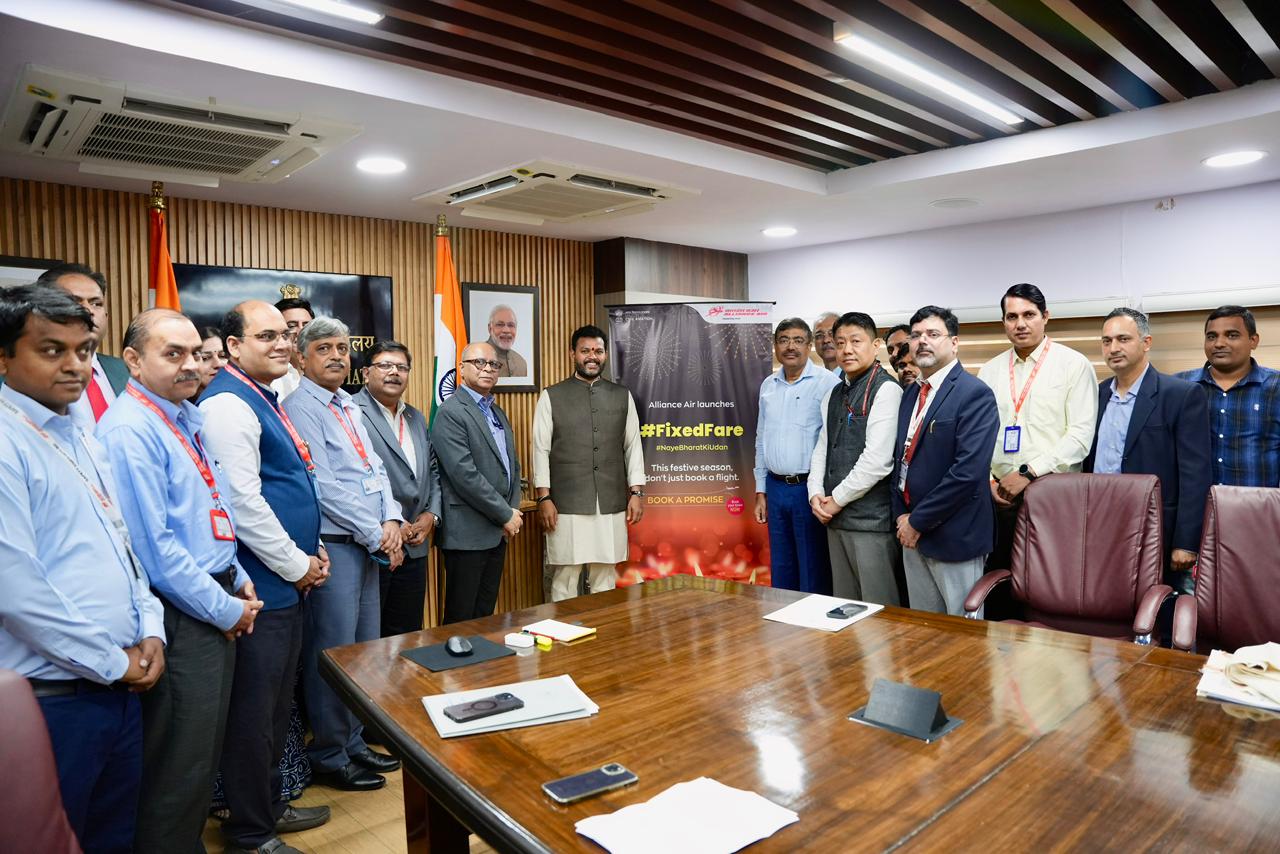
New Delhi: India’s domestic aviation sector sees the return of fixed airfares with the launch of Alliance Air’s “Fare Se Fursat” scheme. Civil Aviation Minister Rammohan Naidu Kinjarapu inaugurated the initiative, which offers passengers a single, fixed fare that remains constant irrespective of booking date, including on the day of departure. The launch event was attended by the Secretary, Civil Aviation, Samir Kumar Sinha; chairman, Alliance Air, Amit Kumar; and CEO, Alliance Air, Rajarshi Sen.. The pilot programme will run from October 13 to December 31, 2025, on select routes to assess operational feasibility and passenger response.
Speaking at the launch, Minister Rammohan Naidu said, “The ‘Fare Se Fursat’ scheme aligns with the core principles of the UDAN scheme. Alliance Air is carrying forward Prime Minister Narendra Modi’s vision of making aviation accessible and affordable for the middle class, lower-middle class and neo-middle class.” He highlighted that fixed fares remove the uncertainty associated with fluctuating airfares, ensuring predictability for passengers, including last-minute travellers. He also referenced complementary measures such as the Udan Yatri Cafes, offering tea for ₹10, coffee for ₹20, and snacks for ₹20 at airports, making air travel more convenient and accessible.
Alliance Air, India’s government-owned regional carrier, has played a central role in the UDAN programme, connecting Tier-2 and Tier-3 cities to the national aviation network. Minister Rammohan Naidu described the “Fare Se Fursat” initiative as a step towards uniform pricing across select routes, encouraging first-time flyers from smaller towns to choose air travel and supporting the broader objective of making aviation inclusive.
Historical context of aviation pricing in India:
- Early 1990s – Liberalisation of domestic aviation: The entry of private carriers into the Indian market marked the beginning of competitive fare structures. Airlines introduced dynamic, demand-based pricing to manage revenue efficiently, particularly on popular routes.
- 1990s–2000s – Rise of dynamic pricing: As competition intensified, dynamic pricing became widespread. Ticket prices fluctuated based on factors such as booking date, demand, seasonality, and available seats. While this model allowed airlines to maximise revenue, it often created uncertainty for passengers, particularly those booking at short notice or travelling to regional destinations.
- Mid-2010s – UDAN scheme and regional connectivity: The government launched UDAN to improve regional air connectivity. While dynamic pricing continued, the focus shifted towards making air travel affordable for underserved routes and smaller towns, sometimes including subsidies and fare caps on regional sectors.
- 2015–2025 – Persistent fare unpredictability: Despite efforts to stabilise fares on certain routes, most domestic flights continued to operate under dynamic pricing. Passengers frequently faced last-minute price surges, particularly on high-demand or peak-season routes. Airlines balanced profitability with regulatory requirements, but fare volatility remained a concern.
- October 2025 – Launch of “Fare Se Fursat”: Alliance Air introduced a fixed-fare model on select routes, addressing the longstanding issue of fare unpredictability. Under the pilot programme, passengers will pay a uniform price regardless of booking date, providing stability and transparency.
India’s domestic aviation market has therefore evolved from fixed or regulated fares during the pre-liberalisation period to highly dynamic pricing in a liberalised, competitive environment. The “Fare Se Fursat” scheme represents a targeted return to fare predictability, particularly for regional and smaller-town routes, aligning with broader government objectives of accessibility, inclusion, and affordability in air travel.
The pilot programme will allow authorities to monitor passenger response, operational feasibility, and route viability, informing potential future expansion to additional routes or carriers. By combining predictable pricing with regional connectivity, the scheme is expected to encourage more first-time flyers, increase utilisation of regional airports, and support the vision of ‘Ude Desh Ka Aam Nagrik’, ensuring that air travel is accessible to a wider segment of the population.
Minister Rammohan Naidu emphasised that the initiative is not merely a pricing adjustment but a step towards a passenger-centric aviation system. He said, “This initiative directly addresses the primary concern of passengers—the airfare—while continuing to build on affordability, convenience, and accessibility. It strengthens public confidence in regional air travel and complements the government’s efforts to expand aviation infrastructure and services to all corners of the country.”
– global bihari bureau