

Protecting the World’s Grain Basket
Why Saving Ukraine’s Farms Matters for World Food Security
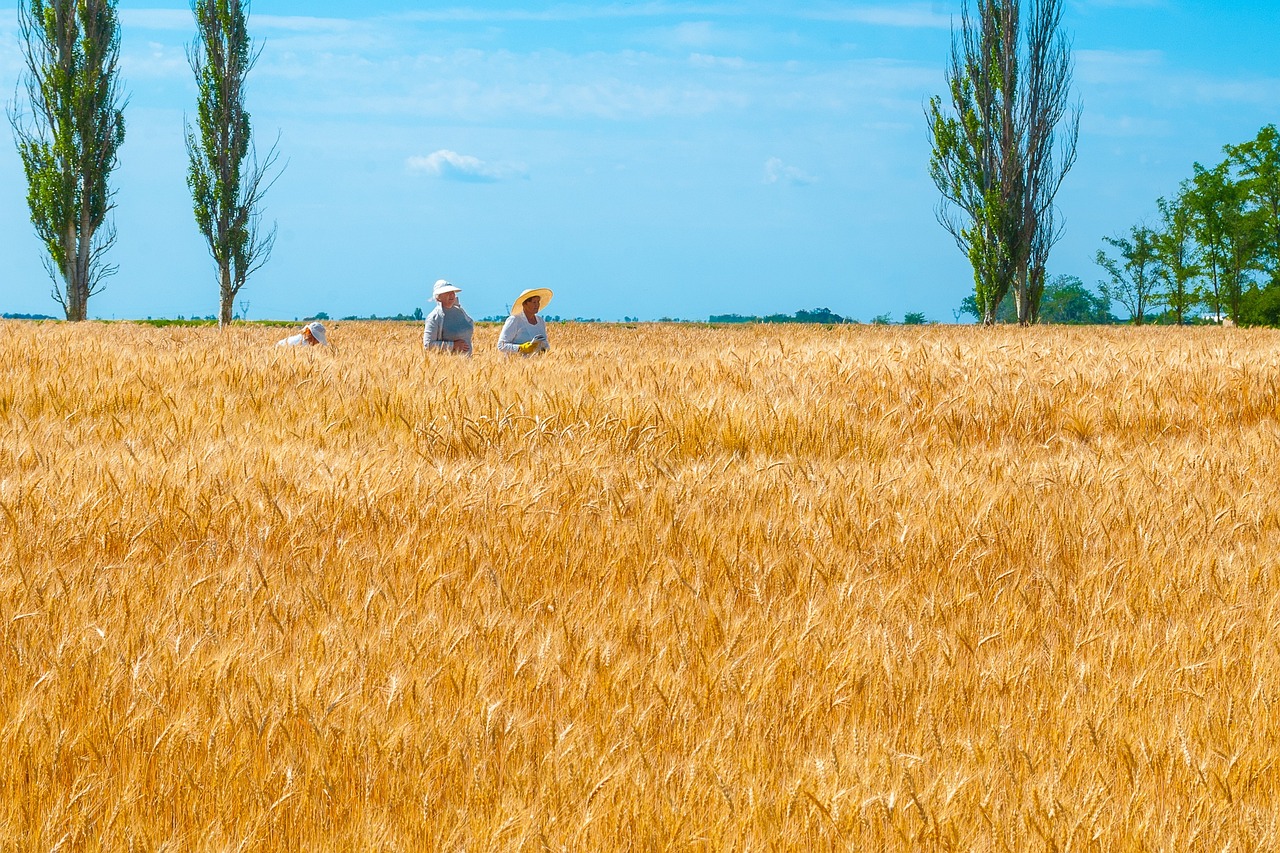
Rome: Ukraine’s agricultural heartland, historically one of the most productive in the world and central to global food markets, faces a perilous crossroads as the war enters its fourth year. Beyond its domestic value, the country’s capacity to produce and export grain and oilseed commodities has far-reaching implications for global food security, prompting the Food and Agriculture Organization of the United Nations (FAO) to design a structured three-year Emergency and Early Recovery Response Plan for 2026–2028 not merely as humanitarian support, but as a strategic effort to stabilise agricultural supply chains that feed millions beyond Ukraine’s borders.
Before the full-scale invasion in 2022, Ukraine ranked among the world’s leading agricultural exporters, supplying significant shares of major commodities on international markets. Over a recent five-year period, Ukraine accounted for roughly 9 per cent of global wheat exports and about 15 per cent of global maize exports, securing positions among the top five producers shipped abroad. It also served as a dominant source of sunflower products, historically providing around half of the world’s sunflower oil exports, a key calorie-dense edible oil in many food-importing countries. These figures underscore Ukraine’s pivotal role in global food baskets, especially for nations in Africa, the Middle East and Asia that rely on imported cereals and oilseed products to meet basic nutrition needs.
The war’s impact on this globally significant sector has been severe. Years of conflict have disrupted access to land, damaged infrastructure and constrained production, with frontline regions particularly hard hit by unexploded ordnance and limited agricultural inputs. Rising costs, labour shortages and barriers to domestic and international markets have compounded these challenges. With infrastructure degraded and export logistics under strain, Ukraine’s ability to maintain its role in feeding global markets has been weakened — a reality that international agencies and food markets watch closely.
The FAO’s Emergency and Early Recovery Response Plan directly responds to these threats by connecting immediate agricultural assistance with early recovery and resilience building, aiming to safeguard not just rural livelihoods but the productive base necessary for sustained market participation. The structure of the plan is designed to prevent dangerous interruptions between relief and recovery, ensuring that producers can continue food production while rehabilitating damaged land and assets. Investments in safe access to fields, rehabilitation of agricultural land affected by explosive hazards and market-oriented production are integral to stabilising Ukraine’s contribution to global food supplies.
Taras Vysotskyi, Deputy Minister of Economy, Environment and Agriculture of Ukraine, highlighted the essential role farming plays not only for national food security but for economic stability and employment. His remarks reflect the broader strategic imperative driving international support: without a functioning agricultural sector, both Ukrainian households and global markets feel the consequences.
The sector’s transformation from emergency response toward sustainable recovery is anchored around three key pillars — evidence and coordination, emergency agriculture, and early recovery — ensuring that support is data-driven and aligned with national priorities. This targeted approach is especially crucial for frontline communities, women, youth, internally displaced persons and returnees, whose involvement in restoring production is key to long-term stability.
FAO’s own operational footprint in Ukraine underscores the scale of needs. Since 2022, the organisation has assisted more than 300,000 rural families and nearly 17,000 small-scale agrifood enterprises with seeds, animal feed, storage solutions, irrigation systems, cash support and other tools to keep production going despite the war. Satellite analysis covering 2.37 million hectares of land has identified over one million craters from explosive impacts, and prioritised 32,000 hectares for mine action interventions; support to date has enabled farming on over 22,000 hectares of cleared land.
Compounding the humanitarian imperative are stark economic figures: the sector has absorbed an estimated USD 83.9 billion in damages and losses, with another USD 1.6 billion in irrigation losses, highlighting the magnitude of disruption to a system that once supplied staple foods worldwide. These statistics illustrate both the humanitarian and economic rationale behind international intervention: preserving a productive agricultural base in Ukraine is not simply about local recovery, but about maintaining the stability of food exports that millions globally depend on.
Current FAO operations in Ukraine amount to nearly USD 26 million, of which USD 24 million is dedicated to emergency and recovery activities. However, the organisation estimates it will need USD 193 million to reach nearly 240,000 rural families and farmers over the next three years if it is to prevent further erosion of productive capacity and ensure that agriculture remains a foundation for both national resilience and global food security.
Household-level assessments by FAO underscore the sector’s fragility: 40 per cent of rural families engage in agriculture, most for self-consumption, yet vulnerable groups such as internally displaced persons and female-headed households face higher food insecurity and are forced into negative coping strategies that undermine resilience over time. Production losses are widespread, with nearly 30 per cent of crop producers reporting reduced harvests in recent assessments and livestock losses are also significant.
Ukraine’s agricultural recovery plan reflects a strategic synthesis of humanitarian support and economic foresight. By aiming to preserve productive capacity and restore safe access to land, FAO and its partners hope to sustain Ukraine’s agricultural output at levels that continue to feed both domestic needs and global markets. In doing so, they are defending not just rural livelihoods but the broader stability of international food systems in a period of heightened geopolitical and economic uncertainty.
– global bihari bureau



The article is good and very readable. The site is useful for regular visitors.