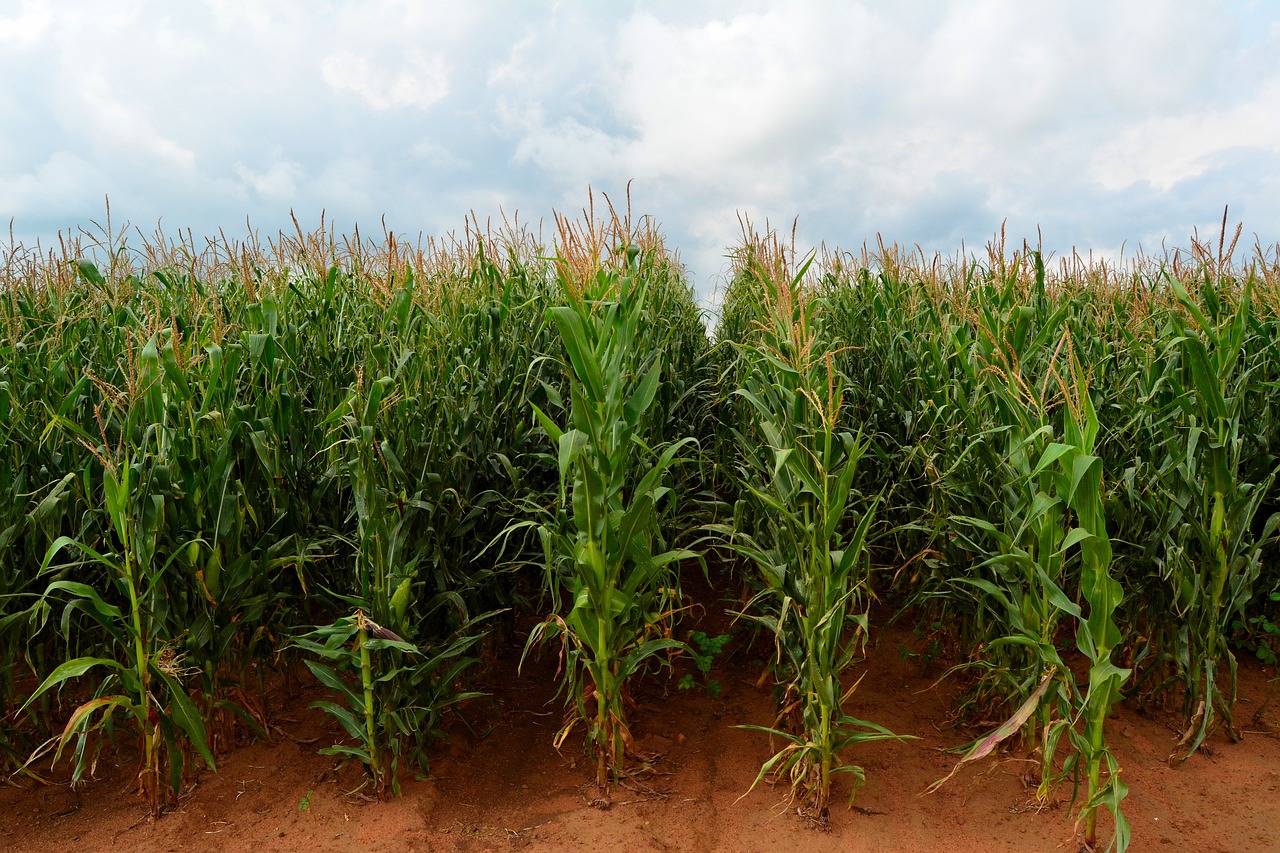
A Maize Corn Field
FAO Forecasts 3.5% Rise in 2025 Cereal Production
Food Prices Steady as Meat, Oil Rise, Cereals Fall
Rome: Abundant maize output forecast for the year ahead has driven the Food and Agriculture Organization of the United Nations (FAO) to project a record-high global cereal production of 2,961 million tonnes in 2025, a 3.5 per cent increase from 2024. According to the FAO’s Cereal Supply and Demand Brief released today, this upward revision of 35.6 million tonnes since July is primarily due to significant increases in maize production forecasts for the United States and Brazil, bolstered by record-high yields and expanded planting areas. Meanwhile, the FAO Food Price Index (FFPI), which tracks monthly changes in international prices of globally traded food commodities, remained virtually unchanged at 130.1 points in August 2025, marginally up from 130.0 points in July and 6.9 per cent higher than in August 2024, as increases in meat, sugar, and vegetable oil prices offset declines in cereal and dairy quotations.
FAO Food Price Index: Stability Amid Mixed Trends
The FFPI, averaging 130.1 points in August, reflects a balance between rising and falling commodity prices, remaining 18.8 per cent below its March 2022 peak following Russia’s invasion of Ukraine. The FAO Vegetable Oil Price Index rose 1.4 per cent to 169.1 points, its highest since July 2022, driven by higher quotations for palm, sunflower, and rapeseed oils. This increase was fueled by robust global import demand and Indonesia’s plan to raise its biodiesel blending mandate in 2026, though soyoil prices dipped due to prospects of ample global soybean supplies in 2025/26. The FAO Meat Price Index rose 0.6 per cent to a record 128.0 points, driven by increases in bovine meat prices due to strong demand from the United States and China, which boosted Australian and Brazilian export quotations. Ovine meat prices rose for the fifth consecutive month, while pig meat prices stayed stable, and poultry prices fell due to ample Brazilian supplies despite some import restrictions.
Conversely, the FAO Cereal Price Index dropped 0.8 per cent to 105.6 points, driven by a decline in wheat prices due to larger harvests in the European Union and Russia, coupled with subdued import demand from Asia and North Africa. Maize prices rose for the third consecutive month, supported by increased demand for feed and ethanol production in the United States, though sorghum prices fell and barley prices increased. The FAO All Rice Price Index fell 2.0 per cent, reflecting lower Indica prices amid fierce competition among exporters. The FAO Dairy Price Index declined 1.3 per cent to 152.6 points, with lower butter (down 2.5 per cent), cheese (down 1.8 per cent), and whole milk powder (down 0.3 per cent) prices due to weak Asian demand and increased global availability, though skim milk powder prices rose 1.8 per cent. The FAO Sugar Price Index edged up 0.2 per cent to 103.6 points, driven by concerns over Brazil’s sugarcane yields and strong import demand from China, tempered by favourable crop prospects in India and Thailand.
Cereal Supply and Demand: Record Production and Stocks
The FAO’s Cereal Supply and Demand Brief projects global cereal production at 2,961 million tonnes in 2025, up 3.5 per cent from 2024, driven by a 5.9 per cent increase in coarse grain output to 1,601 million tonnes. Maize production forecasts were significantly raised for the United States (record-high yields), Brazil (higher yields), and Mexico (larger planted area), though trimmed in the European Union due to dry weather and heatwaves. Global sorghum production is forecast at 66.6 million tonnes, up 5.6 per cent, with Brazil’s output reaching a record high. World wheat production is slightly reduced to 804.9 million tonnes, up 0.8 per cent year-on-year, with lower yields in China and Argentina offset by improved prospects in the European Union. Rice production is expected to rise 1.0 per cent to a record 555.5 million tonnes, led by expansions in Bangladesh, Brazil, China, India, and Indonesia, despite declines in Nepal, Madagascar, the United States, and Thailand.
Global cereal utilisation in 2025/26 is forecast at 2,922 million tonnes, a 1.6% increase from 2024/25, driven by increased maize and wheat use for animal and aquaculture feed, particularly in Brazil, the United States, and Thailand. World cereal stocks are projected to reach a record 898.7 million tonnes by the end of 2026, up 3.7 per cent, with maize stocks in the United States expected to exceed 50 million tonnes. The global cereal stocks-to-use ratio is anticipated to rise to 30.6 per cent, signalling a comfortable supply outlook. Rice stocks are forecast to grow 2.0 per cent to 214.5 million tonnes, with buildups in Brazil, China, India, and Thailand. International cereal trade is expected to reach 493.4 million tonnes, up 1.4 per cent, with maize trade rising due to abundant supplies from Brazil and the United States, and wheat trade increasing 4.0 per cent due to demand from China, Pakistan, Syria, and Türkiye. Rice trade is projected to hit a record 61.4 million tonnes, with increased imports by Bangladesh, Ghana, and Guinea-Bissau.
Implications and Outlook
The FAO’s forecasts indicate a robust global cereal supply for 2025, driven by strong maize and rice production, which helps stabilise food prices despite regional challenges like heatwaves in the European Union and adverse weather in China. The slight uptick in the FFPI reflects localised pressures, such as Brazil’s sugarcane concerns and Indonesia’s biodiesel policy, but abundant supplies in key commodities like soybeans and wheat keep overall price increases in check. The projected growth in cereal stocks and trade underscores a positive global food security outlook, though regional disparities and weather-related risks remain critical factors to monitor.
– global bihari bureau