New FAO Report Exposes Scale of Seafood Mislabeling
Fish Fraud Widespread Worldwide, FAO Warns
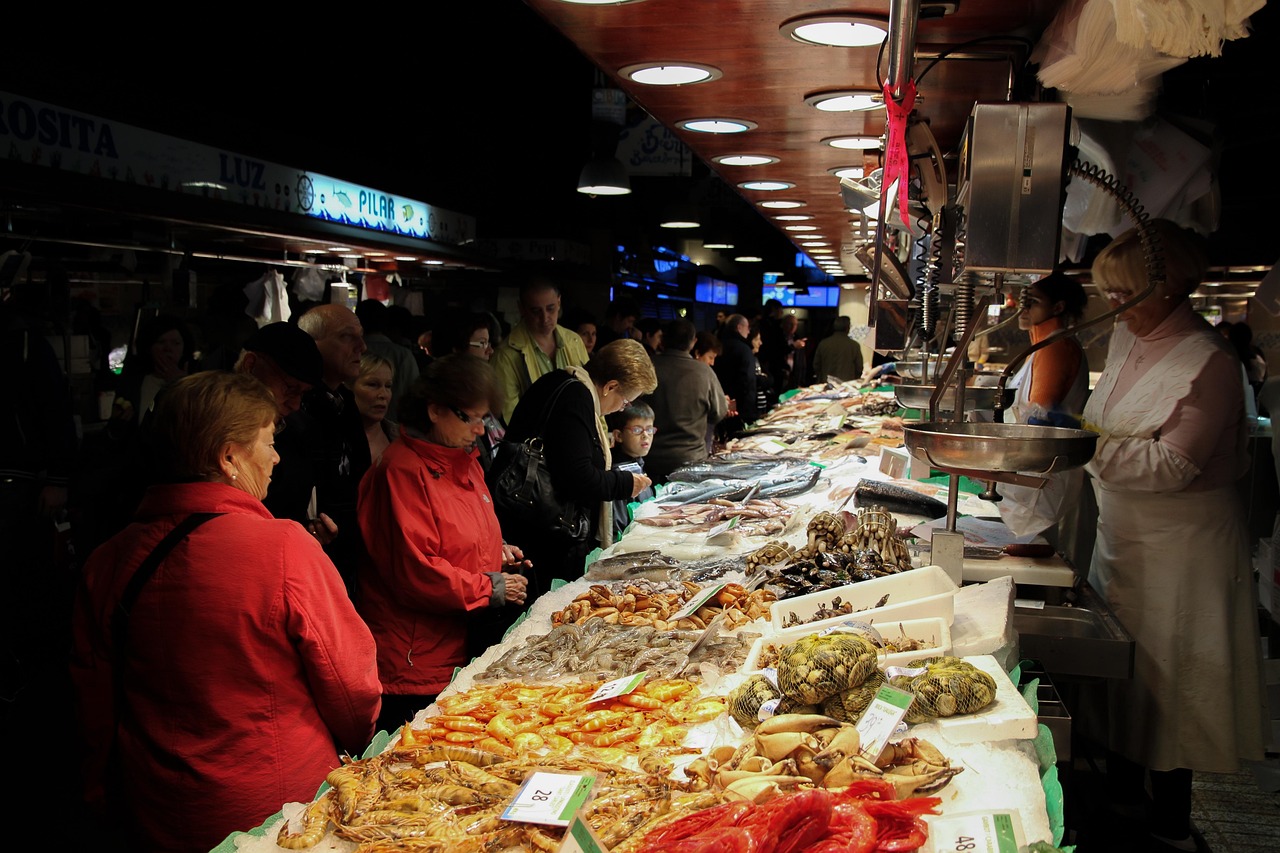
Rome: All too often, the seafood people consume is not what it claims to be on menus or labels, a practice that can pose serious risks to both human health and the environment. A new publication by the Food and Agriculture Organization of the United Nations (FAO) has warned that fish fraud is widespread across global markets and that consumers are frequently misled about the true nature of the seafood they purchase.
Released today, the report titled Food fraud in the fisheries and aquaculture sector was prepared through cooperation between FAO’s Fisheries and Aquaculture Division and the Joint FAO/International Atomic Energy Agency (IAEA) Centre of Nuclear Techniques in Food and Agriculture. It presents a detailed and authoritative portrait of the many forms of fraud affecting the fisheries and aquaculture sector and reviews how emerging scientific and analytical techniques, including nuclear-based methods, can be deployed to detect deception along complex and increasingly globalised seafood supply chains.
Although there is no official estimate of how common fraud is in the global fisheries and aquaculture industry, valued at about USD 195 billion annually, empirical studies cited in the report suggest that around 20 per cent of seafood trade may be affected by some form of fraud. This proportion is notably higher than in meat, fruit and vegetable markets, largely because of the enormous biological diversity involved, with more than 12,000 seafood species consumed worldwide. The report stresses that the diversity of fraud practices, together with the absence of standardised regulatory or legal definitions and differences in national enforcement capacity, makes it extremely difficult to generate accurate global prevalence figures.
Fish fraud is defined as “a deliberate practice intended to deceive others,” and the report draws an important distinction between intentional fraud and cases of unintentional mislabeling or regulatory non-compliance, noting that not all labelling errors constitute criminal activity. Depending on the form it takes, fraud can threaten biodiversity, undermine food safety, distort markets and weaken public trust in regulatory and certification systems.
The main forms of fish fraud identified include adulteration, such as adding dyes or carbon monoxide treatments to tuna to make it appear fresher; counterfeiting, including imitation shrimp made from starch-based compounds; simulation, such as packaging surimi to resemble crab meat; diversion of legitimate products into unauthorised markets; and misbranding through false sustainability or origin claims. Other categories include overrun linked to fishing beyond authorised quotas, species substitution such as selling tilapia as red snapper, tampering and mislabeling involving origin or expiry dates, and outright theft. The report notes that some fraudulent practices are specifically intended to disguise geographic provenance or to suppress evidence of illegal, unreported or above-quota landings, creating direct risks for the sustainability of fish stocks and fisheries management systems and undermining honest fishers and traders through unfair competition.
To combat these practices, FAO advocates harmonised labelling requirements across markets, the mandatory inclusion of scientific species names wherever possible and the strengthening of traceability systems throughout supply chains. It emphasises the need for coordinated international approaches, shared data systems and compatible legal definitions of fraud so that authorities can work across borders to detect and deter deception more effectively.
The report also underlines the importance of risk-based inspection and sampling strategies, urging regulators to prioritise species and product types that are historically more vulnerable to fraud, rather than relying solely on random testing. High-risk categories identified in multiple studies include species such as red snapper, halibut, grouper and shrimp, as well as products that pass through long and opaque supply chains.
Scientific and analytical tools are described as increasingly central to fraud detection. Advanced techniques such as enzyme-linked immunosorbent assay, stable isotope analysis and nuclear magnetic resonance spectroscopy are shown to be effective in identifying species substitution and origin fraud, although access to these methods remains uneven, particularly in developing countries and in small laboratories with limited resources. The Joint FAO/IAEA Centre plays a key role in promoting nuclear and isotopic techniques, especially for determining geographic origin and production methods, and in providing technical assistance and training to Member States to help close these capacity gaps.
Despite thousands of studies documenting fish fraud on every continent except Antarctica, the report finds that there is still no solid baseline for estimating its true prevalence. The global scale of fish consumption, the targeting of more than 12,000 seafood species, the diversity of fraud typologies and the lack of standardised definitions continue to hinder consistent measurement.
Available evidence nevertheless points to a widespread problem. Some studies suggest that up to 30 per cent of seafood products sold in restaurants may be mislabeled. The report documents cases from ceviche stalls in Latin America and seafood eateries in China to canned tuna products sold in the European Union. In the United States, research indicates that as much as one-third of aquatic products on sale may not correspond to what is written on packaging, while less than one per cent of seafood imports are routinely tested for fraud.
The human welfare risks of seafood fraud are evident in cases where fish species unsafe for raw consumption are substituted for safer varieties or when products are repeatedly frozen and thawed, increasing the risk of bacterial growth. However, the report finds that economic incentives remain the most common driver of fraudulent behaviour. Selling Atlantic salmon, which is almost entirely farmed, as Pacific salmon, which is largely wild-caught, can generate nearly USD 10 more per kilogram. Farmed seabass branded as Italian local produce sells for two to three times the price of the same species originating from Greece or Türkiye, and even more if sold as wild-caught. Another widespread practice involves adding water to unprocessed fishery products to increase their weight and price, a method also observed in land-based meat production.
In some cases, fraud is used to conceal geographic origin or to hide landings that exceed fishing quotas, posing risks not only to consumers but also to the long-term sustainability of fishery resources and to the credibility of fisheries management regimes.
The report details how advances in science can help expose these practices. While no standard method yet exists to determine how many times a seafood product has been frozen, differences in fatty-acid composition can distinguish wild from farmed fish, and variations in carbon and nitrogen isotope ratios can be used to identify the geographic origin of major commercial species.
The publication also reviews coordinated efforts to investigate and reduce fraud in countries such as Italy, Argentina and the United States. One investigation using DNA barcoding in Los Angeles, California, found that mislabeling was relatively low in processing plants, moderate among grocery retailers and particularly prevalent in sushi restaurants. At the retail level, mislabeling was rare for tuna, albacore and salmon but common for red snapper and halibut. A local initiative bringing together academic institutions, industry and government agencies succeeded in reducing seafood mislabeling by two-thirds over ten years through education campaigns combined with repeated blind testing.
FAO stresses that prevention and enforcement, with the active participation of the private sector, are essential to reducing and ultimately eliminating fish fraud and other forms of food fraud. The organisation, together with the Codex Alimentarius Commission, is working to develop international standards to combat food fraud. At the same time, FAO, through the Joint FAO/IAEA Centre, continues to provide technical assistance to Member States seeking to strengthen their laboratory testing, inspection systems, and monitoring capacities.
The report concludes that although fish fraud remains a complex and global challenge, coordinated action between governments, industry, scientists and international organisations, supported by scientific innovation, risk-based enforcement and regulatory harmonisation, offers a viable pathway to protecting consumers, preserving marine biodiversity, safeguarding honest traders and restoring confidence in the global seafood trade.
– global bihari bureau