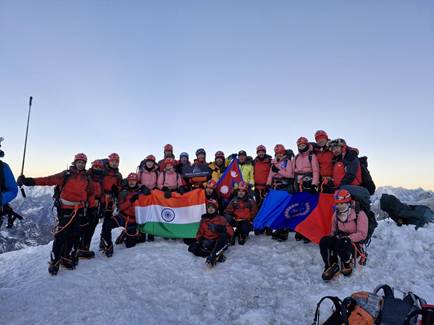
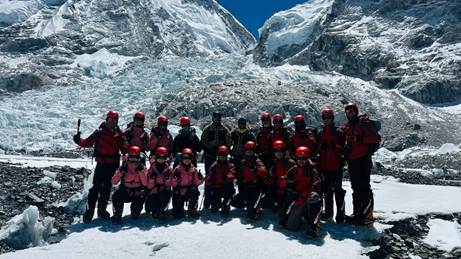
Kathmandu: On May 18, 2025, 10 National Cadet Corps (NCC) cadets, their pulses racing at 8,848 meters, raised India’s Tricolour and NCC flag atop Mount Everest, a pinnacle of national pride. These five boys and five girls, averaging 19 years old, were the vanguard of a 27-member team, supported by four Officers, two Junior Commissioned Officers (JCOs), one Girl Cadet Instructor (GCI), and 10 Non-Commissioned Officers (NCOs). Together, they forged a historic summit, the NCC’s third Everest ascent after 2013 and 2016. Cadets like Jahan Kukkal from Chandigarh, Rifiness Warjri from Meghalaya, and Padam Namgail from Ladakh, alongside their seasoned mentors, showcased India’s youth and discipline, proving that collective grit can conquer the world’s highest peak.
Selected from thousands through nationwide screenings, the cadets began with little high-altitude experience, their raw potential evident. Rifiness Warjri, captivated by her first glacier, found the icy terrain both thrilling and humbling. The Officers, experienced military leaders, and JCOs, senior enlisted personnel, oversaw a rigorous selection, starting with a pre-Everest climb on Mount Abi Gamin (7,335 meters) in the Garhwal Himalayas. At the Army Mountaineering Institute, Siachen Base Camp, the Girl Cadet Instructor, a female NCC trainer, and Non-Commissioned Officers, skilled technical specialists, guided 15 cadets through sub-zero conditions and ice-wall training. Jahan Kukkal, who had scaled Mount Kang Yatse II (6,250 meters), emerged tougher from Siachen’s trials. Ten cadets were chosen for the final expedition, their months of mentorship transforming novices into mountaineers ready for Everest’s relentless challenges.
Also read: Expeditions to Kangchenjunga and Everest flagged off
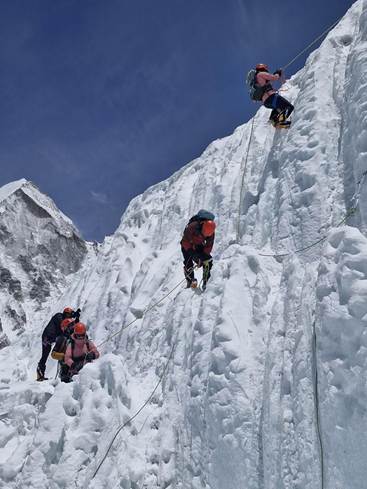
Flagged off by Defence Minister Rajnath Singh on April 3, 2025, in New Delhi, the team carried the nation’s aspirations. The Officers and JCOs orchestrated logistics, ensuring supplies and safety, while NCOs provided on-ground expertise. The ascent tested all—Khumbu Icefall’s crevasses, Lhotse Face’s icy slopes, and winds above Camp 3 pushed limits. Nepali Sherpas, guiding the climb, admired their stamina, noting they moved with the focus of veteran mountaineers. During acclimatisation at Camps 1 and 2, Padam Namgail’s steady encouragement lifted spirits, while Rifiness’s humour warmed freezing tent nights. The GCI’s mentorship fostered unity, binding cadets through shared hardships like ropework and oxygen-scarce climbs.
On summit day, at 4:45 a.m., a windstorm threatened their window. Guided by Officers’ strategic calls, the cadets pressed upward, their training shining. At the peak, they burst into celebration, singing the national anthem as the Tricolour waved, their exhaustion eclipsed by joy. The Officers, JCOs, GCI, and NCOs, though not on the summit, shared the victory, their leadership pivotal. Months at Abi Gamin and Siachen had prepared the cadets for Everest’s trials, a testament to the team’s collective strength.
Rajnath Singh hailed their courage, calling the team “a beacon for India’s youth.” Greeted as heroes, their journey—from novices to Everest conquerors—inspired millions. This was more than a climb; it was a unified effort, with Officers, JCOs, the GCI, and NCOs shaping India’s youth into summit-scaling giants.
– global bihari bureau