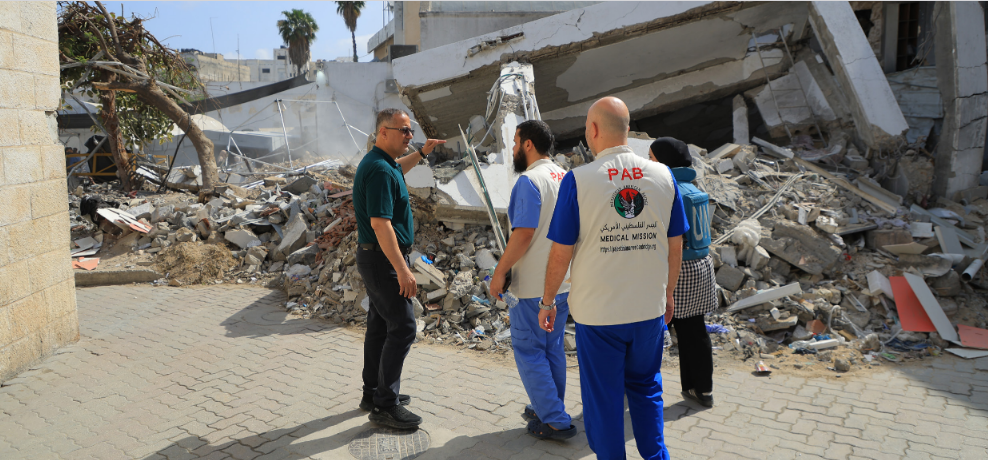
In the heart of the Gaza Strip, where the air hums with tension and the ground trembles from distant blasts, Emergency Medical Teams (EMTs) are fighting a desperate battle to save lives. As of June 11, 2025, a punishing 80-day blockade, enforced since March 2, has choked off the flow of all goods, including the medical supplies that hospitals and clinics depend on to function.
The World Health Organization’s latest report, titled Emergency Medical Teams (EMTs) in the Gaza Strip: March – May 2025, lays bare the catastrophic toll of this crisis, detailing how the escalation of hostilities since March 18 has pushed Gaza’s health system to the brink of collapse. “The blockade of more than 80 days… has further disrupted health service delivery and put people’s health at serious risk,” the report states. With only a “trickle” of aid allowed after 11 weeks of near-total restrictions, the situation demands urgent action to transform this “drop in the ocean” into a “lifeline.”
The blockade’s impact is stark. Essential medicines, surgical supplies, and equipment—such as ventilators, incubators, and vaccines—remain stranded outside Gaza’s borders. The WHO notes that stocks for treating acute malnutrition can only serve 500 children, a fraction of the need, while supplies for trauma and disease management are nearly depleted. The report echoes WHO Director-General Dr. Tedros Adhanom Ghebreyesus’s warning: “People are starving, sick, and dying, while food and medicines are minutes away across the border.”
Yet, amid this chaos, EMTs—comprising surgeons, paediatricians, midwives, and logisticians—persist as a fragile lifeline for a population of 2.1 million grappling with hunger, injury, and despair.
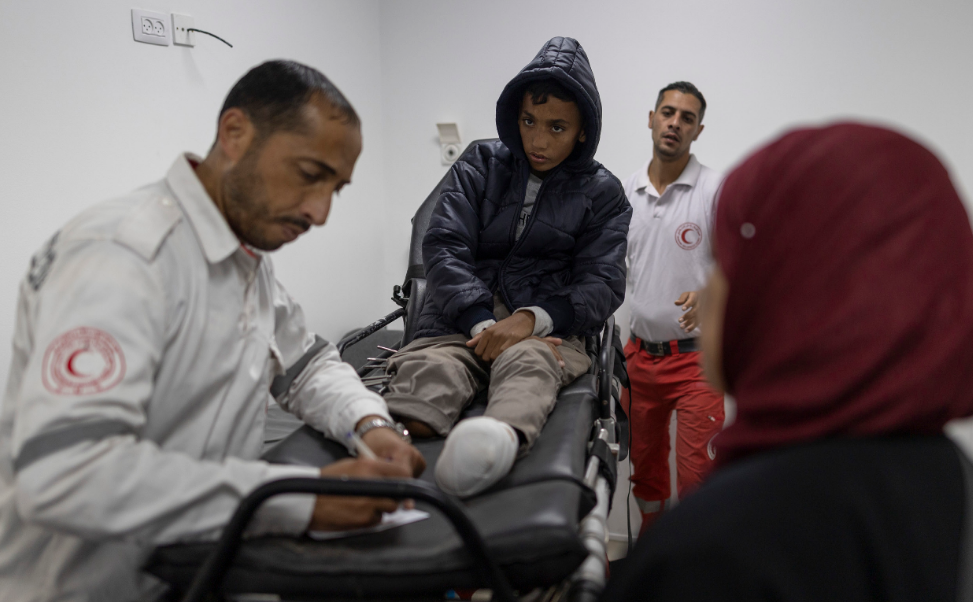
Since December 2023, these WHO-supported national and international teams have been the backbone of Gaza’s health response, delivering specialised care in trauma, surgery, and maternal health despite working in what the report describes as “extremely constrained and insecure environments.” They’ve stitched wounds in makeshift operating rooms, delivered babies under flickering lights, and comforted traumatised children in displacement camps. But the blockade has turned their mission into a near-impossible feat. Essential medicines, surgical tools, vaccines, and insulin are stranded beyond Gaza’s borders, leaving only enough supplies to treat 500 children for acute malnutrition—a drop in the ocean compared to the need. Dialysis patients face a ticking clock, with just three months of supplies remaining as of May. Without fuel, hospitals struggle to power ventilators and incubators, forcing medics to make agonising choices about who gets care.
The health infrastructure is a shadow of its former self. Hospitals, already strained by a 16-year blockade, are now operating at minimal capacity. Only 16 of Gaza’s 36 hospitals limp along, offering just 1,822 beds for a population reeling from conflict and deprivation. Only 16 of Gaza’s 36 hospitals remain partially functional, with a bed capacity of just 1,822—far below what’s needed for the 2.1 million population facing hunger, displacement, and injury. Attacks have further crippled the system, with recent strikes damaging key hospitals like Nasser and Al-Ahli Arab. Al-Awda Hospital, the last minimally functional facility in North Gaza, faces evacuation orders, risking the severance of the region’s final health lifeline.
Since October 2023, 686 attacks on health care have claimed 752 health workers and injured 1,074, each strike chipping away at an already fragile system. The report paints a stark picture: 55,000 pregnant women face high-risk pregnancies, and 20% of newborns need advanced care that’s increasingly out of reach. Over 500 children and 270 women have been killed since March 18, with 57 child deaths tied to malnutrition. For 1.2 million displaced people and 3,500 cancer patients, treatment is a distant hope, with medical evacuations—only 6,256 permitted in 2024 against a need for 12,000—severely restricted.
EMTs are undeterred, though their courage is tested daily. Since March 2022, WHO’s foresight in training teams and prepositioning supplies has enabled rapid responses to escalations, a model that still guides their work. In recent months, they’ve set up field hospitals and mobile clinics, reaching displaced communities with whatever resources they can muster. Medics have worked 72-hour shifts, improvising with dwindling supplies to treat mass casualties and support mental health needs. Community health workers, backed by WHO, have fanned out to displacement camps, offering first aid and health education to those cut off from hospitals. Yet, their efforts are hamstrung. International EMT staff are routinely denied entry, leaving local teams overstretched. Safe movement within Gaza is a gamble, with only 40% of WHO-coordinated missions facilitated in 2024. Checkpoints, damaged roads, and active combat zones turn every trip into a high-stakes mission, with some teams delayed or turned back, unable to reach patients clinging to life.
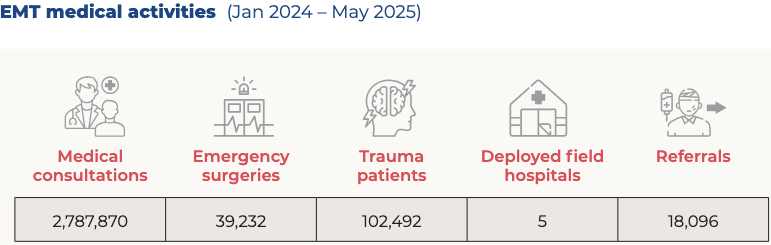
The human cost is staggering. The blockade has driven 470,000 people into catastrophic food insecurity, with famine looming ever closer. Among the most vulnerable are 17,000 unaccompanied children, their futures hanging by a thread. The report captures the urgency with a simple plea: the trickle of aid must become a lifeline. WHO and its partners are calling for the blockade to be lifted, for health care to be protected under international humanitarian law, for safe passage to be guaranteed for EMTs, and for medical evacuations to resume. Above all, they urge a ceasefire to pave the way for lasting peace and the rebuilding of a shattered health system. Dr. Hanan Balkhy, WHO’s Regional Director for the Eastern Mediterranean, put it bluntly: “EMTs are doing heroic work, but they need the world’s support to save lives.”
In Gaza’s darkest hour, these medics remain a beacon of hope, risking their lives to stitch together a fraying health system. But without swift global action, their resilience may not be enough to avert a humanitarian catastrophe. The world watches as Gaza’s fate hangs in the balance, with EMTs standing as the last line of defence against an unfolding tragedy.
– global bihari bureau